May 31, 2019

Three Ancient Andean Short Reports

Restored Ceramics Shed Light on the Wari Civilization of Peru

45 restored ceramics found at the Wari site of Ayachcho in Peru reveal the Wari civilization is linked to the Nazca and Huarpa cultures. The ceramics show coastal animals and marine products similar to the designs on Nazca ceramics. The Wari often destroyed their ceramics as part of Wari rituals. The ceramics also show influence from the little known culture of the Huarpa

Archaeology News Network has the report here;
https://archaeologynewsnetwork.blogspot.com/2019/05/recently-discovered-wari-ceramics.html#d6jxeSmXQBF5LQoC.97

Ancient Pachacamac Cemetery Uncovered in Peru

An ancient cemetery has been discovered at the site of Pachacamac in Peru. A cluster of burials in foetal positions mummified in plant materials, nets and textiles were uncovered in deep pits sunk  into the sand, with ceramics and other offerings, then covered in wood and rushwork roofs. The interred had fractures, bad backs and hips, TB, syphilis, serious bone breaks. The injuries had healed, so they were being cared for.

The later invading Incas carried out targeted attacks on the dead, removing their heads as an example of grave defilement.

Archaeology News Network has the report here.
https://archaeologynewsnetwork.blogspot.com/2019/04/1000-year-old-cemetery-unearthed-at.html#eJpjmgXFcFiCGOAw.97

Ancient Wari Beer Breweries Uncovered in Peru

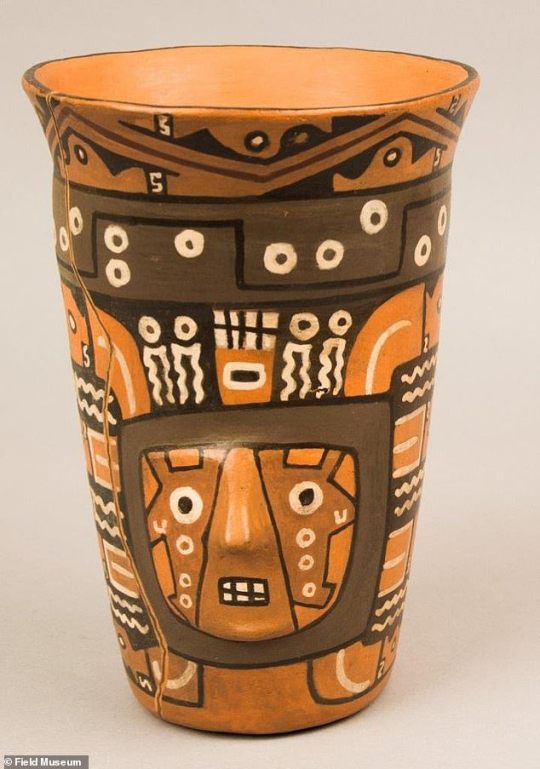
Field Museum of Chicago archaeologists working at the Wari culture (350-1000 CE) site of Cerro Baul found a brewery and drinking vessels for the production and consumption of Chicha, a beer fermented from corn and pepper berries, that had to be drank swiftly before it went bad. Chicha was used at rituals to diplomatically unite communities in the Wari realm, and helped keep the peace.

They analyzed pieces of ceramic beer vessels, heated them to study the molecules, shooting a laser at a shard of a beer vessel to remove a tiny bit of material, and then heating that dust to the temperature of the surface of the sun to break down the molecules that make it up. This told them where there the clay came from and what the beer was made from. Pepper berries could survive droughts. The drinking vessels were tall and decorated to look like Wari gods and leaders.

When the Wari empire began to come apart, they set fire to their breweries and covered them with sand.

The Daily Mail has the report here with photos;
https://www.dailymail.co.uk/sciencetech/article-6936897/Archaeologists-earn-steady-supply-beer-kept-Wari-empires-society-afloat.html

May 25, 2019

Cooking Pot with Llamas Head and Many Ingredients Uncovered at a Moche Site in Peru

Archaeologists working at the Moche site of Wasi Huachuma, dating to 600-850 CE, found a cooking pot under a house floor which contained portions of llamas face, guinea pig, maize, common beans, squash, potato, and chili pepper were found, along with crabs, flathead mullet, and the plant coca. The pot looks like a dedicatory offering which tie together all of the geographic and environmental regions accessed by the Moche. The entirety of Moche culinary knowledge is found in the pot.

The research is published in the Cambridge Archaeological Journal

Forbes has the report here;
https://www.forbes.com/sites/kristinakillgrove/2019/05/24/archaeologist-finds-pot-full-of-llama-face-stew-under-a-house-in-ancient-peru/#16f43bfbdff1

Mike Ruggeri’s Ancient Andean News on Tumblr
http://mikeruggerisancientandeannews.tumblr.com

Mike Ruggeri’s Moche/Wari Era Peru
http://mikeruggerismoche.tumblr.com

May 24, 2019

Beautiful Jadeite Tool Uncovered at Ancient Maya Salt Works in Belize

LSU’s Heather McKillop has found a tool made of high quality translucent jadeite with a Honduras rosewood handle at the Maya salt processing site of Ek Way Nal in Belize, where there is a network of 110 ancient salt working sites. Sea level rise has buried artifacts from the salt works.The soggy mangrove soil preserved the artifact. The tool was used for scraping salt, cutting, scraping fish and meat.

Archaeology News Network has the report here, with a great photo of the beautiful tool;
https://archaeologynewsnetwork.blogspot.com/2019/05/high-quality-jadeite-tool-discovered-in.html#UiuPjYemCujZj5aW.97

Mike Ruggeri’s Ancient Maya News on Tumblr
http://mikeruggerisacientmayanew.tumblr.com

Mike Ruggeri’s Ancient Maya News Magazine
http://bit.ly/1CeeXyu

image

May 21, 2019

The Oldest Human Footprint in the Americas Discovered

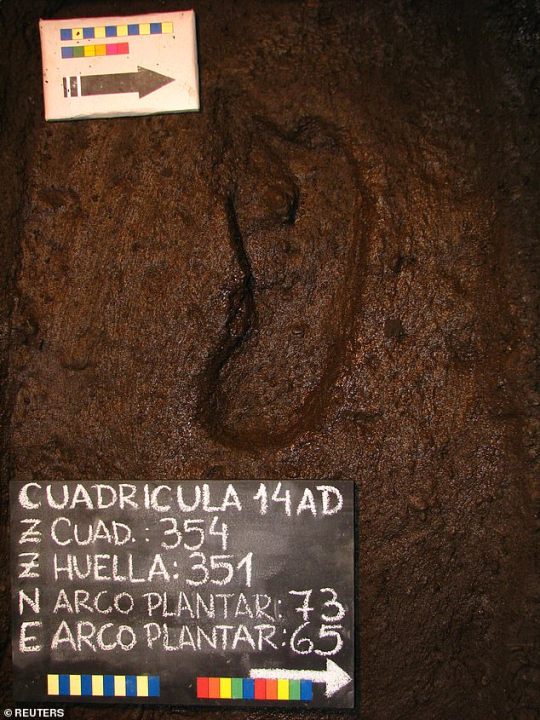
The oldest human footprint in the Americas has been discovered in Chile, dating to 15,600 years ago. It was discovered in 2010 at the Pilauco excavation site in Chile where scientists have been digging since 2007. It is in the region of Patagonia. Fossil bones and tools were alongside of it. Radiocarbon dates on organic plant life that was present at the footprint determined the age of the footprint. Based on features such as foot arch, the size of the print, and the width-ratio between the ball of the foot and the lack third segment, scientists were able to conclude the print came from a human male around 22 pounds (10kg) lighter than one of their print makers. Researchers had also found bones of animals near the site, including those of primitive elephants.

The print was  also likely buried fast by layers of soil after it was made, which allowed it to be preserved it to this day.

The print is only 60 miles away from the oldest site in the Americas, Monte Verde, which dates back to 14,600 years ago.

The footprint is now preserved in a glass box and is housed at the recently established Pleistocene Museum in the city of Osorno, Chile. The study was published online April 24 in the journal PLOS One.

LiveScience has the report here with photos;
https://www.livescience.com/65368-oldest-human-footprint-americas.html

Mike Ruggeri’s Pre-Clovis World
http://preclovisworld.tumblr.com

Mike Ruggeri’s Pre-Clovis and Clovis World Magazine
http://bit.ly/1uAWdvk

image

May 18, 2019

New DNA Test of a Blackfeet Clan Member Breaks New Ground.

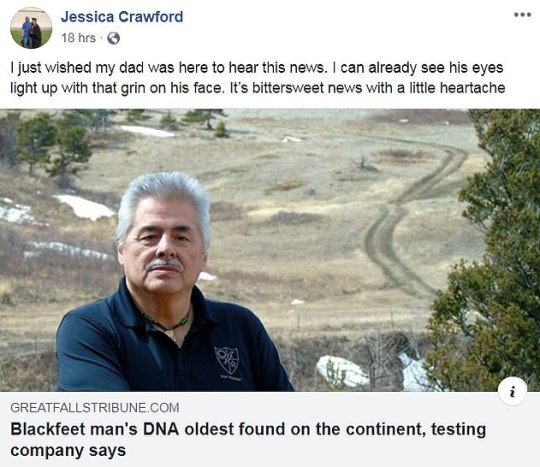
Darrell “Dusty” Crawford, a member of the Blackfeet tribe, wanted to have his DNA tested, and it has been tested after his recent death. His ancestry shows DNA from the Pacific, and ancestors traveling to South America, then north. His DNA is in haplogroup B, which is of low frequency in Alaska and Canada, and originated in Arizona 17,000 years ago. His closest relatives are in Southeast Asia. The Blackfeet clans trace their clanship back to four females, one whose name was Ina. That name comes from a Polynesian mythical figure who rides a shark. His DNA was 83% Native American, 9.8% European, 5.3% East Asian (mostly Japanese and Southern Han Chinese), 2% South Asian (Sri Lankan Tamil, Punjabi, Gujarati Indian and Bengali) and .2% African (Mende in Sierra Leone and African Caribbean).

(My note; The story that the First Americans came across after the Beringia opening has been touted as the only route the First Americans could have taken to arrive here. In all of the research I have compiled, I believe there is a Pacific crossing as well. See my Pre-Clovis news page below. This DNA study also points in that direction).

The report is in USA Today
https://www.usatoday.com/story/news/nation/2019/05/06/blackfeet-man-dna-deemed-oldest-americas-cri-genetics/1121352001/

Mike Ruggeri’s Pre-Clovis World
http://preclovisworld.tumblr.com

Mike Ruggeri’s Pre-Clovis and Clovis World Magazine
http://bit.ly/1uAWdvk

May 12, 2019

Ancient Metallurgist Buried with Bronze Tools Uncovered in Peru

An Archaeologist at a Wari site at Huarmey, Peru was examining a ceremonial square and fell into a hole which contained the tomb of a 1,200-year-old metallurgist wrapped in a textile covering. Further excavations found that the tomb also contained a dozen tools, most of them bronze; a saw, axe, knives, chisel. The bronze was a copper alloy with arsenic. That made the tools harder. They also uncovered an obsidian knife, rare in Wari culture, imported from afar.

The tools show a lot of wear indicating that the deceased man was a professional metallurgist. Slag found in the tomb was probably placed there to indicate his trade. The tomb was located at the bottom of a mountain, the top of which was a tomb excavated by the same team from Poland in 2012 that contained 64 individuals and 1200 rich artifacts dating to the 8th century.

The History Blog has the story here with photos;
http://www.thehistoryblog.com/archives/54996

Mike Ruggeri’s Ancient Andean News on Tumblr
http://mikeruggerisancientandeannews.tumblr.com

Mike Ruggeri’s Moche/Wari Era Peru
http://mikeruggerismoche.tumblr.com

May 11, 2019

New Conquest Research in Mexico

The Aztecs ceremonially disfigured captive Spaniards at the Zultepec-Tecoaque site. The defenders there, in 1520, captured 15 Spanish males, 45 Cuban soldiers, 50 women, and 10 children. The women we’re strung up on skull racks. They were pregnant. They cut another woman in half near a dismembered child. The killings we’re re-enactments of creation myths. Cortes had to leave that group behind to put down an uprising in the Aztec capital. The horses, men and women were eaten, but the pigs the Spaniards brought were not eaten. The Aztecs were suspicious of them.

The town then took on the name Tecoaque, which means “the place where they ate them” in Nahuatl. The inhabitants abandoned the town when Cortes sent a punitive expedition. This research is part of Mexico’s new research and scholarship for the 500th anniversary of the conquest.

AP News has the report here;
https://apnews.com/3148029abd1445b68fa7a3c40c4677b1

Mike Ruggeri’s Toltecs and Aztecs
http://mikeruggeristoltecsandaztecs.tumblr.com

Mike Ruggeri’s Aztec and Toltec World Magazine
http://bit.ly/1ygAdbd

May 11, 2019

Archaeologists Find Oldest Proof of Ayahuasca use in Bolivia

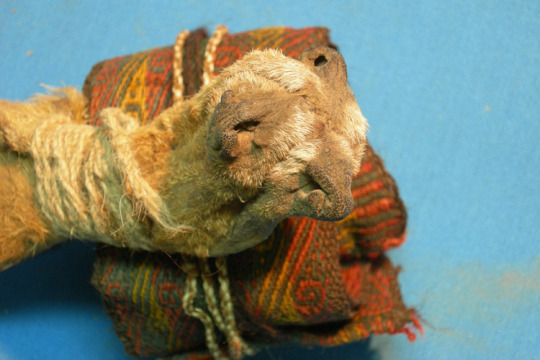
Archaeologists have found traces of the powerful hallucinogen ayahuasca in a pouch of three fox snouts sewn together dated at 1000 CE in a cave, at the Cuevo del Chileno project, in the Bolivian Andes.  The traces of the drug were made up of different medicinal plants mixed together to create ayahuasca. Liquid chromatography tandem mass spectrometry — turned up trace amounts of bufotenine, DMT, harmine, cocaine and benzoylecgonine. Various combinations of these substances produce powerful, mind-altering hallucinations.

The pouch was found at 13,000 feet elevation and was an artifact of the Tiwanaku civilization (550-950 CE). The drug kit included a snuffing tube made from human hair braids, llama bone spatulas, a textile strip, and dried plant material. The plants in the bundle do not come from that region, so perhaps a traveling shaman or an expert trader  in these substances brought them to the region.

The research is published in the Proceedings of the National Academy of Sciences.

Berkeley.edu has the report here with photos;
https://news.berkeley.edu/2019/05/06/ayahuasca-sacred-bundle/

Mike Ruggeri’s Moche/Wari Era Peru
http://mikeruggerismoche.tumblr.com

May 2, 2019

Update on the Oldest Mummies in the World in Peru

CNN has a report on the oldest mummies in the world, the Chinchorro mummies of Peru, which date back to 5000 BCE, 2000 years older than the Egyptian mummies. They hope for UNESCO status, and the building of a new wing of an area museum to display the mummies.

CNN has the report here;
https://www.cnn.com/travel/article/worlds-oldest-mummies-chile/index.html

And Wikipedia has a very detailed article on these mummies;
https://en.wikipedia.org/wiki/Chinchorro_mummies

Mike Ruggeri’s Norte Chico (Peru) World Magazine
http://flip.it/YEMZZ

Mike Ruggeri’s Ancient Peru (5000 BC-600 BC)
http://mikeruggerisancientperu.tumblr.com