image

August 25, 2019

1,800 BCE Mural Uncovered at the Site of Vichama in Peru (Caral Civilization Site)

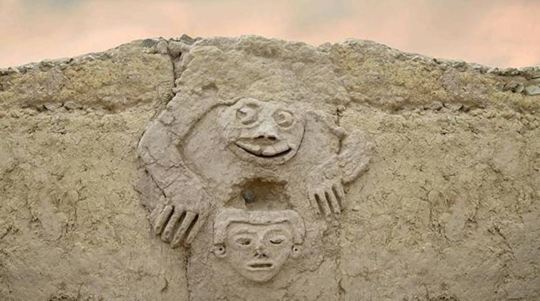
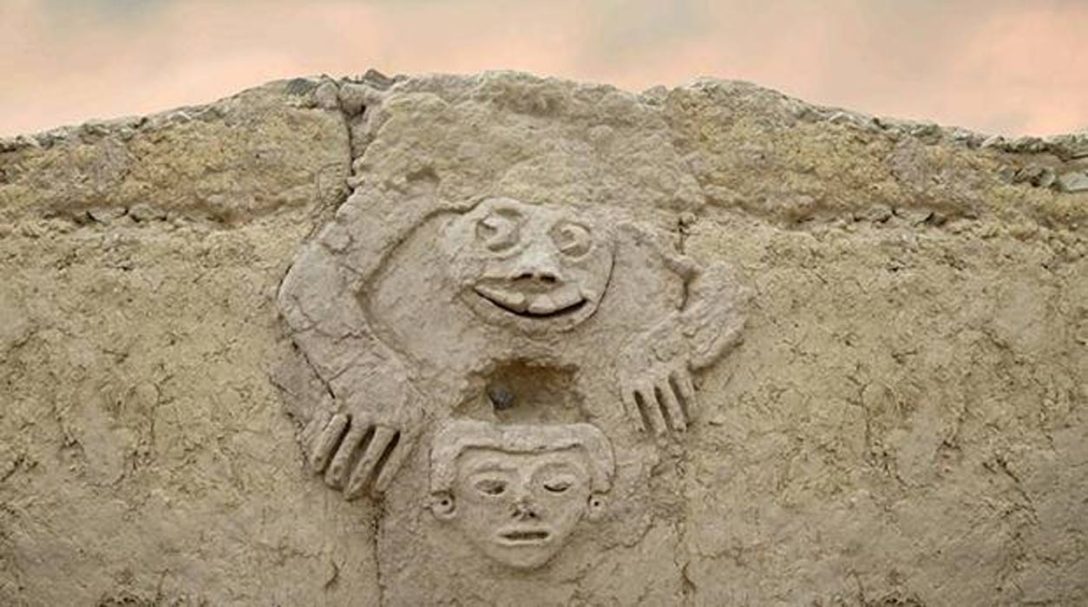
Archaeologists have uncovered a mural depicting a toad wrapping its hands around a human face at the site of Vichama in Peru. Archaeologist Ruth Shady explains the toad is a symbol for rain, and the aura,l suggests it is a prayer for rain. The mural may announce the coming of rain. The mural dates to 1,800 BCE.

Last year, in the same structure, other wall carvings were found at the entry to a ceremonial hall. The bas relief mural depicts four human heads with their eyes-closed and two snakes passing between and around them. These two snakes have their heads pointing at the image of what DW describes as “a humanoid seed symbol that is digging into the soil. These also depict the asking for the coming of rain, since the snake carvings may representations of a rain bearing water deity.

Vichama is 68 miles from Lima. The site existed at 3000-1800 BCE. Excavations started there in 2007. Murals representing the high status of women at the siren have also been uncovered.

Vichama is a site connected to the Caral/Norte Chico civilization. The site of Caral dates back to 3,000 BCE

Ancient Origins has the richly detailed report here with photos;
https://www.ancient-origins.net/news-history-archaeology/wall-carvings-0010573

Mike Ruggeri’s Oldest Andean Cultures
https://mikeruggerisoldestandeancultures.home.blog
1,800 BCE Mural Uncovered at the Site of Vichama in Peru (Caral Civilization Site)

August 25, 2019

1,800 BCE Mural Uncovered at the Site of Vichama in Peru (Caral Civilization Site)

Archaeologists have uncovered a mural depicting a toad wrapping its hands around a human face at the site of Vichama in Peru. Archaeologist Ruth Shady explains the toad is a symbol for rain, and the aura,l suggests it is a prayer for rain. The mural may announce the coming of rain. The mural dates to 1,800 BCE.

Last year, in the same structure, other wall carvings were found at the entry to a ceremonial hall. The bas relief mural depicts four human heads with their eyes-closed and two snakes passing between and around them. These two snakes have their heads pointing at the image of what DW describes as “a humanoid seed symbol that is digging into the soil. These also depict the asking for the coming of rain, since the snake carvings may representations of a rain bearing water deity.

Vichama is 68 miles from Lima. The site existed at 3000-1800 BCE. Excavations started there in 2007. Murals representing the high status of women at the siren have also been uncovered.

Vichama is a site connected to the Caral/Norte Chico civilization. The site of Caral dates back to 3,000 BCE

Ancient Origins has the richly detailed report here with photos;
https://www.ancient-origins.net/news-history-archaeology/wall-carvings-0010573

Mike Ruggeri’s Oldest Andean Cultures
https://mikeruggerisoldestandeancultures.home.blog

August 21, 2019

INAH Uncovers Fortress Wall Built Around Uxmal

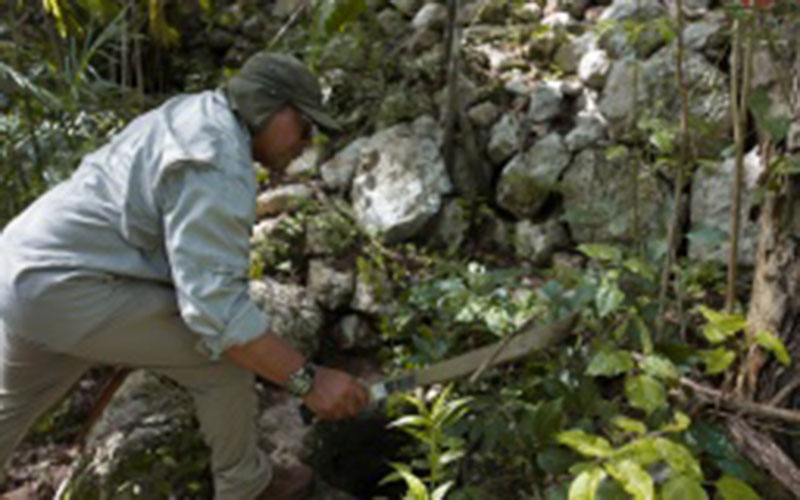
INAH has found a two mile long fortress wall surrounding the site of Uxmal in the Yucatan. It is now covered by thick jungle, but INAH is talking of restoration. More than half of Uxmal is still uncovered.

A drawing of the wall was printed in John Stephens’ “Incidents of Travel in Central America, Chiapas, and Yucatan”  in 1841. The wall was not searched for again till recently.

The wall was for defense and marked off the elite population from the rest. The elite lived inside the walls. The wall had 20 entry points and rainwater tanks. Some of it was built hastily as if to protect against imminent danger.

Maya settlements in Mayapán, Chichen Itza and Tulum were also walled in,

The Yucatan Expat Life has the report here;
https://yucatanexpatlife.com/fortress-wall-surrounding-ancient-mayan-city-of-uxmal-is-uncovered/

Mike Ruggeri’s Ancient Maya News on WordPress
https://mikeruggerismaya.news.blog

August 21, 2019

INAH Uncovers a Fortress Wall Around Uxmal

INAH has found a two mile long fortress wall surrounding the site of Uxmal in the Yucatan. It is now covered by thick jungle, but INAH is talking of restoration. More than half of Uxmal is still uncovered.

A drawing of the wall was printed in John Stephens’ “Incidents of Travel in Central America, Chiapas, and Yucatan” in 1841. The wall was not searched for again till recently.

The wall was for defense and marked off the elite population from the rest. The elite lived inside the walls. The wall had 20 entry points and rainwater tanks. Some of it was built hastily as if to protect against imminent danger.

Maya settlements in Mayapán, Chichen Itza and Tulum were also walled in,

The Yucatan Expat Life has the report here;
https://yucatanexpatlife.com/fortress-wall-surrounding-ancient-mayan-city-of-uxmal-is-uncovered/

Mike Ruggeri’s Ancient Maya News on WordPress
https://mikeruggerismaya.news.blog

August 13, 2019

New Research on the Dead Found in the Great Cenote at Chichen Itza

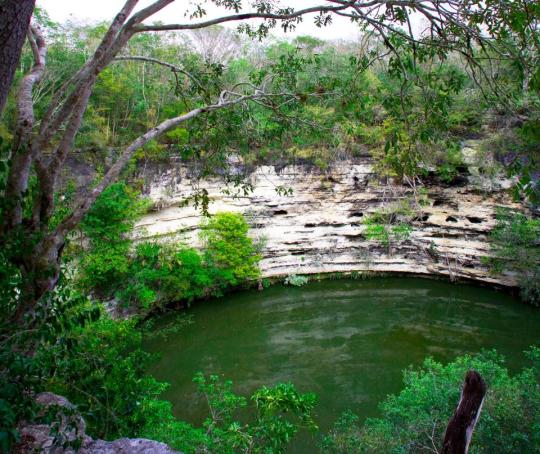
Tooth enamel from the over 200 sacrificial victims found in the great cenote at Chichen Itza show that they came from the area and all across Mexico. Immigrants were coming to the area from all across Mexico during Chichen Itza’s heyday. The city hosted a population of 50,000 in the Mesoamerican post-classic, after 900 CE. Half of the victims found in the cenote were children between 4-6 years of age.

The victims show evidence of flaying, impalement, skinning. Their bodies look to have been displayed before being thrown into the denote. Some were also displayed on skull racks.

Scientific methods on the tooth enamel of 40 of the victims was carried out. These show that some of the victims came from as far away as Honduras, Cholula and Tula in central Mexico, Veracruz, and from local areas. This proves that Chichen’s influence spread across all of Mesoamerica.

The American Journal of Physical Anthropology Magazine published the research.

Forbes.com has the news of the report, with the scientific analysis used by the researchers.

https://www.forbes.com/sites/carlymiller/2019/08/09/skulls-analyzed-from-the-mayan-sacred-cenote-show-that-human-sacrifices-were-sourced-from-far-and-wide-across-mexico-in-1000-ad/#30cea3f4e8b7

Mike Ruggeri’s Ancient Maya News Magazine
http://bit.ly/1CeeXyu

Mike Ruggeri’s Ancient Maya News on Tumblr
http://mikeruggerisacientmayanew.tumblr.com

August 6, 2019

New Research on Maya Total Warfare

New research on the Maya carried out by the University of California, Berkeley, and the U.S. Geological Survey indicates that the Maya used scorched earth military campaigns, destroying everything in their path, including cropland, at the height of their Classic age. This goes against the idea that this was only a response by the Maya during their decline.

Researchers found an inch-thick layer of charcoal at the bottom of lake Laguna Ek’Naab in Guatemala, and the burning of the city Witzna. This took place at 690-700 CE. The event is recorded with the date May 21, 697 CE of a burning campaign recorded on a stone stela at the rival city of Naranjo. The proof of the fire by the new research coinciding with the written record is an amazing proof in the ancient Maya world. Seven meters of sediment cores under the lake matches the burning of Witzna’s monuments. Human activity at Witzna decreased dramatically after the event. The event coincides with more evidence of mass burials, fortified cities and large standing armies throughout the Maya world at the same time.

It appears that total warfare was not the cause of the Maya collapse, since total warfare was a constant across the Maya era.

Three other references to “burning” are mentioned in the same war statement, referencing the cities of Komkom, K’an Witznal, and K’inchil, location unknown. These cities may also have been decimated,

The researchers note that it is known that the conquest of Bahlam Jol/Witzna was set in motion by a queen of Naranjo, Lady 6 Sky, who was trying to reestablish her dynasty after the city-state had declined and lost all its possessions. She set her seven-year-old son, Kahk Tilew, on the throne and then began military campaigns to wipe out all the rival cities that had rebelled, Estrada-Belli said.

The research is published in the journal Nature Human Behaviour

The report is at EurekAlert;
https://www.eurekalert.org/pub_releases/2019-08/uoc–mmw080519.php

Mike Ruggeri’s Ancient Maya News on Tumblr
http://mikeruggerisacientmayanew.tumblr.com