April 29, 2029

Mesoamerica Heart Extraction Research

Vera Tiesler and Guilhem Olivier have published the results of their Mesoamerica heart extraction in Current Anthropology; “Open Chests and Broken Hearts: Ritual Sequences and Meanings of Human Heart Sacrifice in Mesoamerica.”

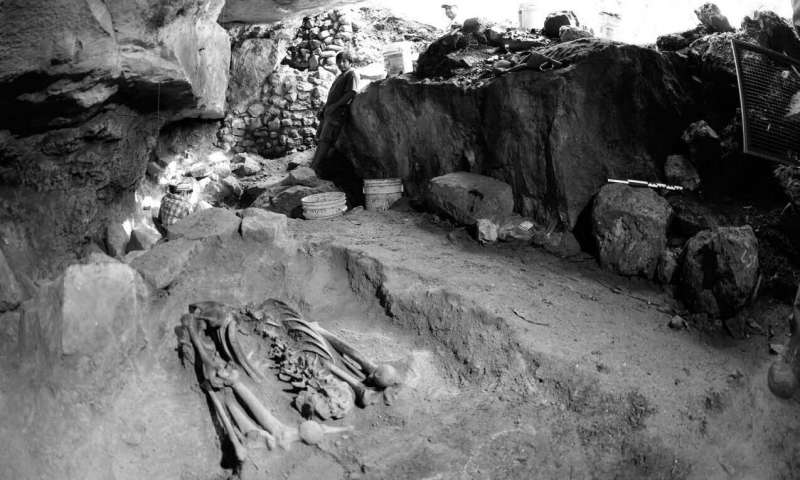
They studied anatomical analysis of skeletal evidence and compared it with systematically checked historical sources and over 200 instances of ceremonial heart extraction in codices. They focused on the location of openings created in the chest to allow for the removal of a victim’s heart and blood. They examined the resulting fractures and marks in articulated skeletons to infer about the nature of the entry wound and the potential instrumentation used.

Three distinct heart extraction methods were used;  cutting directly under the ribs (subdiaphragmatic thoracotomy); making an incision between two ribs (intercostal thoracotomy); or by horizontally severing the sternum in order to access the heart (transverse bilateral thoracotomy).

The reason for this practice was as a source of “vitalizing matter,” or food for the gods. Hearts and blood were offered as sustenance to deities representing the sun and the earth in recognition of their sacrifices during the creation of the universe. Data–including linguistic analysis of ancient Mesoamerican terminology–reinforce suggestions that these rites served as acts of obligation, reciprocation, and re-enactment.

News360 has the report here;
https://news360.com/article/526610248

Mike Ruggeri’s Toltecs and Aztecs
http://mikeruggeristoltecsandaztecs.tumblr.com

(Scroll down to Aztec Human Sacrifice)
Mesoamerica Heart Extraction Research

April 29, 2020

Vera Tiesler and Guilhem Olivier have published the results of their Mesoamerica heart extraction in Current Anthropology; “Open Chests and Broken Hearts: Ritual Sequences and Meanings of Human Heart Sacrifice in Mesoamerica.”

They studied anatomical analysis of skeletal evidence and compared it with systematically checked historical sources and over 200 instances of ceremonial heart extraction in codices. They focused on the location of openings created in the chest to allow for the removal of a victim’s heart and blood. They examined the resulting fractures and marks in articulated skeletons to infer about the nature of the entry wound and the potential instrumentation used.

Three distinct heart extraction methods were used; cutting directly under the ribs (subdiaphragmatic thoracotomy); making an incision between two ribs (intercostal thoracotomy); or by horizontally severing the sternum in order to access the heart (transverse bilateral thoracotomy).

The reason for this practice was as a source of “vitalizing matter,” or food for the gods. Hearts and blood were offered as sustenance to deities representing the sun and the earth in recognition of their sacrifices during the creation of the universe. Data–including linguistic analysis of ancient Mesoamerican terminology–reinforce suggestions that these rites served as acts of obligation, reciprocation, and re-enactment.

News360 has the report here;
https://news360.com/article/526610248

Mike Ruggeri’s Toltecs and Aztecs
http://mikeruggeristoltecsandaztecs.tumblr.com

(Scroll down to Aztec Human Sacrifice)
April 23, 2020

The Rise and Fall of the Wari Complex of Cerro Baul in Peru

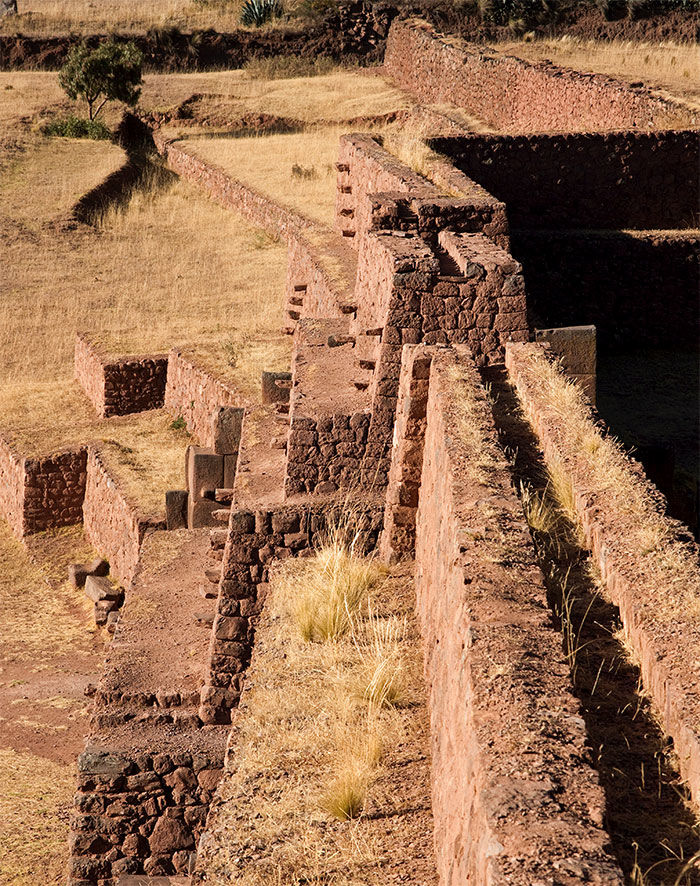
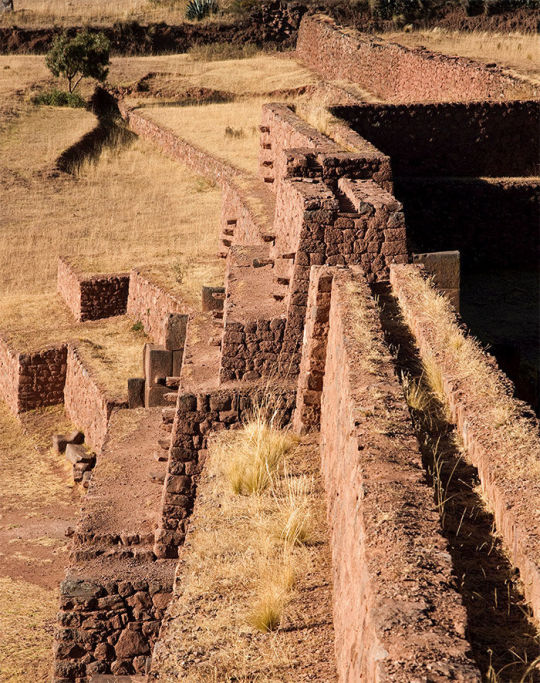
1,400 years ago, Wari colonists arrived in the Moquegua Valley in southern Peru. They occupied high dry land no one had used. They built a regional capital at the site of Cerro Baul, where they built large government structures and erected canals and aqueducts that carried water further than anyone had ever attempted. They carved mountain slopes into agricultural terraces, which captured rain and snowmelt to plots of maize, quinoa, berries to make beer. People moved there to create a large labor force.

Archaeologist Patrick Ryan Williams of the Field Museum calls the Wari strategy “conquest by hydraulic superiority.

Despite the Wari very violent aggression in other areas of Peru, they built a multi-ethnic society of relative peace in the Cerro Baul area for 400 years. Wari, Tiwanaku and local communities lived together from 600-1000 CE. Each culture maintained its own styles of pottery, architecture, temples and burials.

A huge earthquake destroyed the aqueduct system around 900 CE, and its appears the Wari had a hard time getting a work force to fix the damage completely.  And then an extreme drought took place at a time that the aqueduct system was weaker. At 1050, the Cerro Baul structures were abandoned, and in a huge end times feast, rooms were burned, a brewery was destroyed, and smashed drinking vessels were placed on top.

Science Magazine has the detailed report of an international team of archaeologists here;
https://www.sciencemag.org/news/2020/04/shrewd-water-use-helped-south-america-s-first-empire-thrive-so-why-did-drought-destroy

Mike Ruggeri’s Ancient Andean News on WordPress
https://mikeruggerisancientandean.news.blog

The Rise and Fall of the Wari Complex of Cerro Baul in Peru

April 23, 2020

1,400 years ago, Wari colonists arrived in the Moquegua Valley in southern Peru. They occupied high dry land no one had used. They built a regional capital at the site of Cerro Baul, where they built large government structures and erected canals and aqueducts that carried water further than anyone had ever attempted. They carved mountain slopes into agricultural terraces, which captured rain and snowmelt to plots of maize, quinoa, berries to make beer. People moved there to create a large labor force.

Archaeologist Patrick Ryan Williams of the Field Museum calls the Wari strategy “conquest by hydraulic superiority.

Despite the Wari very violent aggression in other areas of Peru, they built a multi-ethnic society of relative peace in the Cerro Baul area for 400 years. Wari, Tiwanaku and local communities lived together from 600-1000 CE. Each culture maintained its own styles of pottery, architecture, temples and burials.

A huge earthquake destroyed the aqueduct system around 900 CE, and its appears the Wari had a hard time getting a work force to fix the damage completely. And then an extreme drought took place at a time that the aqueduct system was weaker. At 1050, the Cerro Baul structures were abandoned, and in a huge end times feast, rooms were burned, a brewery was destroyed, and smashed drinking vessels were placed on top.

Science Magazine has the detailed report of an international team of archaeologists here;
https://www.sciencemag.org/news/2020/04/shrewd-water-use-helped-south-america-s-first-empire-thrive-so-why-did-drought-destroy

Mike Ruggeri’s Ancient Andean News on WordPress
https://mikeruggerisancientandean.news.blog

April 15, 2020

Mysterious Decorated Mud Balls Excavated at the Ancient Poverty Point site in Louisiana

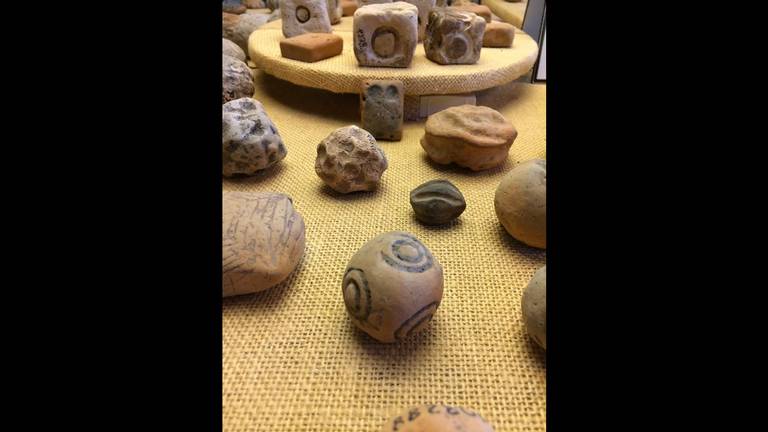
Abstract highly decorated mud balls have been excavated at the ancient Poverty Point Site in Louisiana. They were baked to make them durable through the ages. The designs are abstract, and the patterns represent Spider webs, lotus pods, the sun, an owl. They are dated to 1700 BCE. Poverty Point inhabitants used cooking balls to prepare food, using them as hot rocks. These are different.

These decorated balls were made from soil as far away as the Tennessee River Valley and the Gulf Coast, hundreds of miles away. Were pilgrims bringing these balls to Poverty Point?

The Belleville News Democrat has the report here with a photo of the artifacts.
https://www.bnd.com/news/nation-world/national/article241821501.html

And the extensive research on this is at Researchgate;
Poverty Point Objects Re-Considered;
https://www.researchgate.net/publication/304610019_Poverty_Point_Objects_Reconsidered

For more on the ancient Poverty Point site;
https://michaelruggeri.com/THE_MISSISSIPPIAN_WORLD_AND_THE_MOUND_BUILDERS/MIKE_RUGGERIS_MISSISSIPPIAN_WORLD.html

Mysterious Decorated Mud Balls Excavated at the Ancient Poverty Point site in Louisiana

April 15, 2020

Abstract highly decorated mud balls have been excavated at the ancient Poverty Point Site in Louisiana. They were baked to make them durable through the ages. The designs are abstract, and the patterns represent Spider webs, lotus pods, the sun, an owl. They are dated to 1700 BCE. Poverty Point inhabitants used cooking balls to prepare food, using them as hot rocks. These are different.

These decorated balls were made from soil as far away as the Tennessee River Valley and the Gulf Coast, hundreds of miles away. Were pilgrims bringing these balls to Poverty Point?

The Belleville News Democrat has the report here with a photo of the artifacts.
https://www.bnd.com/news/nation-world/national/article241821501.html

And the extensive research on this is at Researchgate;Poverty Point Objects Re-Considered;https://www.researchgate.net/publication/304610019_Poverty_Point_Objects_Reconsidered


For more on the ancient Poverty Point site;
https://michaelruggeri.com/THE_MISSISSIPPIAN_WORLD_AND_THE_MOUND_BUILDERS/MIKE_RUGGERIS_MISSISSIPPIAN_WORLD.html

April 6, 2020

Calusa People Stored Live Fish in Watercourts

The Calusa were a hunter/gatherer/fisher society in Florida and the island of Mound Key

New research indicates they captured and stored fish in walled structures called watercourses made of shell and sediments. They walled off parts of an estuary for short term holding before eating, smoking or drying the fish.

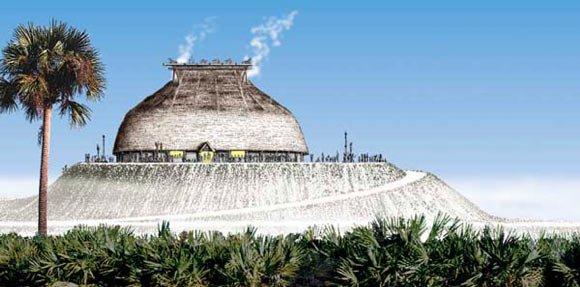
Remote sensing has revealed two large shell mounds, a grand canal, and two large watercourses. A marine highway of 2,000 feet long and 100 feet wide bisected the key. There was a yards long opening to drive fish into the enclosures which would be closed with a gate or net. These structures were built at 1300-1400 CE

The research was published in PNAS;
Victor D. Thompson et al. Ancient engineering of fish capture and storage in southwest Florida. PNAS, published online March 30, 2020; doi: 10.1073/pnas.1921708117

Sci-News has the report here.
http://www.sci-news.com/archaeology/calusa-watercourts-08288.html

Mike Ruggeri’s Moundbuilders/Ancient Southwest News on WordPress
https://mikeruggerismoundbuildersancientsouthwest.news.blog

Mike Ruggeri’s Ancient Mississippian World Magazine
http://bit.ly/1EhnzvE

Calusa People Stored Live Fish in Watercourts

April 6, 2020

The Calusa were a hunter/gatherer/fisher society in Florida and the island of Mound Key

New research indicates they captured and stored fish in walled structures called watercourses made of shell and sediments. They walled off parts of an estuary for short term holding before eating, smoking or drying the fish.

Remote sensing has revealed two large shell mounds, a grand canal, and two large watercourses. A marine highway of 2,000 feet long and 100 feet wide bisected the key. There was a yards long opening to drive fish into the enclosures which would be closed with a gate or net. These structures were built at 1300-1400 CE

The research was published in PNAS;
Victor D. Thompson et al. Ancient engineering of fish capture and storage in southwest Florida. PNAS, published online March 30, 2020; doi: 10.1073/pnas.1921708117

Sci-News has the report here.
http://www.sci-news.com/archaeology/calusa-watercourts-08288.html

Mike Ruggeri’s Moundbuilders/Ancient Southwest News on WordPress
https://mikeruggerismoundbuildersancientsouthwest.news.blog

Mike Ruggeri’s Ancient Mississippian World Magazine
http://bit.ly/1EhnzvE