August 27, 2021

Atacama Desert in Chile Growing Violence at 1000 BCE

At 1000 BCE, ancient Andeans tried farming in the driest desert in the world, the Atacama Desert in northern Chile. At this point, violence exploded with folks using maces, knives, hunting weapons. They were fighting over water and fertile land.

Graves excavated between 3,000-1,400 years old show snapped ribs, broken collarbones, facial mutilation and puncture wounds in the lungs, groin and spine. At least half of the injuries look like they were fatal blows.

There are skinny patches of fertile land in the Atacama Desert where inhabitants irrigated, planted corn, chiles and other crops.

Researchers studied the remains of the dead and found half of the injuries in the dead were fatal. This level of violence is much higher then found in other nearby regions. Males and females were battered, but child abuse is rare. Mace injuries, stabbings were common. The lab at the University of North Carolina studied dental remains from 31 individuals with injuries and 38 individuals with no injuries. They found no foreigners. Some ate a largely seafood diet, others ate food from the valley. So there was conflict between fisherman and farmers.

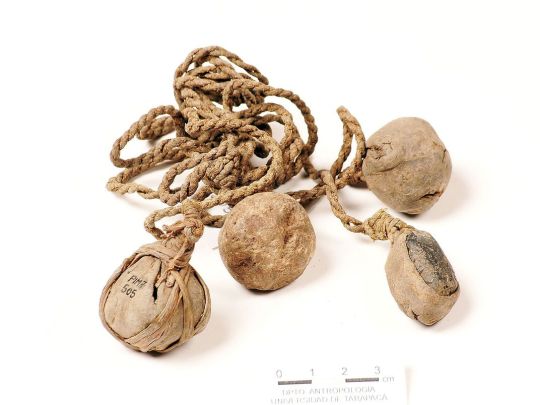
They found spear throwers, knives and other weapons in the graves. Rock art depicts warriors with headdresses and bows and darts. In one village, massive walls were built with stocked sling stones. El Nino cycles around 1000 BCE caused less reliable seafood catch, and drought in the valleys. So wars began over land, water, and food.

The research will be published in the Journal of Anthropological Archaeology.

Smithsonian has the report here:
https://www.smithsonianmag.com/science-nature/human-remains-chilean-desert-reveal-its-first-farmers-fought-death-180978460/

Mike Ruggeri’s Ancient Andean News on Tumblr
http://mikeruggerisancientandeannews.tumblr.com

August 27, 2021

Oldest Archaeological Site in Michigan Uncovered

Researchers in Michigan have found a 13,000 year old Clovis site, which is the oldest archaeological site in Michigan. The site was occupied by 6-7 people. They were hunter-scavengers living on the edge of the retreating mile high glacier at the end of the last Ice Age. Thomas Talbot found the first Clovis point there in 2008, in a field now known as the Belsen Site. The point was of Attica Chert that came from 120 miles away. Talbot found more pieces as the years went by, until he found 20 Clovis tools and a lot of debitage at the site.

A more extensive search of the site was carried out by University of Michigan archaeologists and found an undisturbed layer, and the camp. Protein residue analysis will now take place at a lab in Colorado to identify the plants and animals the points were used on.

The research has been published in the journal PaleoAmerican: • Study: The Belson Site: A Paleoindian Campsite on the Outwash Plains of the Central Great Lakes

The report is here from the University of Michigan;
https://news.umich.edu/farm-field-find-rewrites-archaeological-history-in-michigan/

Mike Ruggeri’s Ancient Americas News on Tumblr
http://michaelruggeriancientamericas.tumblr.com

August 19, 2021

Groundbreaking DNA Research Finds Australasian/Melanesian Ancestry in South America.

DNA studies in 2015 revealed Australasian/Melanesian ancestry in two Indigenous Amazonian groups, the Karitiana and Suruí, Researchers found Australasian ancestry in Indigenous groups living across South America, including those descended from Peru’s Mochica civilization.

They left Siberia 20,000 years ago to Beringia, and left Beringia 15,000 years ago. They are found at the Pre-Clovis site of Monte Verde in Southern Chile 14,800 years ago.

The key to this discovery was locating the genetic Y signal among the groups in the Amazon, on the Brazilian plateau, and in the Peruvian Chotuna people who descended from the Mochica (100-800 CE).

The migrants took a coastal route and split off in the central plateau and the Amazon 15,000-8,000 years ago.

The researchers need to find the Y signal in coastal areas to solidify their claims. And they have to find out why the Y signal has not been found in North or Central America. They may have died out by way of larger groups taking over from the north or the genocide of the Spanish conquest.

The research is published in the Proceedings of the National Academy of Sciences

(My note: There have been many other earlier studies that pointed in this direction. This study brings us closer to the story)

Sciencemag has the report here:
https://www.sciencemag.org/news/2021/03/earliest-south-american-migrants-had-australian-melanesian-ancestry

Mike Ruggeri’s Pre-Clovis and Clovis News on Tumblr
http://mikeruggerispreclovisnews.tumblr.com

August 18, 2021

9,000 Year Old Obsidian Artifacts Found Under Lake Huron

An underwater archaeological team from the University of Texas, the University of Michigan, Lake Superior National Marine Conservation Area, the University of Missouri Research Reactor Center, the Northwest Research Obsidian Studies Laboratory and the University of Georgia have found 9,000 year old obsidian tools under Lake Huron that originated 2,500 miles away from the well-known Wagontire site in Central Oregon. These are the farthest east these western obsidian artifacts has ever been found.

This research was part of a study on caribou hunters at the end of the last Ice Age.

More information: John M. O’Shea et al, Central Oregon obsidian from a submerged early Holocene archaeological site beneath Lake Huron, PLOS ONE(2021).  DOI: 10.1371/journal.pone.0250840

Phys.org has the report here:
https://phys.org/news/2021-06-underwater-site-team-year-old-stone.html

August 14, 2021

Important Discovery at Teotihuacan

Four bouquets of ancient flowers have been found 59 feet below the Temple of Quetzalcoatl at Teotihucan. These are the first ancient botanical artifacts found at Teotihuacan. They are amazingly preserved and still tied together by cotton strings.

Sergio Gomez and his team have also found ceramics in the tunnel below the Temple from various phases of Teotihuacan history during this excavation. They have not removed the bouquets to preserve the humidity and conditions in the tunnel that preserved these flowers. They also found many kilos of charcoal that were the remains of ritual ceremonies which involved the burning of seeds and fruits.

They have found a censor with a slope and board, but have not provided a photo.

Gomez and his team have found 100,000 objects including ceramics, obsidian, shells, snails, rubber, hair, big cats and birds remains. They have also found a half a kilo of cocoa beans in good condition at the end of the tunnel, imported from Maya realms.

La Jornada has the report here (in Spanish) with a video.
https://www.dailymail.co.uk/sciencetech/article-9891095/Bouquets-flowers-left-offerings-gods-1800-years-ago-Teotihuacan-pyramid.html

Daily Mail has some photos here:
https://www.dailymail.co.uk/sciencetech/article-9891095/Bouqu
ets-flowers-left-offerings-gods-1800-years-ago-Teotihuacan-pyramid.html

August 12, 2021

Maya Built Very Modern Water Filtration Systems at Tikal in Guatemala


The Maya built reservoir 2,185 years ago at the site of Tikal, early in its history. It relied on crystalline quartz and zeolite, a compound of silicon and aluminum to create a molecular sieve which removed harmful microbes, heavy metals and other pollutants, and these remained in use until Tikal was abandoned around 1100. Today, the same minerals are used in modern water filtration systems, and not discovered for use in modern times till the 20th century.

Other reservoirs in the area were polluted with mercury from pigments the Maya used on walls and burials. The quartz and zeolite came from 18 miles away. Teams will now look for similar techniques at other sites.

Smithsonian has the report here with photos:

https://www.smithsonianmag.com/smart-news/researchers-uncover-2000-year-old-mayan-water-filtration-system-180976186/?utm_source=facebook.com&utm_medium=socialmedia&fbclid=IwAR2Mt0HJYd1g2vFxVY-eT7k0x88ZbEhrDnktifJ9GSEoRf7ks6bvCtpHrOM


August 12, 2021

Extensive Ruins Found in the Northern Yucatan With LIDAR

Archaeologists using billions of LIDAR shots at the ground in the Puuc region of the Yucatan have found extensive Maya structures including artificial reservoirs, 1,200 ovens, farming terraces, 8,000 housing platforms, each house having 2-3 rooms. Four large acropolises dating from 700 BCE-450 BCE, civic centers built from 600-750 CE in very distinct city layouts not seen elsewhere. Elite housing was dispersed throughout, and not concentrated. No defensive structures exist. This looks like a very large peaceful community.

They built cisterns to collect rainwater in their limestone terrain, and aqueducts with long channels. They had a widespread stone working industry with quarries and 1,232 circular ovens to heat sandstone to produce lime for mortar and to soften maize for help with nutrients.

The study was published online Wednesday (April 28) in the journal PLOS One.

Live Science has the report here with photos:
https://www.livescience.com/lidar-maya-yucatan.html?fbclid=IwAR0qHtd6UyROLqZm0WpDvLuG59VgGdsW9j0HWFKa1x_E0pf84t8hBls4bSc


August 12, 2021

The Rise and Fall of a Maya “Bannerman”

June 24, 726 CE, Ajpach ‘Waal met with the great 18 Rabbit at Copan in Honduras. Ajpach ‘Wall was from El Palmar 200 miles away over rugged terrain, a month on foot away. The meeting was memorialized on a monument at Copan and on a monument at El Palmar. Ajpach ‘Waal’s title was “Bannerman.” He may be buried near the monument. The monument was constructed on September 14 CE. There is a staircase with 164 limestone block glyphs, unusual for a site so small. The ruler of Calakmul is depicted, belonging to the Snake dynasty. Ajpak ‘Waal went to Copan on behalf of the king of Calakmul, perhaps to broker an alliance against Tikal.

Ajpjk ‘Waal was a royal diplomat or Lakam. The possible burial site of Ajpach was very modest. The bones found indicate the life of a man who had malnutrition and possibly scurvy. He had shin injuries possibly related to playing the ball game, and ballplayers are depicted in the glyphs. He had severe arthritis like a Lakam you have hiking long distances over rugged terrain. He had jade and pyrite teeth inlays.

On May 3, A.D. 738, 18 Rabbit was captured and beheaded by rebels from Quiriguá, supported by Ajpach’ Waal’s patron, the king of Calakmul. Calakmul itself then fell to Tikal.
After that Ajpach’s standing fell, and he could not pay for a missing tooth with an inlay. His burial place was celebrated with a fire ceremony and maintained by his family.

Archaeology.org has the story with photos:
https://www.archaeology.org/issues/430-2107/features/9751