December 30, 2019

A Vast Palace Structure Uncovered at the Maya site of Kaluba in the Yucatan

INAH has unearthed a vast Maya palace at the site of Kaluba, in the Yucatan. There are six rooms in the structure. It is part of a larger complex that also includes two residential rooms, an altar and a large round oven. Archaeologists have also uncovered remains from a burial site, and hope forensic analysis of the bones could provide more clues about Kulubá’s Mayan inhabitants.

The palace was in use from 600-900 CE, and then again from 850-1050 CE. The structures uncovered are just part of the vast complex yet to be uncovered.

INAH is considering bringing back some of the forest cover to protect the site from the elements.

The Guardian has the report here with photos and a video;
https://www.theguardian.com/world/2019/dec/27/archaeologists-discover-remains-of-vast-mayan-palace

A Vast Palace Structure Uncovered at the Maya site of Kaluba in the Yucatan

December 30, 2019

INAH has unearthed a vast Maya palace at the site of Kaluba, in the Yucatan. There are six rooms in the structure. It is part of a larger complex that also includes two residential rooms, an altar and a large round oven. Archaeologists have also uncovered remains from a burial site, and hope forensic analysis of the bones could provide more clues about Kulubá’s Mayan inhabitants.

The palace was in use from 600-900 CE, and then again from 850-1050 CE. The structures uncovered are just part of the vast complex yet to be uncovered.

INAH is considering bringing back some of the forest cover to protect the site from the elements.

The Guardian has the report here with photos and a video;
https://www.theguardian.com/world/2019/dec/27/archaeologists-discover-remains-of-vast-mayan-palace
December 24, 2019

A Massive Pyramidal Structure Uncovered in Peru

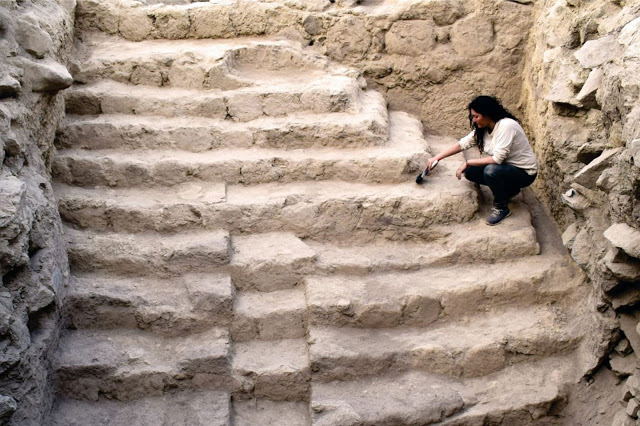
A massive pyramidal structure has been uncovered at the Sechin Archaeological Project dating back to 3000 BCE. The archaeologists dug deep and found a series of steps that may have served as the seat of government of the ancient Sechin culture. They also found two skulls of an adult and child and a dismembered skeleton. There is an adobe wall at the top of the steps with the ancient fingerprints of the builders made when they put their fingers into the wet clay of the bricks.

Ancient Origins has th3e story with photos here;
https://www.ancient-origins.net/news-history-archaeology/peruvian-pyramid-0012915

Mike Ruggeri’s Oldest Andean Cultures
https://mikeruggerisoldestandeancultures.home.blog

A Massive Pyramidal Structure Uncovered in Peru

December 24, 2019

A massive pyramidal structure has been uncovered at the Sechin Archaeological Project dating back to 3000 BCE. The archaeologists dug deep and found a series of steps that may have served as the seat of government of the ancient Sechin culture. They also found two skulls of an adult and child and a dismembered skeleton. There is an adobe wall at the top of the steps with the ancient fingerprints of the builders made when they put their fingers into the wet clay of the bricks.

Ancient Origins has th3e story with photos here;
https://www.ancient-origins.net/news-history-archaeology/peruvian-pyramid-0012915

Mike Ruggeri’s Oldest Andean Cultures
https://mikeruggerisoldestandeancultures.home.blog

December 15, 2019

Human Bones at the Maya Site of Uxul Researched

Maya archaeologists found human bones in a water reservoir in the Maya city of Uxul in 2013.  They were killed and dismembered at 600 CE. UNAM has carried out a strontium isotope analysis. Some of the dead came from 95 miles away in Guatemala. Some were locals of high status with jade and engravings on their teeth. Most of the bones had cuts and injuries done by stone blades. The victims were beheaded and dismembered before being thrown into the reservoir. The body parts were widely scattered to destroy the physical unity of the individuals.

This kind of ritual was carried out on prisoners of war to display the power of the victor.

Phys.org has the report here.
https://phys.org/news/2019-12-isotope-analysis-mayan-prisoners-war.html?fbclid=IwAR1dcJWx3C6-scDgTXBWKRGeK3kzLBajcB-EAGf4-3FrKji-GzNIYzxWuC0

Mike Ruggeri’s Ancient Maya News on WordPress
https://mikeruggerismaya.news.blog

Human Bones at the Maya Site of Uxul Researched

December 15, 2019

Maya archaeologists found human bones in a water reservoir in the Maya city of Uxul in 2013. They were killed and dismembered at 600 CE. UNAM has carried out a strontium isotope analysis. Some of the dead came from 95 miles away in Guatemala. Some were locals of high status with jade and engravings on their teeth. Most of the bones had cuts and injuries done by stone blades. The victims were beheaded and dismembered before being thrown into the reservoir. The body parts were widely scattered to destroy the physical unity of the individuals.

This kind of ritual was carried out on prisoners of war to display the power of the victor.

Phys.org has the report here.
https://phys.org/news/2019-12-isotope-analysis-mayan-prisoners-war.html?fbclid=IwAR1dcJWx3C6-scDgTXBWKRGeK3kzLBajcB-EAGf4-3FrKji-GzNIYzxWuC0

Mike Ruggeri’s Ancient Maya News on WordPress
https://mikeruggerismaya.news.blog


December 3, 2019

3000 Year Old Water Temple uncovered in Peru

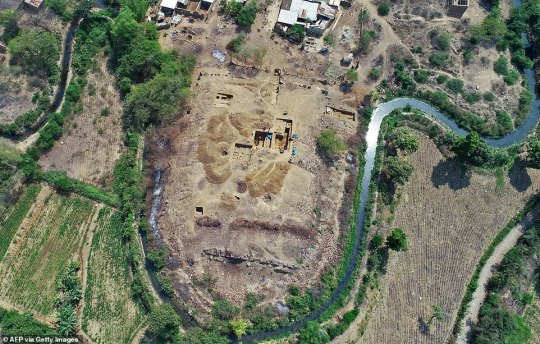
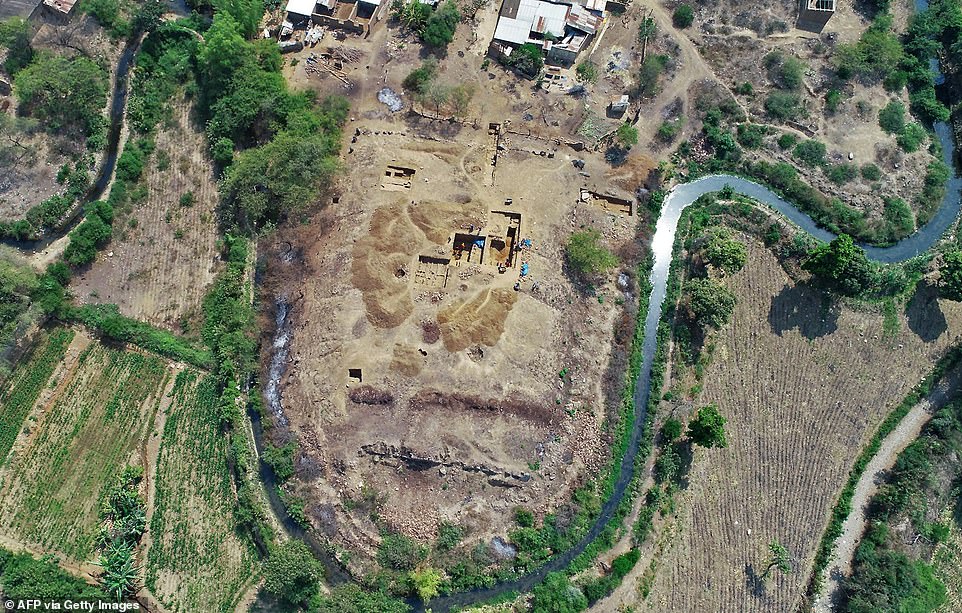
A 3,000-year-old ‘water cult’ temple used for fertility rituals has been discovered in Peru in the Lambayeque region by a team of Peruvian archaeologists led by the famed Walter Alva. The tempo includes large blocks and a central staircase. It is located in the springs of the Zana valley and has holes similar to other water cult sites.

Huge walls surround the temple.

There are 21 tombs there dating to 1500 BCE-292 CE. Ceramics and metal object including knives. The tombs were re-used by the Inca in a later era.

The temple’s age is in the formative period predates major hydraulic works. It is located between rivers and there are small wells shows that this site is one where water is shown to be of great importance in the Formative period. The temple was abandoned by 250 BCE. After the Chimu culture used it as a burial place around 1300 CE.

20 of the burials were from the Chimu era. There was one Formative era burial buried east to west and with a ceramic bottle with two spouts and a bridge handle that was a Formative era style

It was built in three stages; 1500-800 BCE the foundations were built. 800 BCE-400 BCE the temple was built with Chavin influences. 400-100 BCE circular columns used to hold up the roof.

The reports are found in the Daily Mail and Live Science with lots of photos in each report;
https://www.dailymail.co.uk/sciencetech/article-7685227/Archaeologists-3-000-year-old-megalithic-temple-Peru.html

https://www.livescience.com/ancient-megalithic-temple-discovered-peru.html

Mike Ruggeri’s Ancient Andean News on WordPress
https://mikeruggerisancientandean.news.blog

3000 Year Old Water Temple Uncovered in Peru

December 3, 2019

A 3,000-year-old ‘water cult’ temple used for fertility rituals has been discovered in Peru in the Lambayeque region by a team of Peruvian archaeologists led by the famed Walter Alva. The tempo includes large blocks and a central staircase. It is located in the springs of the Zana valley and has holes similar to other water cult sites.

Huge walls surround the temple.

There are 21 tombs there dating to 1500 BCE-292 CE. Ceramics and metal object including knives. The tombs were re-used by the Inca in a later era.

The temple’s age is in the formative period predates major hydraulic works. It is located between rivers and there are small wells shows that this site is one where water is shown to be of great importance in the Formative period. The temple was abandoned by 250 BCE. After the Chimu culture used it as a burial place around 1300 CE.

20 of the burials were from the Chimu era. There was one Formative era burial buried east to west and with a ceramic bottle with two spouts and a bridge handle that was a Formative era style

It was built in three stages; 1500-800 BCE the foundations were built. 800 BCE-400 BCE the temple was built with Chavin influences. 400-100 BCE circular columns used to hold up the roof.

The reports are found in the Daily Mail and Live Science with lots of photos in each report;


https://www.dailymail.co.uk/sciencetech/article-7685227/Archaeologists-3-000-year-old-megalithic-temple-Peru.html

https://www.livescience.com/ancient-megalithic-temple-discovered-peru.html

Mike Ruggeri’s Ancient Andean News on WordPress
https://mikeruggerisancientandean.news.blog