

MIKE RUGGERI'S ANCIENT AMERICAS NEWS
News of the Ancient Americas from the Ancient Andes to Mesoamerica to Ancient North America
November 21, 2014
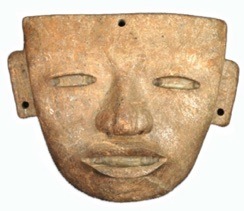
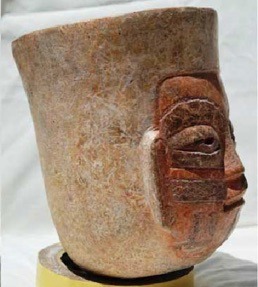
New electron research into Teotihuacan masks reveals surprising proof that the iconic stone masks were made far from Teotihuacan and from materials that were not really jadeite. Researchers studied 150 of the 600 masks held in museums around the world. They found they were made from serpentine, travertine and limestone, and other softer stones and polished with quartz, which does not exist at Teotihuacan. They found 3 fakes among them. They now believe the masks were made by artisans in Puebla and carried to Teotihuacan. They were also able to source the microscopic remains of algae on the masks to identify their Puebla region origins.
Scientific American has the report here;
http://www.scientificamerican.com/article/electron-beam-points-to-origins-of-teotihuacan-stone-faces/
November 13, 2014
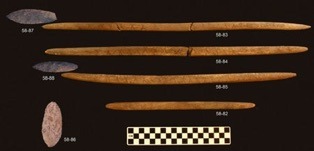
Archaeologists from the University of Alaska at Fairbanks have uncovered the remains of an infant who died at 12 weeks and a fetus that died shortly before birth. The dates of these infants are at 9,500 BCE. The site would have been the area of Beringia during the last ice age. The site where they were found, at Upward Sun River, shows signs of long term occupation, including the oldest residential structures found in Alaska. Stone projectile points that made up a hafted biface spear, and antler rods were placed in the burials, and all were covered with red ochre. The infants may have been twins. Burials of children within residential structures have been found at the site of Ushki in Siberia, and the biface stone points are similar to those found at the Anzick site in Montana.
Science Magazine has the story here;
http://news.sciencemag.org/archaeology/2014/11/infant-burials-could-help-solve-mystery-who-settled-new-world
Western Digs adds that the antler shafts found in the burial are much longer then others found in North America, and are similar to those found in Siberia. Three of the shafts were covered in multiple X patterns, a new discovery in North American hunting tools.
The research is posted in the Proceedings of the National Academy of Sciences.
Western Digs has the report here with photos of the tools;
http://westerndigs.org/twin-ice-age-infants-discovered-in-11500-year-old-alaska-grave/
November 12, 2014
42 children and 76 llamas sacrificed by the Chimu Culture in Peru at 1400 CE have been uncovered by archeologist John Verano. The Chimu site is near the sea, so the children may have been sacrificed as a gift to the sea. The llamas may have been seen as guardians in the underworld.
Fox News has the story here;
http://www.foxnews.com/science/2014/11/02/mass-sacrifice-children-llamas-uncovered-in-peru/

November 5, 2014
Archaeologists have found a Pre-Columbian village in Colombia dating to 900 BCE-1500 CE. It is the biggest site ever found in Colombia. This discovery changes the idea that Pre-Columbian groups living aroud the area of Bogota were nomadic. Many of the artifacts found are of museum quality.
Colombia Reports has the story here with many good photos;
http://colombiareports.co/archaeologists-recover-remains-pre-columbian-village-central-colombia/
October 30, 2014
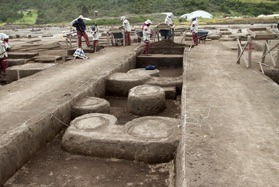
INAH archaeologists have been digging into tunnels below the Pyramid of the Sun for the last year. They have dug their way to the end of a 340 foot long tunnel and have found an entrance to a burial chamber. They have made their way two feet into the chamber. It will take a year to complete that dig. The tunnel was sealed off in 250 CE. They may find the grave of a Teotihuacan ruler in the chamber. A find that has eluded all archaeologists at the site since it began its excavation history.
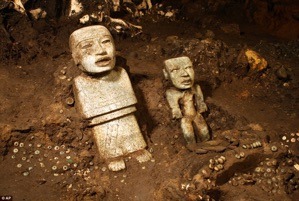
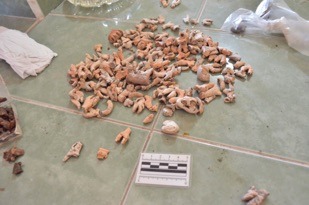
PhysOrg. has a short report and many stunning photos of the finds so far, including large caches of conch shells and great and untouched Teotihuacan figurines.
http://phys.org/news/2014-10-mexico-archaeologists-explore-teotihuacan-tunnel.html
50,000 objects have been found in the tunnel including jade, shell, stone and pottery pieces, including pottery of a kind never before seen at Teotihuacan.
The Daily Mail has an even more stunning collection of beautiful photos of the objects in the tunnel and a video as well. The Daily Mail always has the best photographed displays of archaeological finds.
http://www.dailymail.co.uk/sciencetech/article-2813097/Filled-artifacts-ancient-Mexican-tunnel-lead-royal-tombs.html
October 25, 2014
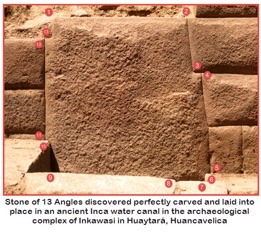
Peru’s Ministry of Culture has annouced the finding of an Inca carved stone with 13 angles. The stone is in two interconnected fountains that run straight and then zigzag to slow down water flow into the river. The previous most angled stone was a 12 angled one in Cusco that was part of the palace of Inca ruler Inca Roca.
Fertur Travel blog has the most detailed photos of the two stones here;
http://www.fertur-travel.com/blog/2014/famous-12-angle-inca-stone-topped-but-not-overshadowed-by-13-angle-stone/9422/
October 25, 2014
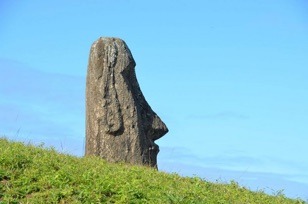
Danish genetic researchers have analyzed the genomes of 27 Rapa Nui individuals and found genes related to Native Americans before any European admixture. The Native American admixture dated to 1280-1495 CE. The same geneticists had examined two skulls of the “Botocudos” of Brazil and found their ancestry was Polynesian, with no detectable Native American traits. The latest findings indicate that Native Americans sailed to Rapa Nui or Polynesians sailed to America and back. The odds are with Polynesian sailings due to ocean currents and winds.
The study is published in the peer reviewed; Cell Press journal, Current Biology.
Popular Archaeology and Science Daily have the news here;
http://popular-archaeology.com/issue/fall-09012014/article/genetic-study-shows-early-contact-between-easter-islanders-and-south-americans
and
http://www.sciencedaily.com/releases/2014/10/141023131655.htm
October 24, 2014
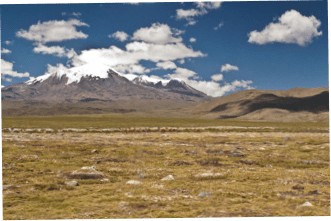
A National Geographic financed team has published a report in the peer reviewed journal Science that evidence of human activity in the high Peruvian Andes has been found in an oasis like region in this high desert area. An ancient campsite was found and two obsidian quarry sites, as well as stone tools and arrowheads. Radiocarbon dating places this site at 10,800 BCE. Vicunas and Llamas were the hunting draw for these folks, who came to this camp seasonally. Oxygen levels at this site are only 60% normal strength. This reveals that these people did not need long time periods to adjust to these altitudes, and that humans spread across South American rapidly. Ice Age glaciers disappeared in this basin at 13,000 BCE.
National Geographic has the report here with photos;
http://news.nationalgeographic.com/news/2014/10/141023-paleo-indians-migration-pucuncho-basin-andes-south-america-archaeology/
And the Boston Globe has more details here;
http://www.bostonglobe.com/news/science/2014/10/23/maine-researchers-find-oldest-highest-human-settlement-andes/3GALsnNYQlior0I8WH8k1H/story.html
October 1, 2014
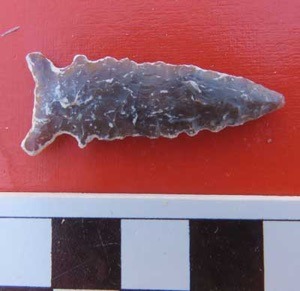
Archaeologists surveying near the Petrified Forest have found two villages dating to 700 CE. The first village had 50-75 structures lined with sandstone slabs, even though there is no stone nearby. Then, in the next season, the same team found another village with the same features about a mile away. Brown ceramics and stone points found there match the late Basketmaker period. The team found a smaller sandstone lined village with no pottery that probably pre-dates the two larger villages. These villages are transitional between hunting and gathering and more elaborate Chaco period sites. And the location of the sites may have been on a pilgramage path.
Western Digs has the story and photos here;
http://westerndigs.org/twin-1300-year-old-villages-discovered-in-arizona-sand-dunes/
September 17, 2014
University of Bristol researchers are studying pottery from Teotihuacan to determine if Teotihuacanos drank alcoholic beverages and in what quantity. They have found the residue of fermented maguey sap in vessels sealed with pine resin. They ground up 300 pottery sherds dated from 200-550 CE to find and analyze residues of alcohol making bacterium found in pulque. Because maize was the most important crop at Teotihuacan, the low rainfall and limited groundwater made maize production risky. So the Teotihuacanos grew agave and turned that into pulque. This would have provided them with essential nutrients that are missing in maize, such as vitamin B and iron.
Murals at Teotihuacan may depict scences of people drinking pulque. The team will now study sherds from other areas of Central America for similar residues. The research is posted in the Sept. 15 issue of the Proceedings of the National Academy of Sciences.
Live Science has the report here;
http://www.livescience.com/47846-teotihuacan-alcohol-discovered.html

September 3, 2014
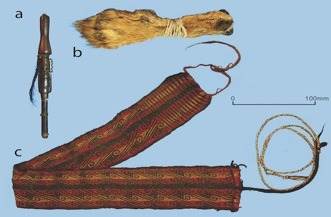
Researchers have found sophisticated drug paraphernalia at a Tiwanaku site called Cueva del Chileno in Bolivia dated at 500 CE. Snuffing tablets, a wooden snuffing tube, colorful headbands and more were found at the site. The snuffing tablets were used to spread out the psychotropic drugs, and the tubes were used to inhale them. Monoliths from the region show individuals holding chicha drinking cups in one hand and a snuffing tablet in the other. The drugs were used by shaman to mediate between the living and the dead. Shaman wore animal costumes depicting pumas and condors. Animal and human sacrifice was carried out at the site. An elite group held control over the substances, while the public was allowed access during healing ceremonies and public events.
Discovery.com has the story here with slides;
http://news.discovery.com/history/archaeology/psychedelic-culture-tripped-circa-500-ad-140902.htm
August 29, 2014
INAH Archaeologists have found eight new sites of Olmec influence in Guerrero. Olmec style figurines, greenstone axes, jadeite, white ceramic bowls have been found at San Marcos, San Luis Acatlán, Acapulco, Atoyac, Ometepe and Petatlán. The Olmec trade system is now better understood as a result of these findings. The sites linked the Olmec heartland to Oaxaca, Chiapas, and the Pacific coast. INAH says the research into the Olmec presence in Guerrero will cover eight volumes, written by 20 specialists.
INAH has the report here (in Spanish) with a slide show of some of the Olmec influnced items. (click on the tiny white camera icon to see the slideshow).
http://www.inah.gob.mx/boletin/2-actividades-academicas/7309-identifican-nuevos-sitios-de-filiacion-olmeca-en-guerrero
August 26, 2014
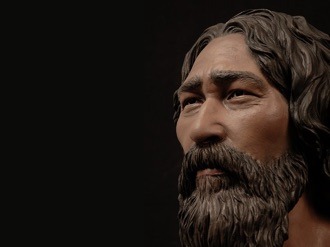
The Kennewick Man researchers have finally released their long awaited final report on Kennewick Man in a 688 page, peer reviewed book, ,“Kennewick Man: The Scientific Investigation of an Ancient American Skeleton,” that will be published this fall by Texas A&M University Press. The book has contributions from five dozen authors who studied Kennewick Man, using all the instruments of modern forensics.
He was a seal hunter who died at 7000 BCE. He had a projectile point in his hip, five broken ribs, two dents in his skull.
He came from Alaska or the Aleutians, or all the way from Asia. He lived off of seals and other marine mammals and drank glacier melt water. His body was wide set, similar to Inuit peoples in Alaska. The skull and long bones show affinity with Asian coastal groups, especially Polynesians. His skull is not like later Native American skulls. It resembles the skull of a young girl found in a submerged cave in the Yucatan and the skull of a man found in the Channel Islands, off of California. His skull most closely matches Polynesian skulls near New Zealand. His type also has elements form the Jomon People of Korea and the Ainu of northern Japan.
He may have belonged to a hunter group that followed the ice edges around the northern rim of the Pacific. This was like an ancient highway back and forth. The opposing viewpoint is that Kennewick Man and all Native Americans are descended from isolated populations in Beringia, who came in waves, after the glaciars receded. There are finally genetic tests taking place on Kennwick Man in Denmark. This will give us much needed support for any theories on his origins.
The Washington Post has the report here;
http://wapo.st/1ls7QR6
And Smithsonian Magazine adds that his grave was 300 miles inland from the sea, and yet, the evidence shows that he ate only marine mammals in the last 20 years of his life. He also drank cold glacier water of the type found in Alaska and not in the area of his death. This lends itself to the idea that he was a long distance traveler. He was buried with care, so he lived in a small band of travelers. This article also has the most detailed reconstruction of his face.
Smithsonian Magazine report;
http://bit.ly/VM1obt
August 17, 2014
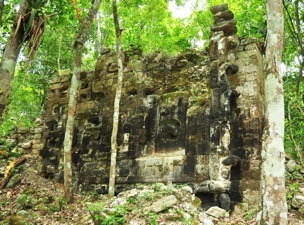
A Slovenian team has uncovered two large Maya sites in Campeche. One of the sites had been located in the 1970’s and was then lost, until this new expedition. The sites are called Lagunita and Tamchen. These sites are in a vast unexplored territory in the central lowlands between the Rio Bec and Chenes regions. Lagunita has a ball court and a temple pyramid and massive palaces around four major plazas. There is a huge monster-mouth doorway representing fertility and the earth. 10 stela and three altars with well preserved reliefs with hieroglyphs are present. Stela 2 has the date 711 CE. Tamchen is 4 miles to the north, also with large monuments. It was settled at 300 BCE-250 CE. The number of inscriptions found at the sites are rare for the Rio Bec region. Both sites were abandoned in 1000 CE. But there are post-classic remains. There are many artistic peculiarities at these sites. INAH is working with the Slovenian team. This is a very major find in the Maya realm.
The Slovenian journal Misli has the report here with photos and videos;
http://ms.sta.si/2014/08/two-ancient-maya-cities-discovered-in-the-jungle-of-southeastern-mexico/
August 15, 2014
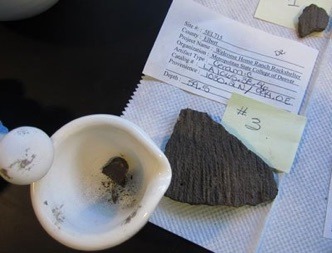
Archaeologists have analyzed pottery sherds from a rockshelter in Colorado and found traces of salicylic acid, derived from willow bark. The residues are a 70%-93% match to salicylic acid. The sherds date to 586-692 CE. This may be the earliest physical evidence of this chemical, used in making modern day aspirin, in North America. The ethnographic record proves the widespread use of willow bark throughout the West and Great Plains. The sherd with the concentration of the pain killer may have been a “medicine pot” used for medicinal purposes.
Western Digs has the report here, with two photos;
http://westerndigs.org/prehistoric-pottery-found-in-colorado-contains-ancient-natural-aspirin/
August 10, 2014
From 1140-1180 CE, several centuries of relative peace in central Mesa Verde, Colorado, broke down into widespread violence. Washington State University and University of Colorado at Boulder archaeologists found that nine out of ten sets of human remains in this area had trauma to their heads or other parts of their body. In the northern Rio Grande, during the same time period, there was far less violence despite the same growth and population pressure. The northern Southwest went from 40,000 population in the mid 1200s to zero in 30 years. the northern Rio Grande people were able to join and identify with larger pueblo organizations and societies. They also had more commercial exchange, so that people were able to obtain what they wanted and needed. In the central Mesa Verde, there was less specialization. Trade and commerce appears to be a pacifying influence on populations. After 1160 CE, Chaco and its surrounding communities disappeared as a result of drought and an out migration of populations that left the remaining smaller populations there vulnerable to raids.
Past Horizons has the report on the study which will be published in American Antiquity;
http://www.pasthorizonspr.com/index.php/archives/08/2014/four-decades-of-violence-in-12th-century-mesa-verde

August 1, 2014
Shaft tomb structures with rich offerings and human remains have been found in Sinaloa, at the limits of Mesoamerica. The tombs are dated to 150-450 CE. This is a unique find for Sinaloa. Dozens of miniature figurines, mostly females, and some playing musical instruments, as well as turquoise pieces were found, among other artifacts. The tombs and artifacts are in similar style to the ancient West Mexico tradition. Human skeletons with the bones painted red were uncovered. It now appears there were cultural relationships between ancient West Mexico and southern Sinaloa earlier than thought.
INAH has the extensive report here (in Spanish), with a lot of detail on the various finds and a great slide show of the finds. (Click on the tiny white camera icon to see the slideshow.)
http://bit.ly/1nm8m1G
Art Daily has a report in English here;
http://artdaily.com/index.asp?int_new=71769&int_sec=11#.U9voKlaF8zI
 MIKE RUGGERI'S ANCIENT AMERICAS NEWS