
MIKE RUGGERI'S ANCIENT AMERICAS NEWS
News of the Ancient Americas from the Ancient Andes to Mesoamerica to Ancient North America
March 10, 2015
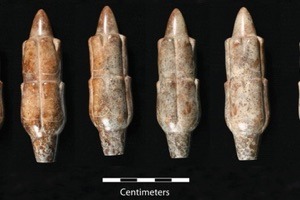
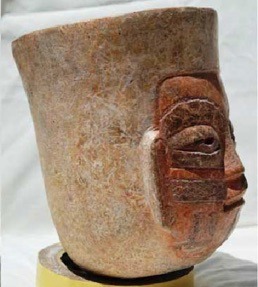
A mottled brown and white jadeite artifact dated to 900-400 BCE has been uncovered from the underwater site of Arroyo Pesquero in Veracruz. There are glyph like designs on it. The design is Olmec in style, and it comes from the Olmec era, and the site is 10 miles from the Olmec site of La Venta. The design and iconography look like they are related to corn. It may have served as the base of a bloodletter or a ruler bar. Thousands of offerings have been excavated from the site. The site is a place where fresh water and salt water converged, and in the Olmec land of stagnant swamps, fresh water sources would have been sacred, and offerings made as a result.
LiveScience has the report here with a photo of the artifact;
http://www.livescience.com/50080-mysterious-jade-artifact-discovered-in-mexico.html
A site project web site
http://anthro.fullerton.edu/Pesquero/
Some of the iconography of artifacts from the site
FAMSI © 1999: Frank Kent Reilly, III
Olmec-style Iconography
http://www.famsi.org/reports/94031/94031Reilly01.pdf
March 6, 2015
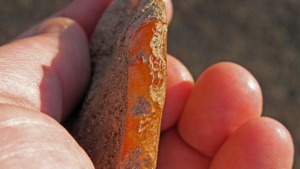
Archaeologists have uncovered a scraper chipped from orange agate at the Rimrock Rock Shelter in Oregon. It was found under volcanic ash, 12 feet below the surface from Mount St. Helen’s, that has been dated at 15,000 years ago. If this date holds up, it will be another Pre-Clovis dated find from Oregon, with the Paisley Cave site as the other Pre-Clovis site, and where DNA evidence, tool evidence and stratigraphy evidence shows proof of Pre-Clovis activity at the site. The problem with this Rimrock Shelter find is that it has not yet been published in a peer reviewed journal, nor been subjected to outside research. And the chipped agate has to have been shown to have not slipped down through the ash layers so that it is not really as old as the ash covering at that depth.
(my note; So this find is not in the same league as the proven Pre-Clovis finds at Monte Verde, Chile or Paisley Cave, Oregon. The Monte Verde finds have withstood the test of time. Numerous tests have been done on the stratigraphy layers where human artifacts were found by many outside groups. None of these groups diputed those finds after testing. The fabric material, tools, footprints and housing posts also have undergone testing over time, and the dates continue to show Pre-Clovis in time. The human DNA found on human chewed seaweed at the site also correlates with the Pre-Clovis dates proven so far. Unless all scientific testing is totally faulty, Monte Verde is proven Pre-Clovis. And if all scientific testing and peer group testing is faulty, then archaeologists cannot date anything correctly. The Monte Verde dates are as proven as any dates proven in the field. At Paisley Cave, human coprolites were found and dated at Pre-Clovis. The stratigraphy layer of the tools has been verified at Pre-Clovis. The Paisley Cave finds are not as old as Monte Verde, so there will be more peer group testing at that site.)
Fox News printed this AP report, with a photo of the agate;
http://www.foxnews.com/science/2015/03/06/excavation-at-oregon-site-unearths-ancient-stone-tool/
February 25, 2015
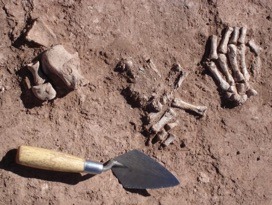
A man and girl were buried at the Horn Shelter Site in Texas 11,100 years ago. Smithsonian is analyzing the bones and grave goods, and Harvard is looking at the DNA. The 40 year old male had a medicine bundle of red ochre pigment, seashells, badger claws, hawk talons, turtle shells. His arms appear to be those of a drummer. The 11 year old girl may have been sacrificed to accompany the shaman into the afterlife. The turtle shells were placed over the man’s face and under his head, and the grave is in the shape of a turtle. There is a sharpened coyote tooth used for scarification. The skeletons were found in 1970.
(My note; This is one of the frustrations on dealing with the ancestry of ancient Americans, it takes so long for studies to commence. Only now, after 44 years are DNA and other extensive studies being done on the earliest bodies ever found in Texas.)
The WacoTrib has the story with photos here;
http://www.wacotrib.com/news/higher_education/smithsonian-sheds-light-on-shaman-and-girl-buried-on-the/article_fec2b8c9-e100-5082-a1e1-5791025981f3.html?mode=jqm

February 24, 2015
Archaeologists have found an ancient mortuary in Bolivia at the site of Khonkho Wankane, where corpses were defleshed and cleaned to carry in pieces. The bodies were boiled in pots of quicklime. The human remains were found in a circular building where there were 1000 teeth and small bones sheathed in white plaster. Ceramics and tools made from llama bones were also in white plaster. Blocks of quicklime were found for the use of defleshing the bones. Body parts were found in this substance, and carvings on a pillar show a human with defleshed ribs. The site was in use for 400 years. Since small bones remain there, the big bones were probably carried away. In this area, the dead were often disinterred for rituals and consultation. The people that stopped at the site were itinerant llama drivers who took the dead on the road with them.
The research is published in the journal Antiquity.
USA Today has the report here with a photo;
http://www.usatoday.com/story/experience/food-and-wine/news-festivals-events/2015/02/22/mortuary-andean-mountain-ancient-chile/23715911/
February 23, 2015
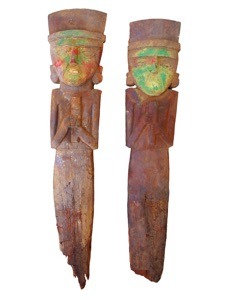
Archaeologists have found two wooden sculptures in a Chimu tomb in Peru. They are of male musicians. They once wore copper masks. The flutes they carry are identical to the 16 bamboo flutes that were also found in the tomb, along with woven cloth and pottery. One pottery vessel depicted the Chimu goddess of the moon, weavers and the sea. the tomb may have belonged to noble musicians and weavers. The wooden sculptures may represent a last musical ceremony actually held for the departed in the tomb.
Archaeology.org has the report here with a photo of the wooden sculptures;
http://www.archaeology.org/issues/128-1403/artifact/1732-artifact-chimu-musical-funerary-idols
February 22, 2015
A mural found in 2010 by a grad student at the site of Xultun in Guatemala, dated to 750 CE, shows intellectuals conversing with a royal governor dressed as the wind god.The mural also gives information about a man buried beneath him. The area below was excavated and the man’s skeleton was uncovered dressed like one of the men in the mural. William Saturno excavated further and found a mural of a king in a blue feathered headdress with a man kneeling before him who was called junior obsidian. Behind them, on another wall, are three black clad men, one who is called senior obsidian. They wear the same headdress and clothing. The murals surprisingly are painted in the residence of a court official and not of royalty. This and much more interpretation of the three walled mural has been published in the February issue of Antiquity.
Live Science has the report here with illustrations of the murals;
http://www.livescience.com/49855-obsidian-maya-mural-guatemala.html

February 15, 2015
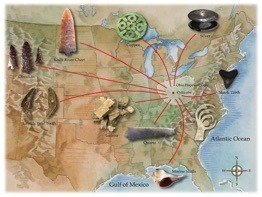
Bradley T. Lepper is looking at the Hopewell Interaction Sphere to try and understand its main components. The Interaction Sphere is primarily a mortuary-ceremonial and religious interaction sphere. Lepper now believes that the Interaction Sphere is primarily a network of pilgrimage centers. Followers brought exotic raw materials and finished craft items to places like the Hopewell Mound Group and the Newark Earth Works. The pilgrims would return home to spread the religious ideas and establish local centers for the main religious ideas to be promulgated. They would bring home bladelets made from Ohio flint ridge material as tokens of visitation.
Research is showing that Ohio Flint Ridge flint bladelets were an important symbol of the Hopewell Interaction Sphere. At Pinson Mounds in Tennessee, 25% of the bladelets found there were from Flint Ridge, Ohio. And another 20% possibly from Flint Ridge. At Ohio sites, the Flint Ridge bladelets dominate. Flint Ridge flint declined at the end of the Hopewell era.
Bradley Lepper’s excavations at Flint Ridge showed that it was quarried on an industrial scale and turned into bladelets. The quantity produced was far greater than local need. Lepper believes that they were made to distribute as souvenirs and pilgrims tokens rather than part of a trade network. They were valuable symbols of the pilgrimage to the large Hopewell sites. And the industry died when the Hopewell era ended even though the bladelets were very efficient and well made, as if the system of belief that supported their use had died.
To further develop the idea of pilgrimages and the transportation of exotic finished products to the main sites, Wright and Loveland published their research at the site of Garden Creek recently in the journal Antiquity. The Hopewell site of Garden Creek in North Carolina has three mounds and earthen enclosures. Fragments of mica and crystal quartz have been found there dating to the Hopewell era. The mica and quartz was probably shaped by craftsmen there into trade objects. But no finished pieces are found there, indicating the pieces were sent away exported. The finished products may have been taken to the great Ohio Hopewell sites as an act of religious devotion.
Bradley Lepper’s reports are here;
http://apps.ohiohistory.org/ohioarchaeology/the-hopewell-mortuary-ceremonial-interaction-sphere/
and here;
http://www.dispatch.com/content/stories/science/2015/02/15/01-theory-looks-at-how-ancient-goods-got-to-ohio.html
and here;
http://www.dispatch.com/content/stories/science/2014/12/07/01-flint-tool-disappeared-with-hopewell-culture.html
February 14, 2015
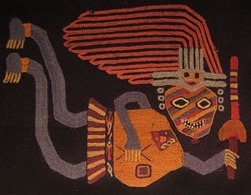
University of Arizona researchers are using bioarchaeology and biogeochemistry to study the diets of 14 individuals dating back almost 2,000 years. They are studying mummies from the Paracas Necropolis of Wari Kayan. Using hair samples, they found what these individuals ate near the time of their deaths. They ate primarily marine products, maize and beans. The mummies were discovered in 1927 in seated positions, wrapped in bundles of textiles. The researchers plan to do more isotopic analysis of other mummies to build their understanding.
Phys.org has the report here;
http://phys.org/news/2015-02-isotopic-analysis-explore-ancient-peruvian.html
And the full technical research report is online for free at the Journal of Archaeological Science,
authors.elsevier.com/a/1QWlU15SlTUSMo
February 5, 2015
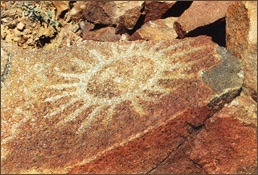
El Comercio Peru reports that there is strong evidence of writing at 2200 BCE at the site of Checta, a petroglyph site
3 hours from Lima. 500 petroglyphs at the site show images and motifs from four cultural periods. The second phase from 2200-1000 BCE could be writing. The same motifs appear over a wide area for 1000 years. The designs appear to be ideographs like ancient Sumerican writing. The site is endangered by new roads leading to a mine and hew housing. Pruvian officials have not been resposive to taking steps to preserve the site.
The Bradshaw Foundation has the report here;
http://www.bradshawfoundation.com/news/rock_art.php?id=Discovery-of-writing-at-Peru-s-Checta
And with a film and photos of the glyphs here;
http://www.bradshawfoundation.com/peru/index.php
January 28, 2015
Archaeologists are working at the Maya site of Cara Blanca in Belize. They have discovered an underwater temple complex. It appears that the Maya at this site were making hurried sacrifices to the rain god Chaak to stave off a continuing drought. Pots and bowls were thrown in by pilgrams coming here to pray for rain. Lisa Lucero is the lead archaeologist at the site, and has been investigating there for four years. Repeated droughts in the Maya realm eventually helped to bring the Maya kings down by 800 CE. The floors of the water temple were sprinkled with sacrificed potsherds and fossil teeth and claws. People also pulled out rocks and fossils from the bottom of the pools and cenotes to incorporate into above ground temples. Human sacrifices also took place in these pools.
National Geographic has the report here with nice photos;
http://news.nationalgeographic.com/news/2015/01/150127-maya-water-temple-drought-archaeology-science/

January 27, 2015
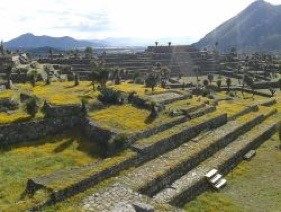
Archaeologists researching at the Mesoamerican city of Cantona, occupied from 600 BCE to 1050 CE, was a large obsidian exporter. The population was at 90,000 at 700 CE. But between 900 CE-1050 CE, it was abandoned. The population expanded during a wet period from 600 BCE-50 CE, and continued to expand during a drier period from 50 CE-1150 CE. And it expanded further duting the most arid period, 500 CE-1150 CE. The expansion of the population was probably due to immigration from Teotihuacanos fleeing a collapsing Teotihuacan, the decline of Cholula and the eruption of Popocatepetl. The Cantona populace built more and more defensive works in its last 150 years, pointing to increasing turmoil. So the history of that great metropolis is a complex one involving both weather factors and social factors.
The research is published in the Proceedings of the National Academy of Sciences.
Popular Archaeology has the report here with soke good photos of Cantona.
http://popular-archaeology.com/issue/june-2013/article/climate-change-and-the-rise-and-fall-of-a-pre-columbian-mesoamerican-city
January 22, 2015
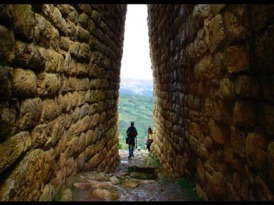
A team of researchers studied two skeletons dated at 800-1535 CE at the site of Kuelap in Peru. Both had holes drilled in their legs. The placement and depth of the holes suggest this was done to relieve pressure from infection or injury, releasing built up fluids.
The research is published in the International Journal of Paleopathology
Peru This Week has the report here;
http://www.peruthisweek.com/news-evidence-for-ancient-bone-surgery-found-at-kuelap-105049
January 14, 2015
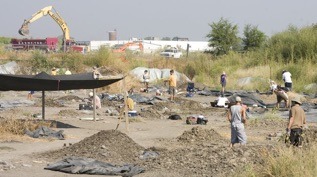
Archaeologists are continuing to excavate at the East St. Louis site. This site is the oldest and largest city north of the Rio Grande. It preceded the site of Cahokia, and continued contemporaneous with Cahokia. It lasted as a large city for 150 years, and it was at its largest at 1000 CE. It is now becoming clear that it was bigger than Cahokia. Like Cahokia, immigration to the site was large. This could have been the result of a religious movement. Pottery from Southern Missouri, Northern Arkansas, Oklahoma, Texas and Wisconsin has been found there. As time went on, immigrants adapted the local pottery style. The Illinois State Archaeological Survey has uncovered 500,000 objects at the site. Arrowheads from North Dakota, Arkansas, Louisiana, Mississippi and Wisconsin are among the items. The number of arrowheads means warfare. And at 1200 CE, the site was abandoned. There is evidence of drought, which may have led to war.
The Pekin Times had the story here; http://www.pekintimes.com/article/20150212/News/150219646
January 13, 2015
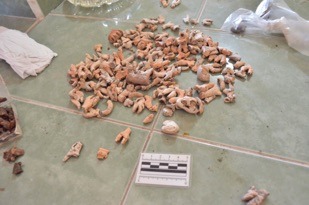
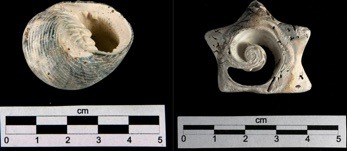
In May 2008, archaeologists found a large offering under the the statue of Tlatecuhtli at the Templo Mayor in Mexico City. Offering 126 had an assemblage of 4000 organic remains and 111 species. 40 from the Atlantic, 66 from the Pacific and some from rivers. 40 species came from as far away as the Gulf of Mexico, Florida, the West Indies, the Caribbean Sea, Venezuela and Brazil, and 66 from Baja California to Ecuador. Most of the material are mollusks, and it is clear that Aztec priests spent a lot of time gathering as wide and diverse collection of these to demonstrate the military and economic might of the Aztec empire. The findings are just being announced now.
Past Horizons has the report here;
http://www.pasthorizonspr.com/index.php/archives/01/2015/offering-to-goddess-reveals-reach-of-late-15th-century-aztec-empire
January 12, 2015
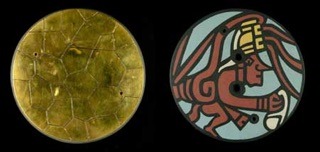
50 Pyrite mirrors were unearthed at Snaketown from the 1930s to the 1960s. They were found broken, burned and buried with humans in 16 graves. Ball courts, copper bells and macaw feathers were also found there. INAH began to study the mirrors intensely recently, starting in 2001. INAH found that the mirrrors were likely manufactured in central Mexico, each taking 110-160 days to create. They were worn by the elite as pectorals, belt ornaments, headgear. They were a portal to the underworld. The Snaketown mirrors date to 650-950 CE. The use of flakes of pyrite glued to sandstone with tree resin glue is a central Mexican craft. The Hohokam did not use pyrite. There are no Hohokam pyrite deposits.
Western Digs has the report here with a good photo;
http://westerndigs.org/mesoamerican-fools-gold-mirrors-found-in-arizona-reveal-ties-to-ancient-mexico/
January 12, 2015
An 11,230-12,401 year old adult male skeleton has been unearthed at Los Vilos in Chile. This is probably the oldest human skeleton ever unearthed in South America. This individual’s diet consisted of seafood, mainly fish and sea lions. He had serious gum infections and small wounds, and died at the relatively early age of 45. He suffered a common ear infection of seafarers. The place where he was found adds to the proof that the earliest Americans came by way of the sea. The archaeologists at the site have collected thousands of human bones. Bones of five other individuals within walking distance of each other have been found. The 11,230-12,401 year old skeleton was found in a mound, buried in a fetal position. And surprisingly, the five other individuals were buried in a different millennium, a thousand years later, in the same place. Donald Jackson, the lead archaeologist, submitted the bones for radio-carbon dating to three different labs in the US. He decided to publish the most conservative date of the three labs at 11,230 years.
(My Note; A little further down the Chilean coast, at Monte Verde, is the site of the first definite Pre-Clovis settlement. Much further north, at Paisley Cave, in Oregon, is the second positively dated Pre-Clovis site. By that, I mean human made tools dated at Pre-Clovis times, fibers, housing posts, human footprints, fishing implements, human coprolites, seaweed chewed on by humans, all dated at Pre-Clovis time periods, peer tested stratigraphy dating. Add to that the very old human remains found on the Channel Islands off the coast of California, and the evidence for a Pre-Clovis entry into the New World along the Pacific Coast by way of canoe traffic is now proven. The only way for humans to have reached coastal Oregon and coastal Chile in Pre-Clovis times was by way of canoe from Asia, hugging the coast from Siberia to the American Pacific Coast).
Que Pasa has the story (in Spanish) here;
http://www.quepasa.cl/articulo/ciencia/2015/01/3-16012-9-el-primero-de-nosotros.shtml
And Donald Johnson’s research on the site and the ancient individual is posted at Academia.edu as a re-print of his post in a peer reviewed journal here;
http://www.academia.edu/2040983/Human_remains_directly_dated_to_the_Pleistocene-Holocene_transition_support_a_maritime_diet_among_the_first_settlers_of_the_Pacific_coast_of_South_America

December 27, 2014
The Old Vero Man Site is being excavated in Florida anew in a large way. Radiocarbon dating of the soil that contained cultural materials and 170 species of plants and animals have been dated at 13,000-14,000 years ago. A buried soil layer has been dated at 19,000 years old. Burnt fragments of bone, some with cut marks, indicate a human presence at this Pre-Clovis dated site. Florida Atlantic University scientists are working with the archaeological team to confirm dates on any human artifacts that may be found at the site. Excavations will continue into 2015.
Heritage Daily has the report here with a very good film narrated by James Adavasio.
http://www.heritagedaily.com/2014/12/mai-dig-suggests-human-presence-old-vero-man-site/106062
December 10, 2014
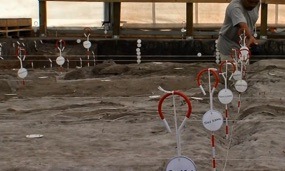
An international team of archaeologists in Peru have uncovered an ancient Wari temple with a D-shaped temple and Wari influenced ceramics and textiles in southern Peru. The dig is uncovering material spanning 200 BCE-1000 CE. The Wari culture covered the south-central Andes from the highlands to the coast, with administrative centers, terraced agriculture and a huge network of roads. Excavations at the site will continue into 2015.
Popular Archaeology has the report here with good photos and a video;
http://popular-archaeology.com/issue/fall-09012014/article/archaeologists-excavate-ancient-wari-temple-in-peru

November 21, 2014
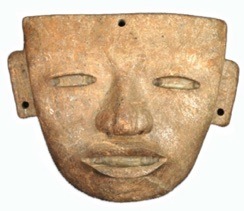
New electron research into Teotihuacan masks reveals surprising proof that the iconic stone masks were made far from Teotihuacan and from materials that were not really jadeite. Researchers studied 150 of the 600 masks held in museums around the world. They found they were made from serpentine, travertine and limestone, and other softer stones and polished with quartz, which does not exist at Teotihuacan. They found 3 fakes among them. They now believe the masks were made by artisans in Puebla and carried to Teotihuacan. They were also able to source the microscopic remains of algae on the masks to identify their Puebla region origins.
Scientific American has the report here;
http://www.scientificamerican.com/article/electron-beam-points-to-origins-of-teotihuacan-stone-faces/
November 13, 2014
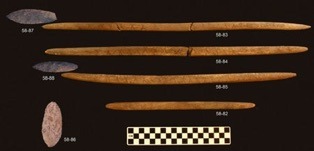
Archaeologists from the University of Alaska at Fairbanks have uncovered the remains of an infant who died at 12 weeks and a fetus that died shortly before birth. The dates of these infants are at 9,500 BCE. The site would have been the area of Beringia during the last ice age. The site where they were found, at Upward Sun River, shows signs of long term occupation, including the oldest residential structures found in Alaska. Stone projectile points that made up a hafted biface spear, and antler rods were placed in the burials, and all were covered with red ochre. The infants may have been twins. Burials of children within residential structures have been found at the site of Ushki in Siberia, and the biface stone points are similar to those found at the Anzick site in Montana.
Science Magazine has the story here;
http://news.sciencemag.org/archaeology/2014/11/infant-burials-could-help-solve-mystery-who-settled-new-world
Western Digs adds that the antler shafts found in the burial are much longer then others found in North America, and are similar to those found in Siberia. Three of the shafts were covered in multiple X patterns, a new discovery in North American hunting tools.
The research is posted in the Proceedings of the National Academy of Sciences.
Western Digs has the report here with photos of the tools;
http://westerndigs.org/twin-ice-age-infants-discovered-in-11500-year-old-alaska-grave/
November 12, 2014
42 children and 76 llamas sacrificed by the Chimu Culture in Peru at 1400 CE have been uncovered by archeologist John Verano. The Chimu site is near the sea, so the children may have been sacrificed as a gift to the sea. The llamas may have been seen as guardians in the underworld.
Fox News has the story here;
http://www.foxnews.com/science/2014/11/02/mass-sacrifice-children-llamas-uncovered-in-peru/

November 5, 2014
Archaeologists have found a Pre-Columbian village in Colombia dating to 900 BCE-1500 CE. It is the biggest site ever found in Colombia. This discovery changes the idea that Pre-Columbian groups living aroud the area of Bogota were nomadic. Many of the artifacts found are of museum quality.
Colombia Reports has the story here with many good photos;
http://colombiareports.co/archaeologists-recover-remains-pre-columbian-village-central-colombia/
October 30, 2014
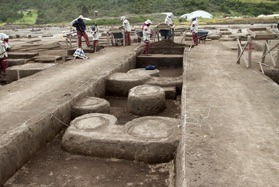
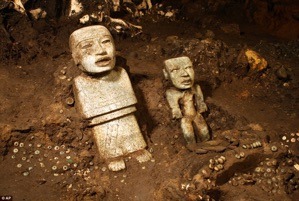
INAH archaeologists have been digging into tunnels below the Pyramid of the Sun for the last year. They have dug their way to the end of a 340 foot long tunnel and have found an entrance to a burial chamber. They have made their way two feet into the chamber. It will take a year to complete that dig. The tunnel was sealed off in 250 CE. They may find the grave of a Teotihuacan ruler in the chamber. A find that has eluded all archaeologists at the site since it began its excavation history.
PhysOrg. has a short report and many stunning photos of the finds so far, including large caches of conch shells and great and untouched Teotihuacan figurines.
http://phys.org/news/2014-10-mexico-archaeologists-explore-teotihuacan-tunnel.html
50,000 objects have been found in the tunnel including jade, shell, stone and pottery pieces, including pottery of a kind never before seen at Teotihuacan.
The Daily Mail has an even more stunning collection of beautiful photos of the objects in the tunnel and a video as well. The Daily Mail always has the best photographed displays of archaeological finds.
http://www.dailymail.co.uk/sciencetech/article-2813097/Filled-artifacts-ancient-Mexican-tunnel-lead-royal-tombs.html
October 25, 2014
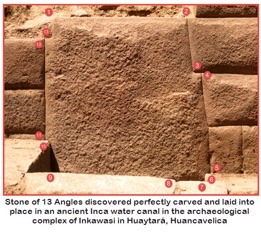
Peru’s Ministry of Culture has annouced the finding of an Inca carved stone with 13 angles. The stone is in two interconnected fountains that run straight and then zigzag to slow down water flow into the river. The previous most angled stone was a 12 angled one in Cusco that was part of the palace of Inca ruler Inca Roca.
Fertur Travel blog has the most detailed photos of the two stones here;
http://www.fertur-travel.com/blog/2014/famous-12-angle-inca-stone-topped-but-not-overshadowed-by-13-angle-stone/9422/
October 25, 2014
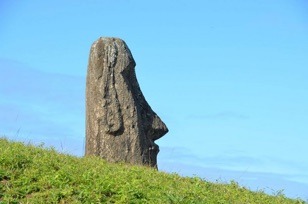
Danish genetic researchers have analyzed the genomes of 27 Rapa Nui individuals and found genes related to Native Americans before any European admixture. The Native American admixture dated to 1280-1495 CE. The same geneticists had examined two skulls of the “Botocudos” of Brazil and found their ancestry was Polynesian, with no detectable Native American traits. The latest findings indicate that Native Americans sailed to Rapa Nui or Polynesians sailed to America and back. The odds are with Polynesian sailings due to ocean currents and winds.
The study is published in the peer reviewed; Cell Press journal, Current Biology.
Popular Archaeology and Science Daily have the news here;
http://popular-archaeology.com/issue/fall-09012014/article/genetic-study-shows-early-contact-between-easter-islanders-and-south-americans
and
http://www.sciencedaily.com/releases/2014/10/141023131655.htm
October 24, 2014
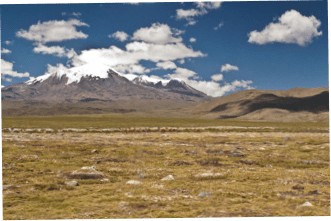
A National Geographic financed team has published a report in the peer reviewed journal Science that evidence of human activity in the high Peruvian Andes has been found in an oasis like region in this high desert area. An ancient campsite was found and two obsidian quarry sites, as well as stone tools and arrowheads. Radiocarbon dating places this site at 10,800 BCE. Vicunas and Llamas were the hunting draw for these folks, who came to this camp seasonally. Oxygen levels at this site are only 60% normal strength. This reveals that these people did not need long time periods to adjust to these altitudes, and that humans spread across South American rapidly. Ice Age glaciers disappeared in this basin at 13,000 BCE.
National Geographic has the report here with photos;
http://news.nationalgeographic.com/news/2014/10/141023-paleo-indians-migration-pucuncho-basin-andes-south-america-archaeology/
And the Boston Globe has more details here;
http://www.bostonglobe.com/news/science/2014/10/23/maine-researchers-find-oldest-highest-human-settlement-andes/3GALsnNYQlior0I8WH8k1H/story.html
October 1, 2014
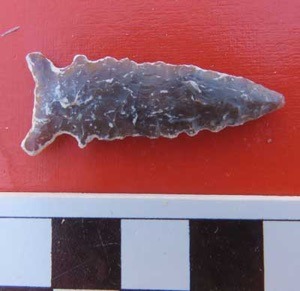
Archaeologists surveying near the Petrified Forest have found two villages dating to 700 CE. The first village had 50-75 structures lined with sandstone slabs, even though there is no stone nearby. Then, in the next season, the same team found another village with the same features about a mile away. Brown ceramics and stone points found there match the late Basketmaker period. The team found a smaller sandstone lined village with no pottery that probably pre-dates the two larger villages. These villages are transitional between hunting and gathering and more elaborate Chaco period sites. And the location of the sites may have been on a pilgramage path.
Western Digs has the story and photos here;
http://westerndigs.org/twin-1300-year-old-villages-discovered-in-arizona-sand-dunes/
September 17, 2014
University of Bristol researchers are studying pottery from Teotihuacan to determine if Teotihuacanos drank alcoholic beverages and in what quantity. They have found the residue of fermented maguey sap in vessels sealed with pine resin. They ground up 300 pottery sherds dated from 200-550 CE to find and analyze residues of alcohol making bacterium found in pulque. Because maize was the most important crop at Teotihuacan, the low rainfall and limited groundwater made maize production risky. So the Teotihuacanos grew agave and turned that into pulque. This would have provided them with essential nutrients that are missing in maize, such as vitamin B and iron.
Murals at Teotihuacan may depict scences of people drinking pulque. The team will now study sherds from other areas of Central America for similar residues. The research is posted in the Sept. 15 issue of the Proceedings of the National Academy of Sciences.
Live Science has the report here;
http://www.livescience.com/47846-teotihuacan-alcohol-discovered.html

September 3, 2014
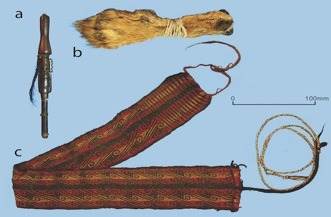
Researchers have found sophisticated drug paraphernalia at a Tiwanaku site called Cueva del Chileno in Bolivia dated at 500 CE. Snuffing tablets, a wooden snuffing tube, colorful headbands and more were found at the site. The snuffing tablets were used to spread out the psychotropic drugs, and the tubes were used to inhale them. Monoliths from the region show individuals holding chicha drinking cups in one hand and a snuffing tablet in the other. The drugs were used by shaman to mediate between the living and the dead. Shaman wore animal costumes depicting pumas and condors. Animal and human sacrifice was carried out at the site. An elite group held control over the substances, while the public was allowed access during healing ceremonies and public events.
Discovery.com has the story here with slides;
http://news.discovery.com/history/archaeology/psychedelic-culture-tripped-circa-500-ad-140902.htm
August 29, 2014
INAH Archaeologists have found eight new sites of Olmec influence in Guerrero. Olmec style figurines, greenstone axes, jadeite, white ceramic bowls have been found at San Marcos, San Luis Acatlán, Acapulco, Atoyac, Ometepe and Petatlán. The Olmec trade system is now better understood as a result of these findings. The sites linked the Olmec heartland to Oaxaca, Chiapas, and the Pacific coast. INAH says the research into the Olmec presence in Guerrero will cover eight volumes, written by 20 specialists.
INAH has the report here (in Spanish) with a slide show of some of the Olmec influnced items. (click on the tiny white camera icon to see the slideshow).
http://www.inah.gob.mx/boletin/2-actividades-academicas/7309-identifican-nuevos-sitios-de-filiacion-olmeca-en-guerrero
August 26, 2014
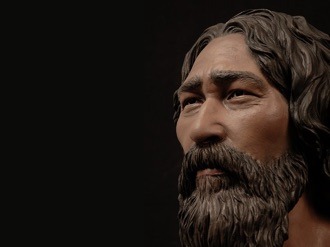
The Kennewick Man researchers have finally released their long awaited final report on Kennewick Man in a 688 page, peer reviewed book, ,“Kennewick Man: The Scientific Investigation of an Ancient American Skeleton,” that will be published this fall by Texas A&M University Press. The book has contributions from five dozen authors who studied Kennewick Man, using all the instruments of modern forensics.
He was a seal hunter who died at 7000 BCE. He had a projectile point in his hip, five broken ribs, two dents in his skull.
He came from Alaska or the Aleutians, or all the way from Asia. He lived off of seals and other marine mammals and drank glacier melt water. His body was wide set, similar to Inuit peoples in Alaska. The skull and long bones show affinity with Asian coastal groups, especially Polynesians. His skull is not like later Native American skulls. It resembles the skull of a young girl found in a submerged cave in the Yucatan and the skull of a man found in the Channel Islands, off of California. His skull most closely matches Polynesian skulls near New Zealand. His type also has elements form the Jomon People of Korea and the Ainu of northern Japan.
He may have belonged to a hunter group that followed the ice edges around the northern rim of the Pacific. This was like an ancient highway back and forth. The opposing viewpoint is that Kennewick Man and all Native Americans are descended from isolated populations in Beringia, who came in waves, after the glaciars receded. There are finally genetic tests taking place on Kennwick Man in Denmark. This will give us much needed support for any theories on his origins.
The Washington Post has the report here;
http://wapo.st/1ls7QR6
And Smithsonian Magazine adds that his grave was 300 miles inland from the sea, and yet, the evidence shows that he ate only marine mammals in the last 20 years of his life. He also drank cold glacier water of the type found in Alaska and not in the area of his death. This lends itself to the idea that he was a long distance traveler. He was buried with care, so he lived in a small band of travelers. This article also has the most detailed reconstruction of his face.
Smithsonian Magazine report;
http://bit.ly/VM1obt
August 17, 2014
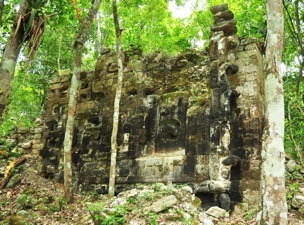
A Slovenian team has uncovered two large Maya sites in Campeche. One of the sites had been located in the 1970’s and was then lost, until this new expedition. The sites are called Lagunita and Tamchen. These sites are in a vast unexplored territory in the central lowlands between the Rio Bec and Chenes regions. Lagunita has a ball court and a temple pyramid and massive palaces around four major plazas. There is a huge monster-mouth doorway representing fertility and the earth. 10 stela and three altars with well preserved reliefs with hieroglyphs are present. Stela 2 has the date 711 CE. Tamchen is 4 miles to the north, also with large monuments. It was settled at 300 BCE-250 CE. The number of inscriptions found at the sites are rare for the Rio Bec region. Both sites were abandoned in 1000 CE. But there are post-classic remains. There are many artistic peculiarities at these sites. INAH is working with the Slovenian team. This is a very major find in the Maya realm.
The Slovenian journal Misli has the report here with photos and videos;
http://ms.sta.si/2014/08/two-ancient-maya-cities-discovered-in-the-jungle-of-southeastern-mexico/
August 15, 2014
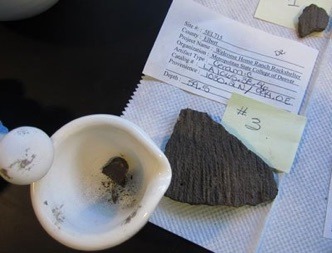
Archaeologists have analyzed pottery sherds from a rockshelter in Colorado and found traces of salicylic acid, derived from willow bark. The residues are a 70%-93% match to salicylic acid. The sherds date to 586-692 CE. This may be the earliest physical evidence of this chemical, used in making modern day aspirin, in North America. The ethnographic record proves the widespread use of willow bark throughout the West and Great Plains. The sherd with the concentration of the pain killer may have been a “medicine pot” used for medicinal purposes.
Western Digs has the report here, with two photos;
http://westerndigs.org/prehistoric-pottery-found-in-colorado-contains-ancient-natural-aspirin/
August 10, 2014
From 1140-1180 CE, several centuries of relative peace in central Mesa Verde, Colorado, broke down into widespread violence. Washington State University and University of Colorado at Boulder archaeologists found that nine out of ten sets of human remains in this area had trauma to their heads or other parts of their body. In the northern Rio Grande, during the same time period, there was far less violence despite the same growth and population pressure. The northern Southwest went from 40,000 population in the mid 1200s to zero in 30 years. the northern Rio Grande people were able to join and identify with larger pueblo organizations and societies. They also had more commercial exchange, so that people were able to obtain what they wanted and needed. In the central Mesa Verde, there was less specialization. Trade and commerce appears to be a pacifying influence on populations. After 1160 CE, Chaco and its surrounding communities disappeared as a result of drought and an out migration of populations that left the remaining smaller populations there vulnerable to raids.
Past Horizons has the report on the study which will be published in American Antiquity;
http://www.pasthorizonspr.com/index.php/archives/08/2014/four-decades-of-violence-in-12th-century-mesa-verde

August 1, 2014
Shaft tomb structures with rich offerings and human remains have been found in Sinaloa, at the limits of Mesoamerica. The tombs are dated to 150-450 CE. This is a unique find for Sinaloa. Dozens of miniature figurines, mostly females, and some playing musical instruments, as well as turquoise pieces were found, among other artifacts. The tombs and artifacts are in similar style to the ancient West Mexico tradition. Human skeletons with the bones painted red were uncovered. It now appears there were cultural relationships between ancient West Mexico and southern Sinaloa earlier than thought.
INAH has the extensive report here (in Spanish), with a lot of detail on the various finds and a great slide show of the finds. (Click on the tiny white camera icon to see the slideshow.)
http://bit.ly/1nm8m1G
Art Daily has a report in English here;
http://artdaily.com/index.asp?int_new=71769&int_sec=11#.U9voKlaF8zI