Peruvian archaeologists have uncovered the tomb of an Inca noble at the Mata Indio site north of Lima dated to 1500 CE.
Five adults and four children look to have been sacrificed to accompany the noble. The children were placed beneath the stone floor on an axis. Spondylus shells were also used as burial offerings. Despite the fact that the tomb has been looted several times, the looters left behind a number of vases. The tomb is very large, 645 squre feet, the biggest uncovered in Lambayeque so far.
Archaeologists have uncovered an ancient canal in south Alabama dating to 600 CE. It facilitated canoe travel from Mobile Bay to the Gulf of Mexico. Similar canals have been found in the Everglades and south Florida. The newly uncovered canal connected two bodies of water rich in oysters, crabs, shrimp and fish. The canal was built during the Middle Woodland period, when there was a lot of earthwork and mound construction. A massive trade network spread across the North America, trading copper and silver from the Mid-West, Obsidian from Oregon, shells and teeth from the Gulf Coast. The canal saved travelers from walking through tangling vines and thorny shrubs in the area.
LIDAR and other scientific methods will now be used to find other parts of the canal.
A Perfectly Perfectly Maya Steam Bath Uncovered at the Site of Nakum in Guatemala
Polish archaeologists have uncovered an ancient steam bath at the Maya site of Nakum in Guatemala dated at 700-300 BCE. The Maya associated baths and caves with the emergence of gods and humans, as entrances to the underworld, and with water and fertility.
The sweat bath had a tunnel to drain away excess water and had stone seating around the bath. Large stones were heated near a fireplace so that water could be poured over the stones for steam. A roof of wood, stones and mortar was built over the bath. The bath was filled over with lime and rubble at the end, perhaps due to dynastic changes at the site. This steam bath is the most perfectly preserved Maya steam bath ever found.
The Polish team at the site have been excavating at Nakum for more than 12 years, and have uncovered graves, temples, palaces, residential buildings, a polychrome frieze and an untouched royal tomb.
Moche Triple Chambered Burial Site Uncovered at the Ucupe Site in Peru
Peruvian archaeologists have uncovered the remains of four Moche elite at the site of Ucupe. The remains are dated to 600 CE. They were found in three ceremonial chambers. One burial was of a possible military leader buried with weapons and a crown. A second chamber contained a woman and child buried with copper ornaments and three ceramic urns. The third chamber burial was of an elderly man.
An Important Moche Ceremonial Site Uncovered in Peru
Peruvian archaeologists have unearthed a Moche ceremonial banquet hall at the Huaca Limón de Ucupe site in the Lambayeque region. They also found artifacts and human remains at the site. The structure is dated to the 4th century, and then it was suddenly abandoned in the same century
The banquet hall was used by the Moche for banquets held by the rulers. There are two rooms at the complex; the banquet room and a meeting room. The banquet room has two thrones, a large and smaller one. A staircase leads up to the banquet hall, which is on a platform. There are 100 nooks for plates and dishes. Murals of painted sea lions and fish decorate the room. There is a mural of fishermen on a painted boat catching fish. We have murals of these feasts, but this is the first time a feasting area like this has been uncovered.
The site sits upon the banks of the Zana River. Perhaps El Nino flooding ended its history.
The First Temple to the Mesoamerican Deity Xipe Totec Uncovered
For the first time, INAH has found a temple dedicated to the Mesoamerica deity Xipe Totec in Puebla. There are two sacrificial altars, three stone sculptures and a stone torso covered in sacrificial skin which all personify Xipe Totec at the site. The temple building dates to 1000-1260 CE, and was in use till 1456 CE. The sculptures are made of volcanic rock imported into the region, The sacrificial skinning ceremony was carried out on two circular altars. The captives were killed on the first altar by staged fights or arrows. They were then skinned on the second altar, by priests wearing the skins of flayed individuals. The skins were deposited in a hole in front of the altars. INAH found that the skulls were used to close the holes in front of the altar
Archaeologists have uncovered the oldest human remains ever found in Ecuador.
Three burials at the site of Loma Atahualpa, on the Pacific Ocean, are dated at 6-10 thousand years old. The burials were part of the Las Vegas culture. The materials at the site are transitional from the Mesolithic to the Neolithic. The stone tools in the burials are becoming studied by specialists in Japan. Russian researchers in St. Petersburg and Siberia are studying the morphological features of the human remains.
Ancient Peruvian Culture Used Chameleon Urine as a Paint Binder
Researchers studying ancient Peruvian Paracas culture (600-100 BCE) pottery made at the site of Cahuachi have found that one of the binders used to hold the paint together contained urine from chameleons. And the chameleon urine was used over time. The urine was used as a binder on white and blue pottery. Some reptiles urine is semi solid. There are snake and salamander motifs on Paracas pottery.
There is a correlation between the older Chavin culture (900-200 BCE) and the later Paracas culture in terms of pigment use such as cinnabar being replaced by red ocher over time. The 15 different colors used in Paracas ceramics show a shift in pigment use that can show trade and interaction in the area.
The researchers are still trying to figure out what the plant binder is made of. If they can pinpoint that, this will tell them more about trade and cultural connections. The Paracas were a desert dwelling people but still figured out to produce multi-covered designs on vessels and clothing.
Ancient Moche and Lambayeque Skeletons with Feet Missing Uncovered in Peru
32 skeletons dated at 300 AD from the Moche and Lambayeque Cultures in Peru have been uncovered, at the site of El Churro. Half of the skeletons were missing their feet. The feet were re-made into decorative lockets for the surviving family members. Many of the dead were children. They also uncovered 60 large urns, looms and instruments made from bones for making textiles, blankets containing alpacas, llamas, and guinea pigs, metal objects, and wooden spoons for feasting. 23 of the bones were from the Moche era and the rest from the Lambayeque culture. The practice of using human bones for jewelry was a regular practice in Ancient Peru.
First Human Remains Uncovered at the Maya Site of Joya De Ceren in El Salvador
The first human remains have been found at the volcanic ash covered Maya site of Joya De Ceren in El Salvador.. The burial is from the Late Classic era (600-900 CE). These are the first human remains found at the site after 40 years of excavations. An obsidian knife was also found with the remains. The site was buried by a volcanic eruption in 650 CE. Archaeologists will now extend excavations in the same area the human remains were found.
Archaeologists working at the Maya site of Vista Alegre on the Yucatan coast are developing a new perspective on the Maya market system. Vista Alegre is about 100 miles from Chichen Itza, and hundreds of years older. The site was part of a complex network that is revealing a robust system of sea traders, dotting the coastline at 30 mile intervals. Study of the bones of these coastal Maya show that they were healthier than the inland Maya due to their diet of protein rich seafood. Their funeral remains also show their society was more egalatarian, with less elongated head shaping and dental modifications free of jade and obsidian.
The coastal Maya were more of a melting pot of people traveling up and down the coast. Ancient war wounds on the bones of the coastal people show more women killed in violent acts, and many survived battle. The probable explanation for this is that the conflicts on the coast were from pirate raids. And the layout of the sites on the coast points to defenses against marauders.
Recently, researchers uncovered salt works along the Belize coast, and the artifacts uncovered there point to a salt making industry all along the Maya coast. And trading canoes would be laden with salt all along the coastal area. These canoes would also carry Quetzal feathers, jade, shells, and obsidian to transport across Mesoamerica.
3000 BCE Elaborate Structures Uncovered in the Atacama Desert, Chile
Archaeologists have uncovered 3000 BCE stone complexes in the Atacama Desert, in Chile, the driest place on earth. They are named Tulan-52 and Tulan-54. These sites show that hunter-gatherers in the region developed complex ceremonial traditions at that very early time period. Tulan-54 is dated to 3000 BCE. Tulan-52 was from 1100 BCE-360 BCE.
Each had a stone complex with several rooms, fire hearths, and grinding instruments for preparing pigments, food and beverages, and for hallucinogens made from cebil and maize. Nearby, they had a cemetery.
In two of the burials, they also found large gold artifacts: a gold-plated wooden vulture head with green malachite eyes and crest, and an elaborate golden plaque.
The stone complex housed several rooms, in which they found 10 hearths with pits, and 28 richly endowed infant pit-burials.
Just 50 meters away, a cemetery was built.
By 1100 BCE, they domesticated camelids for long distance transport, cultivated plants, used hallucinogens, created pottery, and gold metallurgy.
Mysterious Wooden Idols Uncovered at the Chimu Site of Chan Chan in Peru
Peruvian archaeologists have uncovered 19 hand carved wooden idols with clay masks in wall recesses in an adobe corridor at the Chimu site of Chan Chan in Peru, They are dated at 1250 CE. Murals of waves and landscapes, and animal images are painted above them, including a cat or lunar animal. It probably served as an entryway into a plaza.
40 New Sites Found Near the capital of the Izapa Kingdom in Chiapas
Archaeologists have found that the ancient Izapa kingdom capital in Chiapas (700 BCE-100 BCE) is surrounded by 40 smaller towns, all laid out in the Izapa style. The newly discovered towns were found using LIDAR, and are laid out in an area encompassing 225 square miles. The design of the towns were laid out in an east-west axis aligned with the sunrise during winter solstice. The north-south axis was pointed just east of north, toward the Tacanávolcano (which eventually erupted and led to the downfall of the Izapa kingdom. Most have a pyramid on tops of platforms looking out on plazas and mounds. Ball courts have been revealed at many of the sites. Magnetometer and LIDAR research will continue. It appears there are large monumental sculptures yet to be excavated.
Compelling Evidence for Pre-Clovis at the Debra Friedkin Site in Texas
Archaeologists have uncovered 11 spear points at the Debra Friedkin site near Austin. They date to 13,500-15.500 years ago. They were found buried beneath Clovis tools dating to 11,500 years ago. People lived at this fresh water site for 10,000 years. The points are in the style of “western stemmed points.” Researchers used a scientific technique called optically stimulated luminescence (OSL) to determine the dates. This technique is not as accurate as radio carbon dating, but these tools were in water and could not be dated that way. But the very precise vertical placement of the older tools lying below the Clovis tools gives these dates credence. Western stemmed points have been found along the Pacific Coast, thus furthering the thesis that the First Americans arrived by way of canoes along the coast.
(My note; This is the most compelling evidence for Pre-Clovis from either the Texas Gault site or the Debra Friedkin site so far.)
A large team of researchers from 11 institutions studied the process of cacao domestication in the Americas. The ancient cacao domesticators selected for flavor, disease resistance and for theobromine. Criollo was the first variety domesticated. The date for first domestication was at 3,600 years ago in the Amazon Basin, and cacao was brought to Central America by traders. Theobromine was found in Olmec pottery during this time period. The gene sequencing was done at the Center for Institutional Research Computing for the analyses, and Stanford University. The research is published in • Population genomic analyses of the chocolate tree, Theobroma cacao L., provide insights into its domestication process. Communications Biology, 2018; 1 (1) DOI: 10.1038/s42003-018-0168-6
Researchers Find Proof Maya Elite Groups Lived at Teotihuacan
Researchers from INAH and a group of researchers from US universities and from Japan have made new discoveries proving the long term Maya presence at Teotihuacan. They looked at the Plaza of the Columns at Teotihuacan. The Plaza was used for ceremonial and administrative activities, and as the residence of elites from Teotihuacan and the Maya realm around 350 CE. In 2016, 500 mural fragments were uncovered in this sector, and many are in the Maya style. Years ago, a discovery at the Pyramid of the Moon found Maya style green stone earrings at the site. This new mural discovery affirms the presence of the Maya elite at Teotihuacan as a permanent settlement.
The Maya glyphs, fluid style, the naturalism of the renderings show a familiarity with the lowlands of the Maya south.. Nearby, there is a cache of animal bones (rabbit, quail, deer) and food seeds (cassava, tobacco, chili, tomato), and pottery. A lid of a glass was found with Maya characters wearing wolf tail headdresses from Teotihuacan. Two thousand pieces of green stone, beads, human figurines, earmuffs and earrings of obsidian and pyrite, large snails and almost complete skeletons of an eagle and a monkey (of a species from the southeast), the skull of a puma and the remains of small snakes were uncovered. They have also found 2,600 human bone fragments that appear to be of dismembered humans who were part of a ritual sacrifice around 400 CE.
Studies of the human bones can now be carried out.
Elaborate Altar Uncovered at the Maya site of La Corona
Archaeologists, excavating at the Maya site of La Corona in Guatemala have uncovered an elaborate one ton altar in a temple at the site. It depicts a Maya king, Chak Took Ich’aak, holding a scepter which has two patron gods of the city emerging from it.
It proves that that the Kaanul dynasty or the Serpent Kingdom developed a political movement that allowed them to defeat Tikal in 562 CE, and rule the Maya lowlands for two centuries. The altar also shows a wedding between a princess from the Serpent Kingdom and a king of La Corona. The Serpent Kingdom stretched through Guatemala, Belize, and Campeche, and was defeated in the end by Tikal.
New Captive Game Research at the Maya site of Copan
Mesoamericans used big game animals like puma and jaguars to show status and power, to make references to ritual sacrifice, and for processing into trade products. Researchers are studying five ritual sites at the Maya site of Copan. Isotope analysis was performed on the bones and teeth of puma, jaguar, deer, owl, spoonbill, and crocodile to determine the diet and geographical origin of the animals.
They were able to show that wild animals were kept in captivity for rituals, and for trade purposes, and they showed the extent of that trade was larger than thought before.
The Research is published in the professional Journal PLOS.
Two large Olmec carved monuments have been found at the Tak’Alik Ab’aj site in Guatemala. The exact location of the find is being kept under wraps to discourage looters. They are dated at 850-300 BCE. The first has a carved head and ruler symbols, and are related to “Grandfather,” an important ancestor who descended from heaven. The second monument weighs five tons and has many ritualistic symbols, including the Kan Cross.
Archaeology News Network and Ancient Origins have the report here with many photos;
Robots at Chavin de Huantar in Peru; New Discoveries
All terrain robots called the Chavin Rovers have been sent into narrow channels at the site of Chavin de Huantar in Peru. The robots have revealed burials of people who built the temple at the site. The dead are not of high standing and were probably sacrificed. They were buried face down under rocks. They will probably find more burials using the robots. 36 tunnels and passageways at the site connect with one another, but the labyrinth is not completely mapped yet.
1,500 year old remains of 60 people and six trophy heads in 27 funerary pits dating to 550 CE have been uncovered in southern Peru, naturally mummified by the dry climate. They were part of the Ramada culture. Archaeologists have found beautiful and feathered textiles in their burials. At the new site, babies were were buried next to their mothers, perhaps buried at the same time. The team believes that the trophy heads buried here are from the same community, and are the heads of warriors from the community who were killed in battle. This interpretation is still in dispute. The team that excavated this site will carry out DNA and isotope research on the remains to try and prove their assertions
The findings were presented at the SAA meeting in Washington DC in April and will be published.
Peruvian archaeologists have discovered a 3,800 year old wall reliefs at the site of Vichama, which was part of the Norte Chico or Caral culture, which stretches back 5,000 years. The reliefs portray snakes and human heads. A few years ago, archaeologists uncovered 3,800 year old figurines at the same site;
The figurines and the wall reliefs are probably an offshoot of the Caral culture, and they probably portray ancient Caral leaders, including a priestess. The walls are made of adobe. The reliefs show four human heads with their eyes closed, and two snakes wrapped around them. They appear to be humanoid seed symbols digging into the ground and they face agricultural fields. The reliefs portray soil fertilization and the deity of water.
1,500 BCE Vast Trade Network Uncovered Between the Southeast and Great Lakes Region
Researchers excavating at a Late Archaic shell ring on the coast of Georgia found a copper band alongside the cremated remains of seven individuals. The remains and copper band are dated at more than 3,500 years ago. Copper and cremated remains from the Late Archaic (3000-8000 years ago) have been rarely, if ever found in the Southeast. The discovery pushes the practice of cremation and the use of copper in the region back to 1000 years earlier.
The copper came from the Great Lakes region. This also pushes the trade of copper in the region much further geographically at this early time. Cremation has been absent as a burial practice in the Southeast during this time period, but is more common in the Great Lakes region. This indicates that the two regions were connected cosmologically and artistically in a much earlier time period. So there was a vast trade network that covered half the continent 3000 years ago.
The National Science Foundation has given a large grant to the research team to continue to investigate this early vast trade network.The paper is published in the Proceedings of the National Academy of Sciences.
New Ancient Scarlet Macaw Trade from Mexico to the Ancient Southwest Research
Scarlet Macaws were traded from Mesoamerica to the Ancient Southwest for 2000 years. People at Chaco were importing macaws at 900 CE. A team of researchers at Penn State University has sequenced mitochondrial DNA from 14 ancient Scarlet Macaw remains from Mimbres and Chaco. Scarlet Macaws were bred at Paquime in Chihuahua for trade, but that was at 1250 CE. The team found that the Macaws from 900 CE we’re locally bred. So the Scarlet Macaw trade has to be a lot older than 900 CE.
So somewhere in Mesoamerica, there has to be a much older Scarlet Macaw breeding center that was trading with Chaco before 900 CE. The team found that scarlet macaws fall into seven genetic populations across the Americas. All 14 of the ancient macaws the team researched came form Haplogroup 6, so they were bred from the same stock. In an earlier article, Patricia Crown published in KIVA that traders walking from Mexico to Mimbres would be 11 to 12 weeks old. Paintings on Mimbres pottery show birds that are 8-10 weeks old. So it is very possible that that the birds arrived from an unknown site closer to Mimbres.
New Research on Two Ancient Chilean Female Remains Yields Surprising Results
Mummies of two girls, aged 9 and 18 were discovered in Chile in 1976. They are dated to 1399-1475 CE. They were buried with rich grave goods. Their burial clothes were a deep red color. They were ritually sacrificed. The girls were transported all the way from Cusco, 745 miles away, with their goods. The trip would have taken several months. New research on the girls clothes, using chemical and microscopic testing, found that the red color was from cinnabar. Cinnabar is a toxic substance. Those who buried the girls could have sprinkled the cinnabar powder to deter looters. Inhaling the powder can cause mercury poison.The ritual sacrifice ceremony may have been performed to celebrate the area coming under Inca rule.
The research has been published in the journal Archaeometry.
Andina has a short report on a New Excavation in Peru with photos;
Peruvian archaeologists have uncovered skeletal remains, pots and mortars, probably from the Wari period, since they are close to the the Wariwillka Wari complex.
INAH Uncovers Unique Child Sacrifice Remains at the Temple Mayor
INAH has uncovered the remains of a 8 to 10 year old boy at the Temple Mayor. He was sacrificed to the Aztec god of war, Huitzilopochtli, in the late 15th century. He was found with body adornments and Huitzilopochtli symbols. The site is called Offering 176, and it was found under stone slabs near the Temple Mayor. The child was placed in a cylindrical box with volcanic rocks pasted with stucco. Of the 204 tombs found at the site so far, the configuration of the grave is unique. He was wearing jadeite jewelry from Guatemala, rectangular wooden earrings and a wooden breastplate called an anahuatl, bearing insignias of the gods Huitzilopochtli, Tezcatlipoca, Tlahuizcalpantecuhtli and Mixcóatl. The connection to Huitzilopochtli was further enhanced by the presence of the wings of a forest hawk, with their ocher and blue coloring, and the obvious location of the burial – in the west side of a Huitzilopochtli temple. Archaeological News Network has the story here with good photos;
There are rows of cairn-like pillars close to an Inca road network that stretched from Columbia to Chile. The mystery was their function. Archaeologists researched 16th century Quechua sources which pointed to calendrical, astronomical and religious purposes. Astronomers at the Atacama Array and the European Southern Observatory ran simulations of sunrises on different dates. And they found the Sun perfectly aligned with the markers. The Incas, then, broadcast their sacred power over large distances. They observed the autumn equinox at several cairn sites and found the sun rose exactly above them.
Archaeologists found an ancient engraved smoking pipe in 1930 in Alabama. Researchers have now subjected the pipe to new scientific analysis using mass spectrometry. Clear traces of nicotine have been found inside the pipe. The pipe is dated to 1685-1530 BCE. This pushes back the earliest known use of tobacco for smoking by 1000 years. The research is posted in the Journal of Archaeological Science.
(My note; This is not the first time tobacco has been found in the BCE era. In Utah, a site was uncovered that contained artifacts, including tobacco seeds, that dated to 10,000 years ago. No smoking pipes were found, but the presence of tobacco in that cache obviously raises the question, what were these folks doing with gathered tobacco seeds 10,000 years ago.)
Preserved 700 BCE Graves Uncovered Near Mexico City
INAH has uncovered 26 graves at a site near Copilco, south of Mexico City. 11 of them are in the form of a truncated cone. The site was also used for storage of grains and artifacts. 130 figurines have been uncovered. Most depict pregnant women and also children painted in red, yellow and black. The site was protected from the huge volcanic Xictle explosion circa 245-315 CE. The site may have been a specialized site for infant care by the women at Copilco. INAH is undertaking chemical and pollen analysis to confirm the pre-natal care idea.
Mexico Earthquake Reveals New Temple Underneath the Teopanzolco Pyramid
The latest Mexico 7.1 earthquake has unveiled an ancient shrine underneath the pyramid at Teopanzolco. The twin towered pyramid dedicated to Tlaloc and Huitzilopochtli has incurred structural damage to the floor of the top of the temple, leaving the floor sunken and bent. Recovery efforts are underway. And while working on the structure, INAH found a new sunken temple probably dedicated to Tlaloc. There may be a matching one to Huitzilipochtli next to it. They have found that the floor of the newly discovered temple was constructed using reddish volcanic rock and charcoal. They have found ceramic shards and an incense burner.
The new temple dates to 1150-12000 CE. The Teopanzolco pyramid was constructed by the Tlahuica culture, who were later conquered by the Aztecs, who continued work on the pyramid. The site was re-discovered by Zapata’s revolutionary forces in 1910, since it is near Zapata’s home base in Cuernavaca.
INAH has uncovered a large grey stone yoke near Tamiahua, in Veracruz. It has carvings representing a serpent head and rattle, and human heads, and a feline face. The style is Totonac, and is dated between 350 BCE-650 CE. The aesthetics on the stone are remarkable and well preserved. INAH has posted a great photo of the Yoke, and a great video of its discovery is in the INAH report here; http://www.inah.gob.mx/es/boletines/7341-hallan-yugo-totonaco-durante-salvamento-arqueologico-realizado-en-tamaulipas-y-veracruz
New Structures Found In El Salvador’s San Andrés Archaeological Complex
Japanese and Salvadorean archaeologists have uncovered a staircase in a pyramidal structure called La Campana. They also uncovered a glass and bowl with animal drawings inside seven pieces of smooth slate placed vertically and in a circle. The structure is darted to 535 CE. Two pieces of jade decorated with two snake heads with their jaws open and tongues forked were also found.
The San Andres Complex is a large site with a monumental area dating to 600-900 CE, with an acropolis, several pyramids and other structures.
Archaeology News Network has the story here with many photos;
Inca Nobility Burial Site Found at the Site of Tucume
Archaeologists have uncovered a burial site at the Peruvian site of Tucume, which contains 26 pyramids. 24 mummies have been found clothed in finely woven robes. The burial is dated at 1500 CE, within the Ince time period. Ceramics, grains and fabrics were buried with them. 89 archaeologists are working on the find. It now appears the Inca arrived in the Tucume area in 1470 CE. The archaeologists expect to find ten more mummies at this burial site. The tomb appears to contain both men and women. The women are probably buried next to weaving remains and the men are buried next to oars, wooden paddles and shells. Some of the buried are holding spiked spondylus shells. Three or four of the mummies wrapped in fine clothing are probably Inca nobility.
There are intact ceramics that will tell us more about Inca pottery at the time.
The Daily Mail has the report here with their usual fine photos and a video;
The Page-Ladson site is the first Pre-Clovis site to be documented in the US southeast. Artifacts dating to 14,500 BCE were found in a well dated stratigraphic context. The site is near the Gulf of Mexico. 71 wood samples were carbon dated at Pre-Clovis time periods in conjunction with stone artifacts of coastal plain chert, a knife fragment and a flake. The artifacts are in deposits that contain extinct mammal remains (mastodon, camelid, and bison). A mastodon tusk has marks made by humans to remove the tusk, dated at 14,550 BCE. The Pre-Clovis inhabitants knew where to find freshwater, game, plants, raw materials for making tools, and other critical resources for survival. Further Pre-Clovis investigation in the area is hampered by the fact that most of the area is now underwater. The Page-Ladson site itself is underwater.
Archaeological researchers in Louisiana, using sediment coring, radiocarbon dating, carbon-isotope analysis, optically stimulated luminescence at the Grand Caillou mound are trying to find how ancient peoples in the area chose their village sites. The Grand Caillou Mound was built in stages over several hundred years, ending in 800 CE. The village construction began in 1200 CE. They confirmed that building the mound in layers with clay at the bottom, loose sediments in the middle and clay on top was a way that mound builders built mounds to withstand the elements.
Mound building in America began at 4,500 BCE near resource rich waterways. The Grand Caillou Mound village had a population of 500 people at a time. Ceramics there have been dated to 1000-1400 CE when the site was abandoned, due to saltwater incursion at the site over time.
The research appears in the Journal of Island and Coastal Archaeology
Scientific Analysis of 2,000 Year Old Paracas Mummies in Southern Peru
Archaeologists uncovered 2,000 year old mummies at the site of Wari Kayan in southern Peru in 1925. Researchers are now studying the hair of 14 of the mummies with advanced technology to determine their diet. Using isotope analysis. They found that these coastal dwelling people ate a lot of seafood, corn, and drank corn beer. Their food consumption varied little in the months before their deaths.
The findings were published in the March issue of the Journal of Archaeological Science.
New Discoveries of Sacrificed Victims at the Aztec capital of Tenochtitlan
INAH archaeologists found an Aztec human skull rack or tzompantli under a colonial period house behind the National Cathedral. The scale of it suggested it once held thousands of skulls. The racks were the size of a basketball court. They were likely built between 1486-1502. They also found skulls that had been stuck together with mortar on towers. Several thousand skulls had to have been displayed on these structures. INAH has so far collected 180 almost complete skulls and thousands of skull fragments, which are now being meticulously studied. They show that the skulls were defleshed after death, and the decapitations were clean and precise.
75% of the skulls are males between 20-35 years of age. 20% were women and 5% were children. They were in good health. Some may have been slaves sold in markets for sacrifice. This is the same ration as the skulls found at the nearby Templo Mayor. Strontium and oxygen isotopes in their teeth show they are from all parts of Mesoamerica, and lived in the Aztec capital of Tenochtitlan for some time. Historical accounts show some captives lived with the families of the captors for some time.
The skulls also show intentional dental and cranial modifications that were varied according to the culture they lived in, before being transported to Tenochtitlan. Further scientific studies of the skulls can narrow down the specifics of this whole story by individuals, telling us a lot about the rituals all over Mesoamerica and their genetic diversity.
Ancient Native American King’s House Rediscovered in Florida
Spanish troops met a great Calusa leader at Mound Key, Florida in 1566. The king lived in a structure that could host 2000 individuals. The Calusa created a non-agricultural complex society based on fishing, hunting, and gathering. They ate sharks, turtles, shellfish, mullet, deer, birds, wild produce, and animals from the coasts, estuaries and mangrove forests. They grew chili peppers, papaya, and gourds in home gardens.
They developed a priesthood, military, canals, extensive trade routes, and tribute gathered from 20,000 people. Mound Key was an artificial island made from oysters and clam shells, topped with the huge royal house. The Spanish were forced to withdraw from the area after three years due to unending hostility. The Calusa burned down Mound Key. The Spanish did not return for another century. But Spanish diseases decimated their population. The remaining Calusa fled into the Florida Keys and Cuba by the end of the 18th century.
An archaeological team has reconstructed the outlines of the Calusa great house. It was oval shaped, 80 feet long and 65 feet wide, held up by 150 wooden posts. It was built in three stages starting in 1000 CE.
The research is published in the Journal of Anthropological Archaeology.
Researchers have studied ancient Peruvian skulls of individuals who had undergone trepanation; drilling, cutting or scraping a hole in the skull for medical reasons; 59 skulls from 400 BCE to 200 BCE, 421 skulls from 1000 CE to 1400 CE and 160 from the Inca period, 1400 CE to 1500 CE were studied. Ancient Peruvian surgeons treated individuals for traumatic injuries to clean up skull fractures and fluid accumulation that causes pressure on the brain. Some skulls had no evidence of traumatic blows, so they may have been trying to relieve headaches and mental illness. If the bones around the hole showed no signs of healing, the patient died. Smooth bone shows the patient survived. The ancient Peruvian success rate for this procedure was 80% in time. In the American civil War, the success rate was at 50%. The ancient Peruvian success rate climbed from 40% in the earliest era to 80% in the Inca period. Many of the Inca period skulls showed multiple trepanations over time due to successive head blows.
New Research on the First Americans Coastal Route Idea
Researchers analyzing boulders and bedrocks on Alaskan islands found that a coastal migration route was accessible to humans from Asia entering the New World 17,000 years ago. Ancient seal bones in the area of research have been dated to 17,000 years ago. This shows food was available in the area of glacier retreat 17,000 years ago. Four islands were studied 200 miles south of Juneau. Researchers took rocks from that area to determine how long the islands studied had been free of ice. They used a technique called surface exposure dating, which shows the time when the rocks began accumulating chemicals that appear as the ice melts. The date for this chemical change on the rocks was at 17,000 years ago.
The evidence at Monte Verde in Chile has proven humans were living there 15,000 years ago. The same is proven for the Paisley Cave site in Oregon. The coastal route for the First Americans would have been a far easier route to enter areas south of Canada than the treacherous route humans would have to take overland. And that area lacked the resources for human survival long after 15,000 years ago.
The research is published in. The May 30 journal Science Advances.
Intact 1,000 Year Old Mummy Uncovered at Pachacamac, Peru
A team from Brussels have found a 1000 year old intact mummy at Pachacamac in Peru. The site itself has three monumental structures, including a sanctuary to local ancestors. The Incas transformed it into a water and healing temple. Since it is so well preserved, they can study the mummy using advanced medical imaging without unwrapping the body.
Unusual Viru Culture Burials Uncovered in Northern Peru
Archaeologists working on the northern Peruvian coast have uncovered 50 burials from the Viru Culture (100-750 CE) in the town of Huanchaco. 30 of the 50 burials have additional body parts added to the remains. Additional arms and legs were added to the burials. Many of the burials show cut marks and blunt force trauma. Those with trauma are the ones to be buried with extra limbs. Perhaps the extra limbs were a sacrificial offering. The graves also contain ceramic vessels with human faces, whimsical animal details, jewelry, folded copper sheets inserted into the mouths of the deceased. A copper fishhook wrapped in gold foil was also uncovered.
Archaeologists working at the Peruvian Sechura Desert site of Huaca Amarilla for the past three years have uncovered 40 graves and the remains of 74 individuals, 72 of them were children, and 41 fetuses, dated at between 900-1400 CE. Included in the finds, they found a still working toy whistle next to the body of a child, and a three year old child buried near a camelid. The bodies were buried with llamas, alpacas, dogs, doves, and by small vases and other ceramic or wooden artifacts, sometimes adorned with shell or stone jewels. The site was occupied by the Lambayeque and Chimú cultures.
The 2017 El Nino was intense, and washed out roads to the site. The archaeologists had to reach the site by boat, since the harsh desert area is below sea level filled with salt flats, dune fields and washes. There are two stone structures dating to the Lambayeque period (800-1350 CE). The elite lived on one side, the other side was for production and storage,
DNA testing has begun and the team now has archaeobotanists, archaeozoologists, funerary anthropologists, ceramologists, geomorphologists and others working there. They will learn how life progressed in this harsh desert terrain for 1000 years.
An Update on the Massive Child Sacrifice at the Chimu Site of Huanchaquito-Las Llamas in Peru
140 children and 200 llamas were ritually sacrificed in the Chimu empire of the Ancient Andes. The majority were between 8 to 12 years old and were buried facing west. The sacrifice took place at the site of Huanchaquito-Las Llamas, near the Chimu capital of Chan Chan, dated at 1400-1450. Red cinnabar was smeared on the faces of the children, and their chests were cut open to probably remove their hearts. Remains of two men and one woman were also found nearby, killed by blows to the head. They may have been dispatched right after the sacrifice. Evidence that this was a single event was found in the soil, including footprints. Previous to this, the largest known child sacrifice was at the Temple Mayor at Tenochtitlan where 42 children were sacrificed. Cut marks show the victims were dispatched by trained individuals.
This may have been an attempt to appease the gods to stop an El Nino catastrophic event that occurred at this historical time. There is evidence of severe flooding near the site. Preliminary DNA evidence shows the victims were brought from far flung places in the Chimu Empire.
Oldest Tattoo Kit in the World From a Tennessee Site
A tool kit dated at 1,600 BCE or older containing sharpened turkey bones and mussel shells were unearthed in 1985 in a Native American Cemetery in Tennessee. A pair of researchers took a look at the find beginning in 2013 to study it as an example of a possible medicine bundle. They saw the turkey bones as possible needles and the mussel shells as possible ink pots, when they saw red and black pigments on the shells. They referenced the work of a researcher in Montreal who tattooed pig skin with pre-historic tools to see the markings it left on the tools. They looked at the artifacts under microscopes and found a bright polish at the tip and saw the same wear patterns as the pigskin tattoo.
The evidence that this is a tattoo kit is now clear. And this would make the Tennessee find the oldest tattoo kit ever found in the world. The previous oldest kit was found at a Lapita site in the Solomon Islands using obsidian pieces dated at 1000 BCE,
New Research on Ancient Arkansas Caddo Village Burial Site With 114 Human Skulls and 238 Jawbones
The prehistoric Caddo village of Crenshaw in southwest Arkansas has a burial ground that contains at least 114 human skulls and 238 additional jawbones, but no bodies. A new theory about the remains is published in the Journal of Archaeological Science. The burial contains the remains of those who lived in the village or farming areas nearby. The jaws and skulls were possibly returned to the village for ceremonial burials. This would have been easier than transporting full bodies. Crenshaw was inhabited from 700-1400 CE. The remains are dated to 1253-1399 CE. The data was drawn from a study of lead isotopes in the dental remains of the buried.
New Nazca and Paracas Geoglyphs Discovered Using New Technology
Peruvian researchers have found 50 undiscovered geoglyphs in the Nazca area, and in Palpa province, using drone and satellite technology. Many known geoglyphs have also been mapped with the new technology in much greater detail. Some of the newly discovered geoglyphs were drawn by the Nazca culture between 200-700 CE. Others were carved by the earlier Paracas and Topara cultures at 500 BCE-200 CE. The Paracas glyphs are drawn on hillsides and often depict humans, most are warriors. So there is a geoglyph tradition preceding the Nazca by 1000 years in Peru.
Satellites can capture a foot wide object from 383 miles above the earth, equivalent to seeing a single human hair from 650 feet away. Low flying drones flying at 200 feet can see objects a half inch wide in great detail. The new research will continue into the future.
New Research; Ancient Amazon Population in the Millions
New research into the ancient Amazon has discovered 81 sites in the upper Amazon, which was thought to be very sparsely inhabited in ancient times. As it turns out, millions of people lived there. The 81 sites were discovered by satellite imagery, and the effects of deforestation. The archaeological team investigating the satellite imagery then searched the area on foot at 24 of the locations so far, and found they were all inhabited sites. The peak of the activity has been dated to 1250-1500 CE. They have found ceramics, polished stones, and soil engineered by the inhabitants for abundant crops. Some of the sites are not near major rivers, but close to smaller streams, creeks and springs. The southern rim of the Amazon alone could have been home to 500,000-1 million people. What were thought to be isolated villages were actually connected by a stretch of human settlements 1,100 miles long, east to west. Ceramic styles differ along this stretch, thus showing that peoples along this stretch had differing cultures. 60% of this stretch has yet to be researched. European arrival killed off the majority of these people with devastating diseases.
Archaeologists Find Possible Child Sacrifices at a Chimu Site in Peru
Archaeologists working at the Sican and Chimu site of Chotuna-Chornancap in Peru have found a dozen tombs suggesting human sacrifice in 17 graves dating back 600-700 years. There was one high status burial found, and it is not unusual to find individuals sacrificed to the noble at the time of the funeral or thereafter. Many of the buried are children. Six children were found in paired graves to the north, east, and west of the temple at the site, two were footless. They may have been sacrificed as guardians to the main tomb.. Other graves had adult men and women with bone damage that was like other sacrificed victims of the era. Fifty individuals were buried in the graves. Some of the children had their rib cages opened to possibly tear out the hearts of the victims.
Clay pottery a smiling man sculpture, and a vessel depicting a person chewing coca leaves, ceramics with maritime themes, coastal animals, and geometric shapes, reflecting the connection to the sea felt by the ancient culture, and fishing tools such as weights, hooks and needles have also been found have been found as grave offerings.
The cemetery is near Lima’s main zoo. Four human burials have been found so far. The remains date to 100-650 CE, and belong to the Lima Culture. A ceramics oven, earthenware, and two spindle whorls were buried with them. The cemetery has artifacts from three civilizations. The Lima culture people built their first structures in Huaca El Rosal. In 2016, adobe walls and mud floors were discovered in the lower part of the huaca, and the walls of an oven between 400 and 500 AD. The new finds are contemporary with burials found in 2016-17.
INAH Finds Petroglyphs Spanning 3000 years in Colima, Mexico
INAH has found 100 petroglyphs, with assorted iconographies and cultural affiliations, covering a period of over 3000 years (1700 BCE-1520 CE) at the site of La Campana in Colima. This is one of the few sites in Mesoamerica that has evidence of all the stages of Mesoamerican history. These petroglyphs are within the new La Campana archaeological park. This will protect the entire pre-Hispanic city for future research. The glyphs represent zoomorphs, stripes, numerals flowers, hearts, faces. There is a stone with faces from 400 BCE, a Teotihuacan style glyph from 400-600 CE for example. INAH also excavated a retaining wall with steps next to the Colima River. The area is served by two rivers and was a good space for cultivation and trade.
Newly Discovered Ancient Rock Art in Chile Depicts Whale Hunting
Ancient Rock Art depicting whale hunting has been found in the Atacama Desert of Chile at the site of Izcuna. The art shows how hunters used multiple harpoon lines. The rock art also shows hunting strategies, numbers of sailors involved, hunting devices and prey selected. The new discovery is of 328 paintings on 24 slabs of rock. The artists depicted the prey as the antagonist. The art is dated to 500 CE.
The people who lived here specialized in marine hunting. They used fish-hooks made from shell, bone, cactus spines and copper, and rafts made of sea lion skin. The paint is iron-oxide red. And they depict whales, swordfish, marlin, squid, sea lion, turtles and sharks.
LIDAR Finds Huge Tarascan (Purepechan) City Near Morelia, Mexico
LIDAR technology has revealed a giant ancient Tarascan (Purepechan) city near Morelia, Mexico. It was double the size of the Tarascan capital, Tzintzuntzan. The city is known as Angamuco. 40,000 structures have been found within the newly discovered city. This would make the city the size of Manhattan. Pyramids and open plazas are concentrated in eight zones around the city’s edges. 100,000 people lived in the city from 900-1350 CE. The city was first excavated in 2007, and 1,500 structures had been located. On the ground mapping would take a decade. LIDAR will be finding even more about the city.
A 2000 Year Old Mummified Macaw Uncovered in Northern Mexico
INAH has uncovered a 2000 year old mummified macaw at a cave at Avendaños ejido in San Francisco de Borja, in Chihuahua. This is the oldest example of this type of macaw ever found in Northern Mexico or the Southwest. INAH is joined in ancient macaw research by Penn State University and the University of Oklahoma. Strontium and DNA research is being done on all the ancient macaws in the Southwest, and now the Avendanos Cave, to determine how many of the macaws came from Paquime and how many from the rest of Mesoamerica.
So far, 670 skeletal remains of macaws have been found along with feathers of macaws. 504 came from Paquime as trade items. The rest were from the ancient Southwest sites of Chaco, Grasshopper, Turkey Creek, Salado, Gila Cliff, Kiet Siel, Sinagua-Wupatki, Pueblo Grande and Snaketown, among others. 90% are red macaws and 10% are military macaws. The newly discovered macaw is the first to be found in Mexico outside of Paquime. The macaw trade spanned 800 CE-1400 CE. The newly discovered macaw may be 800 years earlier than any ancient trade macaws that have been found in the Southwest or Mexico, if confirmed by carbon-14 dating.
Astounding Discovery of Vast Maya Sites and Structures In Guatemala
Archaeologists using lidar technology have found houses, palaces, elevated highways, and defensive fortifications under the Guatemalan jungle. Millions more lived in this area than previously believed. Speaking to the BBC, top archaeologists had this to say about the discovery; “I think this is one of the greatest advances in over 150 years of Maya archaeology,” said Stephen Houston, Professor of Archaeology and Anthropology at Brown University. “Everything is turned on its head,” Ithaca College archaeologist Thomas Garrison told the BBC. “He believes the scale and population density has been "grossly underestimated and could in fact be three or four times greater than previously thought”. "The archaeologists were struck by the "incredible defensive features”, which included walls, fortresses and moats.“ "They showed that the Maya invested more resources into defending themselves than previously thought, Mr Garrison said.” 60,000 new structures have been identified. Th lidar survey also showed longer and more numerous raised highways than archaeologists knew about, connecting many more sites, showing a heavy trade pattern. And a previously unknown seven story pyramid was uncovered by the survey. The site of Tikal was found to be three to four times larger than previously thought. Archaeologists are not finished with their lidar survey. The new discoveries will take many decades to research.
INAH Uncovers a 400 BCE Spiral Pattern Mass Burial South of Mexico City.
INAH has found the remains of nine young adults, a child and a month old baby at the site of Tlalpan. The remains date to 400 BCE. They have been found intertwined in death, laid out in a spiral pattern, their sides and arm bones interlocked. Their heads were damaged and their teeth mutilated. Bowls, pots, ceramics were placed as grave goods. Tlalpan lasted for 500 years. The site was first excavated in 2006. The area excavated is under a metropolis, which will make it difficult to explore this area in more detail.
A group of international researchers have studied the remains of 55 turkeys dated at 300 BCE-1500 CE in Mesoamerica. The DNA showed European turkeys are descended from Mexico. The researchers found that the Mesoamerican turkeys were consuming increasing amounts of corn which shows more intensive farming of turkeys. Turkey bones are rarely found in domestic refuse, and none of the 55 turkeys studied had been eaten. Some were buried in temples and human graves, perhaps as companions in the afterlife. Turkeys have been depicted in Mesoamerica as gods and calendric symbols. The turkey was the first animal to be domesticated in Mesoamerica after the dog.
Some of the 55 turkeys analyzed were Ocellated turkeys, but they were left to roam free and never domesticated. The reason for this is a mystery.
The new research is published in the Royal Society Open Science
Archaeological excavation unearths evidence of turkey domestication 1,500 years ago
More information: Aurelie Manin et al. Diversity of management strategies in Mesoamerican turkeys: archaeological, isotopic and genetic evidence, Royal Society Open Science (2018). DOI: 10.1098/rsos.171613
Yucatan Researchers Have Found the Largest Underwater Cave System in the World
The Underwater Exploration Group of the Great Maya Aquifer Project (GAM) has discovered a connection between two large flooded cave systems, Sac Actun and Dos Ojos, in the Yucatan. This joined cave system is the largest flooded cave system in the world, stretching 215 miles. There are more than a hundred archaeological contexts contained within the cave, from the remains of some of the First Americans to the Maya culture. The director of the project has been looking for this connection for 14 years. Project researchers are looking for more connections to three more underwater systems. They will study the water quality of the system and continue mapping the cave system.
National Geographic has the report here with a video;
Peruvian archaeologists have uncovered a Moche site dated at 500 CE that may have been a meeting site for ancient desert leaders. The site was found at the Limon archaeological complex in Lambayeque. Two rooms may have been used for political purposes. One appears to be a banquet hall with two thrones, which could have been for hosting feasts. The other room has a circular podium where announcements may have been made. There are murals of fish and sea lions. The site itself is depicted on Moche ceramics, and now the place depicted on the ceramics is found. Construction appears to have halted abruptly in the sixth century. There was a super El Nino sometime between 536-594 with flooding, followed by extreme drought.
Researchers have studied the the remains of an infant girl called Xach’itee’aanenh T’eede Gaay, by the indigenous people at the Upward Sun River site in Alaska. Her remains are dated to 11,500 years ago. But her genomes show a previously unknown population, and is the earliest known population of Native Americans. She was buried next to another infant in a ceremonial grave, and they were covered in red ochre. They are members of a group now known as the Ancient Beringians. Their population split from East Asians 36,000 years ago.
They were genetically changed from their ancestor group 25,000 years ago, probably due to population isolation due to brutal climate conditions, They entered Alaska first by way of Beringia, and their northern and southern offshoots descended from them later.They were trapped in Beringia until around 20,000 years ago. They were either genetically distinct from the rest of the Native Americans before they left Beringia or both groups traveled across, and then split genetically after they arrived in Alaska. This study relies on a single sample. So the real diversity in the gene pool will await more samples. The research is published in Nature;
J. Víctor Moreno-Mayar et al, Terminal Pleistocene Alaskan genome reveals first founding population of Native Americans, Nature (2018). DOI: 10.1038/nature25173
(My note; Since this is a single sample, a lot more needs to be learned about these populations, and this needs more samples. And while the “Ancient Beringian” population is now definitely the oldest group to have entered the Americas so far, by way of proven genetic research, we still may find even older groups later in time. And there is still the question of whether even earlier groups made their way into the Americas, and traveled all the way down to Monte Verde in Chile, by way of canoe coastal travel, starting at even earlier dates on their journey south.)
INAH Finds an Aztec Water Structure Depicting the Beginning of Time
INAH has found a stone shrine in a pond that depicts the Aztec idea of the design of the universe. The shrine was found at Nahualac, near the Iztaccihuatl volcano. Ceramics, lithic, lapidaries were also found. The stones portray a miniature universe. The stones are placed so that they look like they are floating on the water. The Mexica creation myth saw a world of water. The earth monster, Cipactli, floated on the water, and from his body, the earth was created. INAH believes that there was a ritual control of water from nearby springs to irrigate the pond which made it appear that the structure was floating on the water. The structure evokes the primitive waters and the beginning of time. The Nahualac site has two parts, the pond shrine and nearby areas with ceramics dedicated to the storm god Tlaloc.
New Research into Female Figurines in Ancient Tabasco
Archaeologists at the site of Jonuta in Tabasco which dates to 600-1000 CE have studied over 200 ceramic pieces representing females at the site. Females are shown taking care of children, doing domestic chores, cooking and raising animals. Both elite and ordinary women are shown. A figurine named “The Lady of Jonuta” has a long headdress, and other elite markings. Other pieces are being called “oradoras.” They have raised arms, long skirts, earpieces and bracelets, and loose hair linked to fertility. This representation can be found in ceramics along the Gulf of Mexico coast. Female figurines are also shown as musical instruments such as whistles. The site was probably linked to Palenque for trade. And its goods were also traded to Comalcalco and Jaina.
Archaeologists in Peru, working at the Espiritu Pampa site in the Cusco region, have uncovered an astronomical observatory, massive stone walls, ceramics and other Wari and Inca artifacts at the site. The D-shaped temple found at the site looks Wari in design. A smaller structure inside the temple appears to be an observatory. Two spaces within contained animal teeth, Wari style ceramic bottles, a silver chest piece and a silver crown. Inca architecture lies next to the temple, housing Inca pins, needles and pottery. The pieces will be studied further.
The UCL Institute of Archaeology is mapping some of the largest petroglyphs in the world in Amazonas, Venezuela. Some of the panels are 2,000 years old. They depict animals, humans, rituals, and mythical creatures like horned serpents. They are similar to rock art in Brazil, Columbia and further out. In one panel, there is a flautist surrounded by human figures, probably a renewal motif. They show the influence of traders from diverse and distant regions. The study forwards research on the Orinoco River, and its influence on the formation of ancient social networks. Some of the formats can be seen mirrored all the way to the Ancient Southwest much later in time, like the flautist and the horned serpent.
The Fort Ancient culture lived in southern Ohio and parts of Indiana, Kentucky and West Virginia between A.D. 1000 and 1650. They lived in large villages, grew maize in their gardens, and made distinctive pottery and arrowheads.
Robert Cook, an archaeologist at Ohio State University, in his new book “Continuity and Change in the Native American Village: Multicultural Origins and Descendants of the Fort Ancient Culture,” presents a new interpretation of the Fort Ancient Culture.
He posits that the Fort Ancient Culture developed rapidly as a result of the “Big Bang” that took place in Mississippian cultures that were centered at Cahokia in 1050 CE. Analysis of human remains at Fort Ancient sites show that some of the people there came from the vicinity of Cahokia, bringing new religious ideas and design ideas with them. Fort Ancient sites at 1050 CE were the largest of the culture with the highest maize consumption, Mississippian artifacts and migrants. Climate change and pressure from the Iroquois led them to abandon their sites at the end of their culture.
New Research on Corn Dependency in the Ancient Southwest
A University of Cincinnati archaeologist has taken a look at the supposition that people in the Ancient Southwest between 900-1200 CE were dependent on corn and is taking issue with it. He has taken a look at 2000 sites where pottery and other artifacts have been found and sees very little evidence of any dependence on corn.
He has spent two decades leading field research in the Grand Canyon National Park and the upper basin in the region. His evidence shows the ancient people of the area used fire to promote the growth of edible leaves, seeds, and nuts like amaranth, goosefoot, and chenopodium, wild relatives of quinoa, and calorie rich nuts and berries. Researching thousands of clay pots, he and his students have found 6000-7000 pollen grains and only six were corn. He also found that there was more evidence of wild edible plants then when people left these sites. He also looked at the area after a massive wild fire in 2016, and edible plants were growing there a month later in abundance.
This is not to say that other people in the Ancient Southwest were not more dependent on corn. There is more evidence for it outside of the area in question.
(My note: It seems to me that the same techniques used in this study should be applied elsewhere in the Southwest to test whether corn dependency is as prevalent as we have thought).
Russian and Ecuadorian archaeologists have found pottery in Ecuador that is provisionally dated to be 6000 years old at the site of Real Alto. They also found human remains there. They belong to the San Pedro culture. Japanese researchers are now testing the dating hypothesis. More work will be done at the site to see how long this dating horizon existed. The Russian group is studying human adaptation on the Pacific rim from East Asia to South America. If the dates hold up, this is probably the oldest pottery in the Americas.
(My note; I include the Wikipedia page on the Valdivia Culture that has mention of the San Pedro site and the fact that this culture pre-dated the Valdivia culture. https://en.wikipedia.org/wiki/Valdivia_culture)
Large Orca Geoglyph Re-Discovered in the Nazca/Palpa Region of Peru
A huge Orca geoglyph has been re-discovered in the Palpa area of Peru, related to the Nazca culture. It was first found in the 1960’s by German archaeologists, but during restoration and research, the records were inaccurate as to the location and dimensions of the geoglyph. It has been found again and re-mapped. The size of the geoglyph is 60 metres long and 25 metres wide. The whole area is now endangered by land traffickers. The Orca is a marine deity that shows up on ancient pottery and ceramics in Peru.
The Bradshaw Foundation has the report here with photos;
Newsweek adds more to the story adding that the Orca geoglyph was first located in 2013, not the 1960’s. The geoglyph is 200 feet long. There are 1,500 geoglyphs in the region dating from 200 BCE-600 CE. The glyph is dated to 200 BCE and may be related to earlier Paracas culture styles (800 BCE-200 BCE).
Archaeologist Kasia Szremski has excavated at the Salitre and Campo Libre sites in Peru. She found extravagant artifacts at the Salitre site: decorated pottery, a spondylus shell, ornamented silver. They held huge feasts of mollusks, pumpkins, beans and other items. She believes that the Salitre people, an outpost of the Chancay culture, traded shellfish for access to the Huanangue River. The Chaupiyunginos lived upstream, and could have cut off the water to Salitre and other Chancay villages that needed the water for crops. The feasting at Salitre took place at a time of widespread warfare, in the 15th century, as the area became balkanized after the collapse of the Wari empire. So the Salitre and Chaupiyunginos feasted and traded together to prevent conflict.
The great Tom Dillehay says the two cultures were “highly entangled”—they had a variety of economic, political, and social interactions with each interaction affecting the others. And shellfish for water diplomacy led to peace between them.
New Research in Ancient Southwest Turquoise Mining and Trade
Researchers in Arizona have found that Pre-Columbian turquoise mining at the Canyon Creek mine, on the White Mountain Apache Indian Reservation, was larger than thought in intensity. They found through isotopic analysis of the Canyon Creek turquoise that it has ratios of lead and strontium isotopes unique from other Southwest turquoise. Scientists can now determine where turquoise was mined using these new techniques. They also found that the site was mined between 1250-1400 CE. This new science will help in studying ancient turquoise trading routes. Researchers are now using the same techniques to study the turquoise found at Tenochtitlan, the Aztec capital in Mexico. They may be able to determine the exact location of the mine the turquoise came from in the Southwest, and advance the study of Southwest/Mesomerica trading networks.
The research is published in the Journal of Archaeological Science,
Skeletal Remains at the Site of Pacopampa in Peru Exhibit Signs of Ritual Violence
Skeletal remains from a ritual platform at the site of Pacopampa in Peru, show the individuals in the grave died of blows to the head that appear to be from ritualized violence, and that the blows probably did not kill them. The studies at this platform began in 2005. To date, they have found 104 people, 66 adults, 38 children whose remains date from 1200 BCE-500 BCE. Many had injuries to the head, limbs, and elbows. There were repeated blows to the heads of many, but signs of healing as well, showing they did not all die from the head blows. They were found on a ceremonial platform and do not exhibit defensive wounds. These may have been controlled acts of violence for elites to show dominance. The site is related to the early Chavin culture.
The research is published in the peer reviewed journal; Nagaoka et al, PLoS One, 2017
Ancient Amazonians Domesticated Rice 4,000 Years Ago
Researchers from the UK and Brazil the UK have discovered that Amazonian people were domesticating rice 4,000 years ago. They analyzed 16 samples of plant remains from 10 different time periods and found the ancient Amazonians grew bigger rice over time. This helped with their diet during flooding seasons. The research was published in the journal Nature Ecology and Evolution.
Ancient Sican (Lambayeque) Human Sacrifice Uncovered in Peru
Nine sacrificed men, between the ages of 25 and 30, have been found in a tomb alongside an ancient metallurgy workshop at the Huaca de la Cruz site in Lambayeque. They also uncovered an elite grave of a Sican leader. The burial would be circa 1200 CE. Ceramic vessels and ceremonial knives were also found at the site.
Ancient Wooden Carvings Excavated at Chan Chan in Peru.
Four wooden carvings were found at the Chan Chan site, three of them are carvings of women. The male carving had its face covered in white clay as a mask. A scepter, metal vessels, textiles and shells were also found in the tomb like area. There was a body next to the carvings they have not yet studied. The carvings would have been placed there circa 1400 CE.
2,500 Year Old Burials Unearthed In Quelepa, El Salvador
Archaeologists in El Salvador unearthed the remains of skeletons dating back to 500 BCE at the site of Quelepa in El Salvador. Four pottery pieces and a metate were buried in the tomb. The site is in eastern El Salvador, the region of the ancient Lenca people who lived in the region from 1,200-400 BCE. They had their own language and pottery styles distinct from the Maya in west El Salvador.
Was Cacao Cultivated by Amazonian People 1,500 years before the Maya?
In 2014, archaeologists uncovered a stone structure built in a spiral in Ecuador. The structure contains a tomb dated at 3500 BCE. Ceremonial vessels in the tomb were found to contain cacao starch. There is a second temple similar to the one found in 2014 in the Amazon region found in 2016. It also contains a similar tomb, excavated twice by archaeologists across the river in Peru. So far, no funds have been raised to undergo further excavations at this twin site. If Cacao is found there as well, it will upset the timelines for the cultivation of cacao, and may prove that the people of the Amazon cultivated cacao 1,500 years before the Maya of Mesoamerica.
Maya Ruler’s Tomb Uncovered at the Site of Waka in Guatemala
A Maya ruler’s tomb has been uncovered at the site of Waka in Guatemala. It is dated to 300-350 CE. This is the 7th tomb found at the site, and the oldest. A remarkable jade mask was found in the tomb representing the Maize God. There were also ceramics, jade ornaments, and a shell carved as a crocodile. Most are painted red. The tomb was re-entered after 600 CE, when the objects were probably painted.
Child Sacrifice and Obsidian Blades at Maya Site of Ceibal
Researchers have found 42 obsidian blades alongside the graves of possibly sacrificed children. In one grave the children found were from 2-4 years of age and buried face to face. In another grave, obsidian blades were placed at the points of the compass with five children aged one to four. More obsidian blades were found on the east-west axis of Ceibal’s main plaza. In May, researchers found the biggest trove of jade artifacts ever uncovered in the Maya world.
The new research is published in the Journal of Field Archaeology,
Elaborate Shell Jewelry Found in Ancient Sonora Sites Traded to the Hohokam in Arizona
Hundreds of shell ornaments have been found in the La Playa and Cerro de Trincheras areas of Sonora, Mexico. And they are similar to those found in Hohokam communities in Arizona.
Cerros de Trinchera was built on the side of a high hill with a central plaza, and walls in the shape of a snail shell spiral. The shell ornaments produced there were worked from 2,800 BC to 1400 AD. INAH and the University of Binghamton researchers have found seven kilograms of sea shells there worked into rings and bracelets with geometric motifs.
The La Playa site had 10,000 years of occupation. Shell ornamentation began there at 850 BCE-200 CE. This jewelry has not been found in burials in the area, so they were trade items sent to people further north and west. They worked shells into hoops worn as bracelets, which were worn by individuals all over northwest Mexico and the Southwestern US. The shell jewelry was exchanged for Paquime pottery and pottery from Arizona and New Mexico.
Archaeologists at Marcaville in the Cusco region have found a seven meter ring shaped wall built by the Marcaville Culture dated at 1000 BCE. It was used as a dwelling and ritual site. They also found another wall. Probably part of a workshop or warehouse. Potttery, figurines, obsidian points, stone and bone beads were in the structures. This culture was a precursor to the Inca Culture.
Aztec Structure Uncovered at Plaza Pino Suarez, Mexico City
INAH have uncovered an Aztec structure in the Plaza Pino Suarez in Mexico City. The structure is very close to the Ehecatl Temple inside the Pino Suarez metro station. This was within a calpulli or district of Cuezcontitlan which enabled fast and efficient distribution of agricultural products in the partialities of Teopan (also called Zoquipan or Xochimilca) and Moyotlan. There are fragments of Aztec III and IV ceramics (1430-1521) at the site.
Aztec Gold Covered Sacrificed Wolf Uncovered in downtown Mexico City
Mexican archaeologists have uncovered a wolf sacrificed by the Aztec, adorned with a rich array of gold, in downtown Mexico City. 22 pieces have been found including pendants, a nose ring, a chest plate. They were found in a stone box near the Temple Mayor. The wolf was placed over a layer of sacrificial knives. The wolf was facing west and represented the god of war, Huitzilopochtli. Wolves helped guide fallen warriors across a dangerous river in the underworld. The wolf was buried during the reign of Ahuizotl from 1486-1502.
INAH Finds a Possible Tunnel Under the Pyramid of the Moon
INAH has found another possible tunnel underneath the Pyramid of the Moon. It was found by electrical resistivity tomography. The tunnel appears to go from the center of the Moon plaza to the pyramid. This would mirror the tunnels beneath the Pyramid of the Sun and the Temple of Quetzalcoatl. The tunnels equate to the idea of Teotihuacan being related to the underworld and to agricultural fertility.
There are indications there may be other underground sites under the same pyramid. INAH will move to excavate the tunnel. This kind of excavation takes years of slow careful work.
INAH has the best report (in Spanish) of this discovery;
New Study on Early Human Habitation at 12,500 Feet in Peru
Archaeologists in Peru have found that groups in Peru survived at 12,500 feet before the advent of agriculture despite lack of oxygen, frigid weather and exposure to elements. Excavations have uncovered 16 people and 80,000 artifacts going back 8,000 years. Evidence at several sites puts hunting and gathering groups at this altitude 9,000 years ago. The bones of the individuals at the site studied show the bones of the individuals having oxygen and carbon isotopes that match permanent high level occupation. Travel time to low elevation zones were too long for seasonal occupation. And the presence of women and children at the site makes seasonal migration unlikely. The tools found were made with high elevation material.
The research is in the Royal Society Open Science journal
650 Skulls from Aztec Times Uncovered in the Zocalo in Mexico City in a Cylindrical Tower
Archaeologists have found 650 skulls caked in lime near the Temple Mayor. They were placed in a cylindrical tower. These skulls were placed in one of the skull racks on display at Tenochtitlan. Skulls of women and children were found among the skulls. This was an unexpected surprise. Were the skulls of women and children displayed on skull racks?
Archaeologists are suggesting that a pyramid in coastal Peru was built to resemble a volcano, and may have hosted ceremonies based on astronomical events. It is now called El Volcan. It was discovered 50 years ago, but in depth investigations have just begun. The pyramid was built between 900-200 BCE. The volcanic cone was either created by erosion or it was deliberately built like this. The preponderance of evidence is that it was deliberate. The last occupation of the pyramid was at 1563 CE. There were total solar eclipses at 1521, 1538, 1539 and 1543 CE. These solar eclipses may have been celebrated at the volcano. The report was posted in the journal Antiquity.
Oldest Crafted Copper Object in South America Uncovered in Argentina
The oldest carefully crafted copper object ever made in South America has been uncovered in the La Quebrada region of Argentina. The mask is dated to 1000 BCE. It is a delicate copper mask. And the location in Argentina may show that copper technology had more than one place of origin. The mask was cold hammered and re-heated and then deposited as a grave good. The grave the mask was found in had 14 bodies of men, women and children. And then a single grave with a child buried with a bead and copper pendant. So metal working originated in small remote agricultural level communities. The research is published in the journal Antiquity.
Aztec Temple and Ball Court Excavated in the Zocalo, Mexico City
A new major discovery of an Aztec Temple and Ballcourt have been excavated near the Zocalo in Mexico City. The excavation uncovered the foundations of a massive circular shaped temple dedicated to the wind god Ehecatl and part of a ball court. The structures were described in the Spanish chronicles. They also found 32 severed male neck vertebrae in a pile next to the court. These would have been the victims of the ball game ritual. The structures were built during the reign of Ahuizotl from 1486-1502. Mexican archaeologist Eduardo Matos said the top of the temple would have resembled a coiled snake with priests entering a doorway that was shaped as the serpent’s nose.
Aztec Temple and Ball Court Excavated in the Zocalo, Mexico City
A new major discovery of an Aztec Temple and Ballcourt have been excavated near the Zocalo in Mexico City. The excavation uncovered the foundations of a massive circular shaped temple dedicated to the wind god Ehecatl and part of a ball court. The structures were described in the Spanish chronicles. They also found 32 severed male neck vertebrae in a pile next to the court. These would have been the victims of the ball game ritual. The structures were built during the reign of Ahuizotl from 1486-1502. Mexican archaeologist Eduardo Matos said the top of the temple would have resembled a coiled snake with priests entering a doorway that was shaped as the serpent’s nose.
3,500-Year-Old Friezes Discovered At Huaca Garagay In Lima, Peru
Archaeologists have found 3,500-year-old high relief polychrome friezes —similar to those of Chavin de Huantar— at Huaca Garagay site in Lima. They appear to be older than the Chavin Culture. The Huaca had been abandoned for 30 years.
A Large Cache of Jade and Serpentine Objects Uncovered at the Ceibel Site in Guatemala
A new large cache of jade and serpentine objects have been uncovered at the Maya site of Ceibal in Guatemala. 72 polished celts made from jade, metagabbro, serpentine and other metamorphic greenstone were found in the new excavation. They were buried in the central plaza at Ceibal near huge structures. These celts were used to give authority to a new elite. Many were aligned with the points of the compass.
13,000 BCE Inhabitants at Huaca Prieta, Peru Exhibit Advanced Society
Researchers at the Huaca Prieta site in coastal Peru have found that early inhabitants of the region, living at 15,000 years ago, were far more advanced than thought earlier. Mounds of artifacts have been removed from the site for more than a decade. These include food remains, stone tools, baskets and textiles. Researchers found a variety of fish hooks to carry out a diversity of fishing. The early inhabitants also grew chilis, squash, avocado, and a large amount of a medicinal plant. So these early people would have probably had a bureaucracy and a large organized religion. Baskets made during this period show a variety of complex styles using elaborate dyes. The latest excavations took six years at 32 excavation units, 32 test pits, 80 geological cores.
(My note, the early dates here fall within the Pre-Clovis time period).
A new generation of Chaco Culture studies is underway. The impetus for this is a study of a burial at Pueblo Bonito, which included turquoise, shell, and the skeleton of a man buried there between 800-850 CE. Boxes of human bones from Chaco were packed away and carted to various museums decades ago. A researcher is now re-uniting the bones into whole bodies again. As the skeletons were re-assembled, signs of disease like syphilis and TB have been uncovered. Bodies were manipulated with bones placed in very unusual ways.
Recent research concludes that a dynasty based on a maternal line ruled at Chcaco for 330 years, and recent research also points to the idea that the local inhabitants built the large Chaco structures, and not more experienced outsiders. Individuals with six toes were apparently very important as evidenced in the Chaco art work. There is clear evidence of Chaco trading 2000 miles to the south and 50 miles to the west and south.
Room 33 at Pueblo Bonito shows individuals, probably rulers, were buried in layers over 300 years in time. The dates for the emergence of complex society at Chaco have now been pushed back to 900 CE, 200 years earlier than thought. Dental analysis from 61 individuals at Pueblo Bonito shows that folks there were eating plants, animals and water from local sources. This strengthens the idea that the local Chacoans built their own complex society. Wood for the structures came largely from the Zuni Mountains, 75 kilometers to the south, and the Chuska Mountains, about the same distance to the west of Chaco Canyon, provided 70 percent of the more than 240,000 trees that were used for roof beams, doorframes and other features of Chaco great houses. Residue on Pueblo Bonito jars and pitchers comes from a chocolate beverage made from cacao that grew in Mesoamerica. Scarlet macaws from Mesoamerica appear at Chcao at 800 CE.
Once Chaco collapsed in 1300 CE, the people lived in small communities around clans based on maternal descent.
Earlier reports on all of these findings can be found at my web sites;
Archaeologists have studied the calcified plaque of Moche individials who lived from 200-800 CE. Plaque hardens over time and turns into micro-fossils. They found the Moche once ate a grain heavy diet, which included amaranth. But they also found sponge spicules, and green and red algae from fresh water and deep sea sources. This means the Moche were eating fish and mollusks, and perhaps seafood from the banks of the Moche River. The researchers also saw an increase in cavities and dental wear showing a shift from a carb-heavy diet to marine protein. And this shift showed up among all classes of people.
In 1945, researchers found 22 beads made from meteoric iron at the Avana Hopewell site in Illinois. The Hopewell culture spanned 200 BCE-500 CE in time. A team from the National Museum of Natural History tried to find a linkage between the beads and a specific meteorite found in North America. Artifacts made of meteorites stretch back 5,000 years acriss the glove. The team found a link between the Havana site beads and iron from a meteorite in Anoka, Minnesota. New masses of Anoka iron have recently been found near the Mississippi River. The team studied three of the iron beads, and a polished section of Anoka iron from a sample excavated in 1983. Using modern technology, they found a close relationship between the beads and the Anoka iron. It would appear to strengthen the idea of long distance trade by the Hopewell of Illinois to Minnesota to obtain the iron for the beads.
A new discovery by Sabine Hyland of St. Andrews University in Scotland about Inca Khipus looked at two khipus kept by village elders and found that they have 14 different colors that allow for 95 unique cord patterns. They could represent syllables and words. The khipus have been kept in a wooden box by elders in the village of San Juan de Collata. Unlike most known khipus which are made of cotton, these two khipus are made from the hair and fiber of vicuna, alpaca, guanaco, llama, deer, and the rodent vizcacha. A Spanish chronicler who claimed that khipus made from animal fiber “exhibited a diversity of vivid colors and could record historical narratives with the same ease as European books.” The problem with the new khipus is that they only date to the mid-18th century.This brings into question how closely related these khipus are to the ancient ones, and if these khipus are influenced by the Spanish alphabet and language. Researchers will now use computer technology to try to unravel more understanding of khipus.
Macaw Feather Harvesting Finds in the Ancient Southwest
Macaw skeletons in three pueblos in New Mexico show signs of feather harvesting. Macaw feathers have been found all the way north to Utah at sites dating from 300-1450 CE. There is little evidence of macaw breeding in the Southwest. So the birds were imported from Mesoamerica. Researchers found that the macaw bones in the three pueblos show multiple feather loss the entire length of both wings. Thus the feathers were being harvested. Evidence of hand feeding and great care for the birds also showed up in the study. Chaco had an aviary with a 25 centimeter layer of guano. Macaws lived at Chaco around 1050-1120 CE. They saw the birds as tied to the underworld and rain bringers. So the birds were carefully cared for beyond the need for feather harvesting.
New Analysis of 12,000 Year Old Remains of a Girl Found in a Yucatan Cenote.
New analysis by INAH of the 12,000 year old skeleton of a girl found in a cenote in the Yucatan in 2007, nicknamed “Naia,” shows that the girl traveled a long distance and suffered severe nutritional stress that scarred her bones and teeth. Half of her bones were recovered. She died at age 15-17 from a fall into the deep pit where she was found. It appears she gave birth.
Pre-Clovis occupation 14,550 years ago at the Page-Ladson site, Florida, and the peopling of the Americas
Stone tools and mastodon bones at the Page-Ladson site in Florida have been dated to 14,550 years ago. People butchered or scavenged a mastodon in a bedrock sinkhole in the Aucilla River. The site has been studied since 1983 but the earlier evidence of a Pre-Clovis date were challenged. Excavations began anew in 2014. The new studies now confirm that the stone artifacts, which include a biface knife fragment made of coastal plain chert, have been dated at the Pre-Clovis date of 14,550 years ago. Tusk marks of the mastodon show stone tool made grooves as humans were extracting the tusk at that date. Page-Ladson now joins Monte Verde, Chile and Paisley Cave, Oregon as Pre-Clovis sites that have shown evidence of Pre-Clovis human activity beyond just stone artifacts.
14,000 Years Old Site Found on Triquet Island, British Columbia
The oral history of the Heiltsuk people in British Columbia tells of a coastal strip that did not freeze during the last ice age, and that their people used as a place of refuge during the ice age. Now archaeologists have found an ancient hearth on Triquet Island that is carbon dated to 14,000 years ago. They have also found fish hooks, a hand drill for igniting fires, a wooden device for launching projectiles and a cache of stone tools near the hearth. This bolsters the concept of the entry into the Americas by way of coastal travel. And the date of the site is a Pre-Clovis date.
A royal palace has been excavated in Oaxaca dating to 300 BCE. The early date for this palace gives new insight into early state development in Oaxaca. The site is called El Palenque. Researchers have been excavating there since 1993. The palace is multifunctional, with courts and buildings for govenment functionaries, along with the ruler’s residential quarters. An analysis of radio carbon dates on charcoal samples and ceramics in the walls of the palace confirm the early date.
Ground-breaking study of the Central Highlands City of Tlaxcallan
Respected archaeologist Richard Blanton of Purdue has written a research report about the governance of the city of Tlaxcallan founded in 1250 CE. The Spanish documented the ordeals Tlaxcallan leaders had to face to govern the city. They had to stand naked in the central plaza and be beaten by the citizenry, then had to stay in a temple for 2 years while they were educated by the priests on the moral and legal code, starved, beaten with spiked whips, cutting themselves in bloodletting rituals. Having gone through this, they emerged warriors and joined the 100 member senate. Richard Blanton, in his research in Science Magazine, stated that the city was run as a collective. The clues to this are in their repetitive architecture, public places over temples, local production over importation of luxury goods, and a narrower wealth gap. Michael E. Smith, the premiere archaeologist on the areas surrounding the Mexica capital, will now take this data and test it by using the methods Blanton has revealed. This new paradigm contrasts with other major sites in Mesoamerica from the Olmecs to the Maya and Aztecs, where the structure was imperial, and the rulers and elite lived in posh palaces filled with exotic luxury products. Tlaxcallan plazas were scattered in every neighborhood, with no sign of a clear center or hierarchy. Recently, the Olmec center of Tres Zapotes was found to have this style of collective layout and collective artifacts from 400 BCE to 300 CE. (See) http://www.archaeology.org/issues/249-1703/features/5300-olmec-tres-zapotes-government
The Tlaxcallans successfully defended their city against the Aztecs throughout, and when the Aztecs imposed a trade blockade, the Tlaxcallans were not weakened because their goods were locally produced as was their food.
Research at the Olmec site of Tres Zapotes shows that the city lasted for some 1,500 years, while other Olmec cities only lasted 300-500 years. Archaeologist Christopher Pool posits that its success was due to a form of cooperative rule. Between 1000-400 BCE, Tres Zapotes was a major site with centralized rulers represented by huge stone heads carved in the rulers likeness. It had a central plaza and elite burials. At 400 BCE, La Venta, the most important Olmec site, collapsed. Traders no longer brought in luxury goods, and the city was abandoned. Many of the inhabitants may have moved to Tres Zapotes, 60 miles away. Tres Zapotes expanded quickly in size at 400 BCE. Now, Tres Zapotes had four separate plazas evenly spaced apart. Each has a temple pyramid on the west side, a long platform on the north, and a low platform in the center on an east-west line. All of the sites were oocupied at the same time, 400 BCE-1 CE. No one group dominated. It appears to be a shared power structure. All the inhabitants had the same types of goods, exotic goods were not imported. Ceramics and obsidian tools were made locally. This is the key to Tres Zapotes lasting so long. But between 1 CE-300 CE, there was a resurgence of centralized rulers. Tres Zapotes declined and was eventually abandoned.
Research at the Olmec site of Tres Zapotes shows that the city lasted for some 1,500 years, while other Olmec cities only lasted 300-500 years. Archaeologist Christopher Pool posits that its success was due to a form of cooperative rule. Between 1000-400 BCE, Tres Zapotes was a major site with centralized rulers represented by huge stone heads carved in the rulers likeness. It had a central plaza and elite burials. At 400 BCE, La Venta, the most important Olmec site, collapsed. Traders no longer brought in luxury goods, and the city was abandoned. Many of the inhabitants may have moved to Tres Zapotes, 60 miles away. Tres Zapotes expanded quickly in size at 400 BCE. Now, Tres Zapotes had four separate plazas evenly spaced apart. Each has a temple pyramid on the west side, a long platform on the north, and a low platform in the center on an east-west line. All of the sites were oocupied at the same time, 400 BCE-1 CE. No one group dominated. It appears to be a shared power structure. All the inhabitants had the same types of goods, exotic goods were not imported. Ceramics and obsidian tools were made locally. This is the key to Tres Zapotes lasting so long. But between 1 CE-300 CE, there was a resurgence of centralized rulers. Tres Zapotes declined and was eventually abandoned.
New Evidence of Wide Spread Forest Management by Ancient Amazonian People
A large Amazon research team studied 1000 forest surveys on a map of 3000 archaeological sites in the Amazon. They focused on 85 tree species domesticated by Amazonian people for food, shelter and other uses. They found extensive use of the Amazon forests by ancient peoples. They were able to show that these species are abundant across the Amazon, thus proving that the ancient peoples planted these trees over wide areas of the Amazon in Pre-Columbian times. Even more tree species were managed by these peoples, but not domesticated. The team will continue to study that aspect of ancient forest management. In the last few years, archaeological evidence of very large ancienrt structures in the Amazon have been uncovered, proving that the ancient Amazon had a much larger population and much more advanced culture than previously believed.
A remarkable jade pendant was uncovered at the Maya site of Nim Li Punit in Belize in 2015. The archaeologist who found it has published a paper in Ancient Mesoamerica on the find and a second paper in the Journal of Field Archaeology about the excavations. It is the only jade pendant inscribed with a historical text. Nim Li Punit was inhabited between 150-850 CE. While excavating a palace there dated at 400 CE, they found a tomb dating to 800 CE. Inside were 25 pottery vessels, a carved stone representing a deity and the jade pectoral. The pendant is in the shape of a T and the front is carved with a T. This is the Maya glyph for “ik.” It stands for wind or breath. It was found in a T-shaped platform. And one of the vessels depicts a Maya god of wind. The inscription on the back says the pendant was first used in 672 CE. Two bas relief slabs at the site show kings wearing the pendant while scattering incense, carved in 721 and 731 CE. The pendant was buried in 800 CE. At this date, the Maya world began to crumble in Belize and Guatemala. The glyphs show the pendant was made for the Maya king Janaab’ Ohl K’inich. His mother was from the Belize site of Cahal Pech and the father probably came from Guatemala. The glyph story may link the king to the huge site of Caracol in Belize. Perhaps royalty arrived at the site with this pendant.
Radiocarbon dating and DNA show ancient Puebloan leadership in the maternal line
Researchers have found that the Chaco Canyon elite in New Mexico descend from a matrilinear dynasty. Researchers used DNA studies and radio carbon data to investigate the first elite tomb at the Pueblo Bonito structure at Chaco. The initial burial was of a male in his late 40s who died from a blow to his head. He was buried with 1,000 turquoise beads, 3,300 shell beads and other artifacts including abalone shells and a conch shell trumpet originating from the Pacific Ocean and Gulf of California. This is the richest burial ever found in the Southwest. 12 more burials, spanning 300 years, were found on a floor above. All of the buried shared the same mitochrondial DNA, so inheritance was through the mother. So one kinship group controlled Pueblo Bonito for more than 300 years, Douglas J. Kennett et al, Archaeogenomic evidence reveals prehistoric matrilineal dynasty, Nature Communications (2017). DOI: 10.1038/ncomms14115
New Research Discoveries in the Chaco Canyon, New Mexico
Researchers at Chaco have analyzed 60 sets of human remains at the Chaco site in New Mexico. The remains were found at the Pueblo Bonito structure of the site. These were elite burials with turquoise, pendants and pottery found in the graves. The researchers found that the vast majority were from Chaco Canyon, and not from more distant areas as many experts thought. So the Chaco phenomenon was brought about by the original settlers in the area. Isotope analysis was done on the teeth of these remains, which are scattered in museums throughout the US. The researchers found that the population of the elite was very homogeneous. There were 3 outliers that still have to be studied further to see where they may have come from among the 61 studied. The remains also exhibit cranial deformation, a sign of elite status throughout the Americas. The team reports their findings in The Journal of Archaeological Science: Reports. Price, T., Plog, S., LeBlanc, S., & Krigbaum, J. (2017). Great House origins and population stability at Pueblo Bonito, Chaco Canyon, New Mexico: The isotopic evidence Journal of Archaeological Science: Reports, 11, 261-273 DOI: 10.1016/j.jasrep.2016.11.043
Researchers at Cahokia had theorized that the large Mississippian sites, including Cahokia, began to build during an unusually warm period and began to decline during the Little Ice Age. New research on ancient layers of calcite crystals in layers of mud in an Indiana lake show that the Mississippi Valley began to get more rain in the 10th century, when corn began to thrive at around 950 CE, as shown in the skeletal remains at the time. Cahokia began to explode with growth at the time. Around 1200 CE, a new Ice Age began with drought at 1350 CE. This lasted for 500 years. Large conflicts began at 1250 CE, with more palisades being built, burned villages, more skeletal injuries like decapitation. Mississippians began to abandon their cities and moved south. A contributing factor would have been in-migration of different groups into the large centers like Cahokia in the good times. When the droughts began, migrant infighting may have also contributed to the collapse.
INAH has found a large ancient Colima tomb with the skeletal remains of at least 12 male individuals buried at 300 CE. Several have cranial deformation, and the teeth show they had severe dental problems. Several grave offerings were found, including two anthropomorphic sculptures. They are in the traditional Colima art style. This find is an unusual non-looted tomb in the area of the city of Colima.
450 Ancient Stonehenge Type Enclosures Found in the Brazilian Amazon
450 ancient earthworks that look like Stonehenge have been found by discovery drones over Brazil. This further confirms that there was an advanced culture clearing the Amazon in ancient times to build giant earthworks and enclosures. The round earthworks have an outer ditch and inner wall enclosure, just like Stonehendge in the UK. No artifacts have been found there, so these were probably built for sporadic rituals. The research will be published in the Proceedings of the National Academy of Sciences.
JQ Jacobs has published an incredibly researched blot with many photos and videos on his site that references dozens of sources and reminds us that these enclosures have been known for many years. The new work shows the henge type enclosures in a more defined way. JQ Jacobs is a national treasure for archaeological enthusiasts.
LIDAR images have found an ancient network of reads that run over 150 miles in the Mirador Basin of Guatemala. The site of El Mirador (600 BCE-150 CE) was the largest city-state in the world in size and population at its height. One million lived there in its time. In some years, 200,000 people inhabited the site. The roads have been known since 1967, but the LIDAR images have found structures, terraces, pyramids, canals and 17 roads. The roads are 130 feet wide, 20 feet wide and some extend for 25 miles. The oldest is dated at 600-400 BCE, and the newest from 300 BCE-100 CE. The roads were used to transport food, materials, tribute armies. The Mirador complex collapsed in 150 CE.
University of Arizona archaeologist Takeshi Inomata and his team, working at the Maya site of Ceibal in Guatemala (1000 BCE-950 CE), have found evidence of two collapses at the site. They have compared ceramics at the site with radio-carbon dates to form a precise history of the site. They found a collapse happened around 150-300 CE and a second collapse at 800-950 CE. They found that violent warfare intensified at 75 BCE-735 CE. These conflicts led to unrest and disintegration across the Maya lowlands during this time. After the first collapse, centralized power increased with strong dynasties based on divine rulership. The second collapse saw decentralization and more seaborne trade. The research will be published in the Proceedings of the National Academy of Sciences Journal. The report is published here; https://uanews.arizona.edu/story/archaeologists-uncover-new-clues-maya-collapse
The bones of horses. bisons, mammoths and other remains at Blufish Cave in the Yukon Territory excavated decades ago placed the bones at 25,000 years old. Anthropologist Lauriane Bourgeon at the University of Montreal believes a few of these bones show clear evidence of human cut marks on the bones of a dozen of the remains. This human cut mark theory was first proposed in 1977. The area of the bones were part of a land mass called Beringia, east of the Bering Strait. This goes further to proving what is called the “Beringian Standstill.” The theory is that a genetically isolated human population lived in Beringia before the last Ice Age. And they moved into the Americas from there, once the ice in front of them receded. The team studied 36,000 bones in the caves using high tech equipment. 15 of the bone samples prove human butchery says the research. The oldest sample with this find was dated at 24,000 years ago. The research is published in PLOS One journal. Bourgeon, L., Burke, A., & Higham, T. (2017). Earliest Human Presence in North America Dated to the Last Glacial Maximum: New Radiocarbon Dates from Bluefish Caves, Canada PLOS ONE, 12 (1) DOI: 10.1371/journal.pone.0169486
(My Note; Cut mark evidence in the absence of any other human evidence is not always reliable many archaeologists maintain. Lauriane Bourgeon does state that this is just a beginning theory that has to be buttressed by other evidence such as human DNA evidence. So much more research has to be done. And many questions remain in Pre-Clovis science. Did the inhabitants of Beringia enter the Americas before any other groups? Are they related to the Pre-Clovis folks that lived at Monte Verde in Chile or the Pre-Clovis folks who utilized Paisley Cave?)
Archaeologist Sarah Newman published a paper in Antiquity called “Sharks in the Jungle: real and imagined sea monsters of the Maya.” She has explained that the giant teeth of an extinct shark species were used by the Maya as sacred offerings at several Maya sites. Ancient Maya depictions of a sea monster called “Sipak,” also known as Cipactli among the Mexica have a single giant tooth that looks like the tooth of the shark species fossils. The Maya word for shark is “Xook.” This name was taken by some Maya royalty, Yax Ehb Xook ("First Step Shark”) at Tikal and Yax Ehb Xook ("First Step Shark”) at Yaxchilan. The interconnecteness of the shark teeth with myths across Mesoamerica are an indication of long distance religious influences.
An “Amazon Stonehedge” in Amapa state Brazil has been analyzed recently. Excavations of the site began in 2005. They found ceramic bural urns. When the stone circle was completely excavated, they found 127 blocks of granite standing in an upright circle. The stones appear to be arranged to coincide with winter solstice. The site was first noted in the 19th century but not studied by modern archaeology until recently. The stone circle is dated at 1000 CE. There are multiple explanations for the possible use of this stone circle, ranging from winter solstice or a place of worship, or as hunting markers.
An “Amazon Stonehedge” in Amapa state Brazil has been analyzed recently. Excavations of the site began in 2005. They found ceramic bural urns. When the stone circle was completely excavated, they found 127 blocks of granite standing in an upright circle. The stones appear to be arranged to coincide with winter solstice. The site was first noted in the 19th century but not studied by modern archaeology until recently. The stone circle is dated at 1000 CE. There are multiple explanations for the possible use of this stone circle, ranging from winter solstice or a place of worship, or as hunting markers.
New Evidence on the End of the Montezuma Castle site in Arizona
New evidence at Montezuma Castle, inhabited by the Southern Sinagua culture at 1100 CE-1300 CE, shows the final days of the cliff site may have been violent. 80 years ago, archaeologists found evidence of massive fires in both structures at the site. Building A at the site was found to have been burned between 1375-1395. Jeddito Yellow and Jeddito White pottery was being made right up to the end. A new examination of four dead from the site shows cut marks on their bones, burn marks and three skulls were fractured. Their bones were burned while they were still alive. It appears that the site was burned suddenly as part of a violent attack. The Native American oral histories of this event match the new findings.
The findings are published in the journal Kiva. Guebard, M. (2016). During the Migration Time: Oral History, Violence, and Identity in the Prehistoric Verde Valley KIVA, 82 (3), 259-277 DOI: 10.1080/00231940.2016.1208632
Earliest Known Clay Figurines in the Southwest May Be Fertility Symbols
3,000 year old Clay figurines found at two sites in Arizona appear to be fertility symbols. They may be the earliest clay figurines ever found in the Southwest. The artifacts were dated to the Early Agricultural period, 1.800-3,500 years ago in the Sonoran desert. Bone and antler material was found with the figurines at one site. The figurines have prominent sexual traits, looking phallic and also some with breasts. They may be dualistic. The research is published in the Journal Kiva.
Temple to Ehecatl Quetzalcoatl Uncovered in Mexico City
INAH has uncovered an Aztec circular temple under a Mexico City demolished department store. The round temple was dedicated to Ehecatl Quetzalcoatl, as the wind god. It will be preserved behind a viewing window inside a shopping mall to be built in the site. Inside the temple, INAH found an infant, bird bones, obsidian, cactus spines and monkey and duck ceramics. White stucco remains on the temple.
Oldest Decapitation Ritual in the New World Discovered in Brazil
At the Lagoa Santo site in Brazil, a 9000 year old skull was unearthed with amputated hands placed over the face at the Lapo do Santo cave at the site. The face had been defleshed. The previous earliest known case of decapitation in South America was in the Peruvian Andes 3000 years ago. The earliest case in North America was in Florida between 6,990-8,120 years ago. The skull belonged to a young man who was a member of the group in the cave and the positioning of the skull and hands suggest a ceremony. The burial ritual does not suggest violence.
Archaeologists have found that the Pueblo people bred turkeys as far back as 200 BCE during the Basketmaker II era from 400 BCE-500 CE. They were used as a food source and for turkey feathers for blankets. Archaeologist Bill Lipe said that turkeys were primarily eaten at feasts and ritual gatherings. Later in Pueblo history, deers were being hunted out and replaced by turkeys. Archaeologists see that deer bones were being replaced by turkey bones as time went on. Lipe says that raising one turkey a year would require diverting lots of maize to raise the turkey. Turkey consumption peaked in the 1200’s, followed by depopulation. Perhaps the cost of raising turkeys contributed to the exodus, as maize was being used up in times of drought to raise turkeys.
Archaeologists have found that the Pueblo people bred turkeys as far back as 200 BCE during the Basketmaker II era from 400 BCE-500 CE. They were used as a food source and for turkey feathers for blankets. Archaeologist Bill Lipe said that turkeys were primarily eaten at feasts and ritual gatherings. Later in Pueblo history, deers were being hunted out and replaced by turkeys. Archaeologists see that deer bones were being replaced by turkey bones as time went on. Lipe says that raising one turkey a year would require diverting lots of maize to raise the turkey. Turkey consumption peaked in the 1200’s, followed by depopulation. Perhaps the cost of raising turkeys contributed to the exodus, as maize was being used up in times of drought to raise turkeys.
Earliest Evidence of Turkey Domestication Found in Oaxaca
Field Museum archaeologists have found a cache of intact domesticated turkey eggs used as a ritual offering at 500 CE in Oaxaca. This confirms hypotheses that turkeys were domesticated at that date. The turkey eggs were buried by the Zapotec people. The eggs were placed alongside seven baby turkeys. Their bones were found in the offering. Older turkey bones were found nearby. Turkeys are still important in Zapotec society today for gifts and rituals. The report is published in the Journal of Archaeological Science.
New Discovery at the Kulkulcan Pyramid at Chichen Itza
Archaeologists have found a third pyramid buried underneath the Kulkulkan pyramid at Chichen Itza, Yucatan. A second pyramid had already been discovered underneath. The third pyramid was built between 550-800 CE. The middle one was built between 800-1000 CE. The standing pyramid was built between 1050-1300 CE. The pyramid is also built above a cenote. The third pyramid was found using tri-dimensional electric resistivity tomography.
(My note; In Mesoamerica, there was often ritual destruction of large monuments based upon a religious calendar. New pyramids atop old ones could also be the result of a new leader and a new style of architecture. Building above a cenote probably connotes that the pyramid or person/persons buried in the pyramid are put in touch with the afterlife through the cenote).
Archaeologists have found a rural luxury retreat at the site of Becujal in Guatemala. There is a luxury residence and two pyramids on the site. Inscriptions there link the complex to a Maya ruler called Great Fish-Dog Turtle. His base was five miles away. This is the first country resort ever found belonging to a Maya ruler. A sacrificed baby was found at one temple. Bejucal had two courtyards with residential rooms. A large tomb dated to 350-450 CE was found beneath one pyramid. The site has many looters tunnels too dangeroud to explore for now.
INAH Archaeologists in Chihuahua have investigated a cave where an infant skeleton, the lower half of a man whose ankles were tied, and the remains of a scarlet macaw along with points, textiles, a sea shell, a bag of deer skin. The remains were naturally mummified by the dry desert air. The finds possibly date to 2000 years ago. The site is 250 miles from Paquime, which was a trading hub between Mesoamerica and the Ancestral Puebloans. The finds suggest the site pre-dates Paquime, which was founded around 1,300 years ago. The discovery of a scarlet macaw that pre-dates Paquime may show that long distance trade in exotic goods predate Paquime.
Researchers have found that humans probably lived alongside an extinct horse species at Paisley Cave. Oregon, 14,000 years ago, in Pre-Clovis times. Dennis Jenkins has shown proof of tools and human feces dating back to 14,300 years ago in earlier research. In the same cave as the humans were extinct fossils of camels and mastodons. Researchers analyzed toe bones of the extinct horse species and computer modeled the finds with five other extinct horse specimens across the US to determine the exact species of the horse fossils. The research is published in the Journal of Vertebrate Paleontology.
Archaeologists at the site of Holmul have found two unlooted tombs underneath two pyramids. The finds date to 650-700 CE. They found an artifact related to the Snake Kings dynasty named after the snakehead emblem of their house. They lived 100 miles to the north. In one tomb, they found the remains of a middle aged person with jade inlayed teeth and an inscribed tibia. A carved frieze near the tomb depicts five rulers, a conch shell that was used as a scribe’s inkpot, and artifacts made of jade, obsidian, human bone, ceramics and marine shells. The second tomb in a separate pyramid also contained a middle aged person, a masonry bench, ceramics, bone and jade. The jade artifact has the name of a Snake King, “Yuknoom Ti’ Chan from Dzibanche. There appears to have been a civil war among the Snake King, and Tikal eventully overthrew them. New Technology is going to find more great Maya cities.
Large Temple Complex Uncovered at the Cahuachi site in Peru
A large temple, now called the “South Temple, has been found at the site of Cahuachi in the Nazca Velley, Peru. A wall separates it from the great temple at the site. Its function is not understood yet. Five vases that are 2 metres tall and a metre and a half wide have been found there. Perhaps these were funerary urns for kings or priests, but vases are empty. Cahuachi was occupied for eight centuries, from 400 BC until 450 AD., after which time it was abandoned. Between 420-450, the Nazca Valley had two large floods and a large earthquake. The people of Cahuachi may have abandoned their deities after these events, thus closing and sealing the temple. Nazca lines were still being drawn after the Cahuachi collapse.
Tulane and Del Valle University archaeologists have uncovered more artifacts at El Achiotal in Guatemala. A six foot tall stucco mask was found in the largest pyramid dated at 100 BCE at the site. It still has its polychrome decoration depicting the Bird Deity. Half of the pyramid is still to be excavated. The same archaeologists, working at Holmul in Guatemala, have excavated two tombs untouched by looters with pottery, a jade jewel with the name of a distant Maya ruler.
New Research on Salt at Chaco Changes Past Theories
Past research claimed that the Ancestral Puebloan water management techniques in the Southwest resulted in toxic salt in the water, killing the soil’s ability to grow corn. New research challenges that claim. The new researchers analyzed 1000 year old sediment and found that salts that had accumulated there were non-deleterious sulfate minerals. The Chacoan people gathered water from the surrounding mountains after the spring thaw, and in the rainy season, captured runoff water from small canyons and arroyos. The process helped the water gain essential minerals for rich fertilizer and good irrigation. Water was collected in ceramic jars for storage during droughts. The Chacoans also used sulfates for paint segments and murals, and gypsums from the sulfates were used to whitewash dwellings.
The research is pulished in; Kenneth Barnett Tankersley et al, Evaluating soil salinity and water management in Chaco Canyon, New Mexico, Journal of Archaeological Science: Reports (2016). DOI: 10.1016/j.jasrep.2016.07.014
Archaeoliogists working at the Arroyo Seco 2 site in Argentina have found tools, bones of extinct species and animal bones broken by tools, mammal bones that appear to have been transported dated at 14,064-13,068 years ago, placing the find in the Pre-Clovis era. Taken separately, each find could have been done without human involvement, but it is the confluence of all of the finds together which indicates a human occupation. The research has been published in the peer reviewed Plos One Journal. (My note; the most important and totally proven Pre-Clovis site is at Monte Verde in Chile dated within the same time period. So far, the researchers have not found human DNA evidence at the site as has been found at Monte Verde).
Circular geoglyphs have been found near the site of Quilcapampa in Peru dated to 1050-1400 AD. They may be related to trade routes. The geoglyphs are both lines and rings within rings. Rock piles and cairns accompany the glyphs. Perhaps they pointed at trade routes or they mark the end of a journey. At the time of Quilcapampa, trade between the coast and the highland was very active. The research will be published in the Journal of Archaeological Science, and work will continue there. Ancient Origins has the report here with their usual array of good photos; http://bit.ly/2dslfqn
The oldest indigo-dyed fabric ever found has been uncovered in Peru, 6,200 years older than the oldest blu-dyed fabric found in Egypt. Study researcher Jeffrey Splitstoser, an archaeologist and textile expert at George Washington University, explained the finding that was excavated by Tom Dillehay and Duccio Bonavia between 2007 and 2008 from a prehistoric site called Huaca Prieta, on coastal Peru. (Jeffrey is on the Board of the great Pre-Columbian Society of Washington DC). The temple at the site was a mixture of ash, shells and sand, and continually renovated over the centuries. The fabric scraps were found in bundles lining the ramp that led to the top of the temple. They all date to 2000-4200 BCE. Splitsoser had a British chemist test the fabric for indigo, which was not apparent in the first tests. The new tests with advanced equipment confirmed indigo. The fabrics were torn on deposit, probably representing a “ritual killing” of the fabric, just as they did with pottery. The fabrics also contained off-white cotton and white thread from milkweed, and red and yellow ochre. The preparation of indigo day is a very complex process The research is in the September 14 Science Advances.
Interesting Burial Remains in Chihuahua spanning 2,500 BCE to 700 CE.
A naturally mummified macaw, two human skulls, textiles, deerskin, baskets, a large sea shell have been uncovered in Chihuahua. Macaws were being bred in the area for trade to the north into New Mexico. The remains have been dated to the period before Paquime, pre-700 CE. Archaeologists began digging deeper and found food remains, corn, beans, housing, 30 arrow points, coprolites, a gourd and rope all dating to the 2,500-1,000 BCE period. Human bone was found on a rabbit skin, two bodies of an adult and baby.
Important Tomb Find at the Chotuna-Chornancap Site in Peru
Seventeen graves of adults and children have been uncovered at the Chotuna-Chornancap in Peru. Some show possible evidence of ritual sacrifice. The remains were from the Chimu culture. Ceramic offerings were also found in the graves. The child burials were found without their feet. They may have been sacrificed to accompany the adults. At the Moche Lord of Sipan site, a grave was found of a footless warrior sacrificed to prevent him leaving a sentry position for the honored position. in 2011, archaeologists found the remains of 42 children and 76 llamas that showed signs of human sacrifice.
Ancient Origins has the report here with good photos and a video. http://bit.ly/2cOgYNQ
A monolith carving of a crocodile has been found at the Zapotec site of Lambityeco dating to 500-850 CE. The carving was found after clearing a hidden path on a ball court, that had been barricaded by its inhabitants. Charcoal, burnt human skull, ceramics and incense burners were found in front of it as offerings. It appears that the carving had once been a balustrade on one side of a stairway. The ball court area had been a copy of one of the ball courts at Monte Alban, but it was altered in time, perhaps showing independence from Monte Alban. It is unlikely that the inhabitants ever saw a crocodile in this landlocked valley. They saw representations of it in other art works from outside the valley.
New Dates for the Presence of Scarlet Macaws in New Mexico
New dating methods of scarlet macaw feathers imported from Mesoamerica taken at Pueblo Bonito and a Mimbres Site in New Mexico and the Grand Gulch Site in Utah show that six of the Chaco birds date to 885-990 CE, before Chaco had reached its florescence. It was thought these birds reached Chaco during its boom time. Six other birds were dated to 970-1035 CE, shortly before the building boom at Chaco. And some were dated to 1015-1155 during the boom. The dates show importation of the scarlet macaws was sporadic. One of the Mimbres birds was dated to 895-1020 and the other three to 1015-1155 CE as did the two Grand Gulch birds. So Chaco was the first to import these birds into New Mexico. Macaws have been found at Hohokam sites in Arizona even earlier than Chaco, but these have not been directly dated. We still do not know the exact trade routes to the south.
The research is published in: Watson, A., Plog, S., Culleton, B., Gilman, P., LeBlanc, S., Whiteley, P., Claramunt, S., & Kennett, D. (2015). Early procurement of scarlet macaws and the emergence of social complexity in Chaco Canyon, NM Proceedings of the National Academy of Sciences, 112(27), 8238-8243 DOI: 10.1073/pnas.1509825112
Cacao originated in the Amazon and was being grown in Chiapas by 1900 BCE. In 2011, cacao residue was found on pottery from Chaco Canyon, New Mexico. Then cacao was found on “Abajo Red on Orange” pottery in Utah in 2013. The pottery was tested to 780 CE. This adds to the story of extensive trade in cacao, scarlet macaws, pyrite mirrors, and turquoise, among other items, between Mesoamerica and the Southwest, which included repeated migrations. A new group of researchers are now testing pottery from areas near the site of the original cacao residues find in Utah. They have found mug bases, corrugated jar bases, white ware bowls and Abajo red-pon-orange pottery with cacao residue at three different sites within 10 miles of the original find, thus validating the original find.
Teotihuacan May Have Bred Rabbits for Animal Husbandry
Researchers at Teotihuacan may have bred rabbits and hares for food, fur and bone tools. Large mammals suitable for animal husbandry did not exist at Teotihuacan. So the researchers studied the remains of 134 rabbits at Teotihuacan using stable carbon and oxygen isotope analysis. They found that the rabbits had a higher level of maize and other human crops in their diet than wild rabbits. The research is published in the peer reviewed journal PLOS ONE. Somerville AD, Sugiyama N, Manzanilla LR, Schoeninger MJ (2016) Animal Management at the Ancient Metropolis of Teotihuacan, Mexico: Stable Isotope Analysis of Leporid (Cottontail and Jackrabbit) Bone Mineral.
New Research on the Arrival of the First Americans
Researchers from Denmark have taken samples from nine former lake beds in British Columbia and radio carbon dated the sediments. In the deepest layers from 13,000 years ago, they found no evidence of life in the area of the “ice free corridor” First Americans would have used to come to the New World. The area was naked and barren at 13,000 year ago. At the 12,600 years ago layer, they found traces of bison, hare and sage brush. So the area was not open to human travel at 13,000 years ago. There was a physical corridor, but it would be 400 years before humans could have traveled that corridor. So people entering the Americas could not have done so unless they traveled along the Pacific Coast. We know that people with stone tools had populated the Americas before 13,000 years ago. Before 12,600 years ago, there was no wood for fuel and tools, game animals for food, clothing and shelter in the so called ice free corridor. So the Clovis Culture that had established itself in the Americas by 13,000 years ago, had to have arrived by way of coastal travel by canoes. There were earlier Pre-Clovis peoples who arrived by the same coastal route at Monte Verde in Chile and Paisley Cave in Oregon before the arrival of the Clovis Culture immigrants 1,500 years before the arrival of the Clovis people.
Researchers have analyzed the “beaded burial” at Cahokia and have found that the burial contains both males and females of high status, and not just males. Mound 72 had five mass graves, each containing 20-50 bodies, 270 bodies in all. The burials date to 1000-1200 CE. Twelve of the bodies are associated with a shell design in the shape of a bird. It was assumed that this meant the burials were of male warriors of chiefs. The new research found that the beaded burial area contained 12 bodies and not 6 bodies and that the 2 central bodies are of a male and a female. Other male and female pairs have now been found. The researche is published in American Antiquity. This puts a new light on the role of females at Cahokia.
The largest tomb of a Maya ruler ever found in Belize has been uncovered at Xunantunich. Archaeologists have found the skeletal remains of the ruler, a male between 25-30 years of age. Buried with him are the remains of a deer or jaguar, ceramics and jade stones. Archaeologists have been working at Xunantunich for a century and this is the first tomb they have ever found there.
10,300 BCE; Earliest Tobacco Use in North America Found
Researchers have found a campsite dated to 10,300 BCE in the Utah desert salt flats. There is a hearth, spear point, and tobacco seeds, possibly the earliest evidence of tobacco use in North America. There had been no evidence of the use of tobacco in North America past 3000 years ago. Bones of ducks and geese were found in the trash. The inhabitants were carrying their big game tool kits. The spear point was adapted for big game hunting. The team had found 1000 large points nearby in 2015. The remains contained elephant residue. At the time of this site, the Utah salt flats were wetlands with rivers and lakes. The inhabitants hunted mammoths and giant bison. The tobacco seeds are a mystery. Where did they come from?
INAH Archaeologists have found underground water tunnels under the Temple of Inscriptions at Palenque. They believe that the pyramid was deliberately built atop the spring. The tunnels led water from under the funeral chamber of Pakal into the esplanade in front of the temple, giving Pakal a path to the underworld. The tunnel is two feet wide and tall. Tunnels like this have been found at Teotihuacan. The tunnels were detected in 2012 with geo-radar. They were worried about pyramid collapse. They found three layers of stone over the top of the tunnel. A robot has been sent to veiw the shaft.
Archaeologists in Texas have uncovered 90 stone tools that date back 16,700 years, along with human teeth, and 160,000 flakes from the tool making process at the Gault Site. The teeth are from a young adult female. The teeth have been sent to a lab for analysis. The stone tools are completely different from Clovis tools. And so are the flakes. To prove the dating assertion, the soil the stone tools were found in was tested using optically stimulated luminescence dating, and the dates showed an age of 13,200-16,700 years old. Radiocarbon and relative dating of the artifacts were in agreement with these dates. The team presented their findings at the 2015 meeting of the Plains Anthropological Conference.
Archaeologists in Texas have uncovered 90 stone tools that date back 16,700 years, along with human teeth, and 160,000 flakes from the tool making process at the Gault Site. The teeth are from a young adult female. The teeth have been sent to a lab for analysis. The stone tools are completely different from Clovis tools. And so are the flakes. To prove the dating assertion, the soil the stone tools were found in was tested using optically stimulated luminescence dating, and the dates showed an age of 13,200-16,700 years old. Radiocarbon and relative dating of the artifacts were in agreement with these dates. The team presented their findings at the 2015 meeting of the Plains Anthropological Conference.

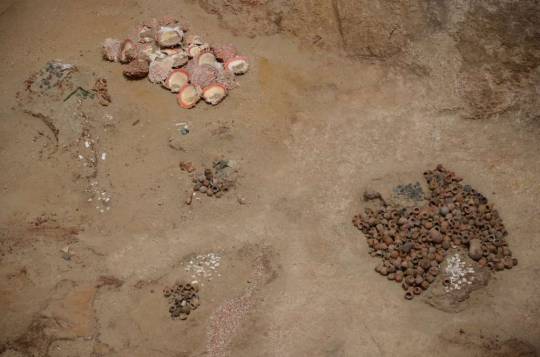


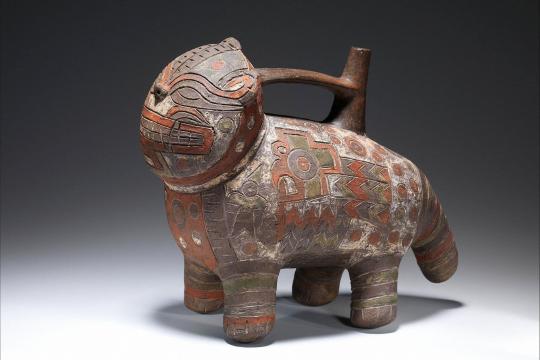


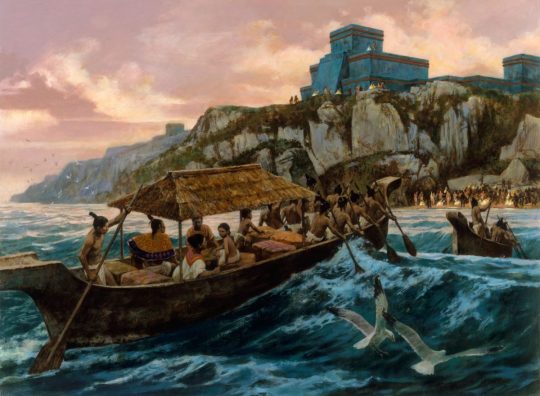
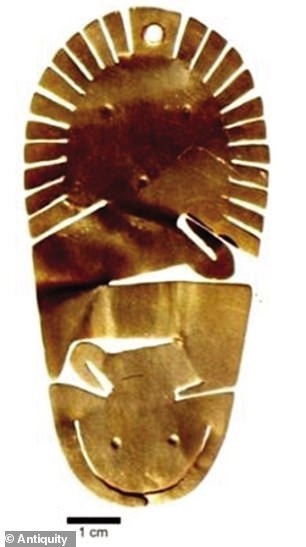


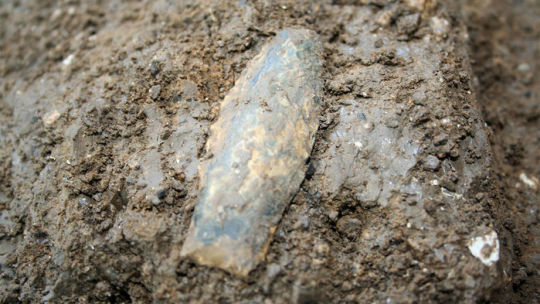

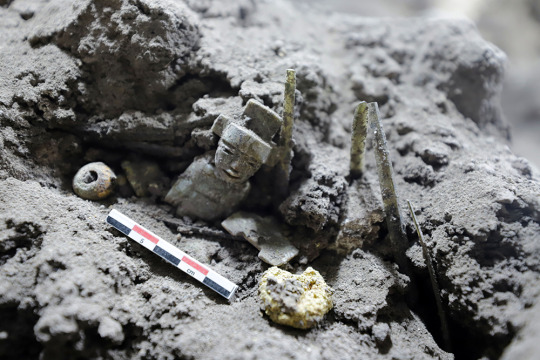
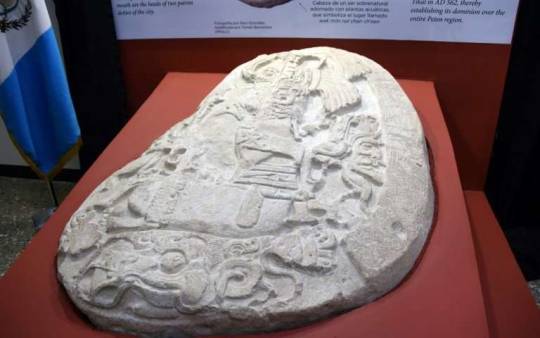
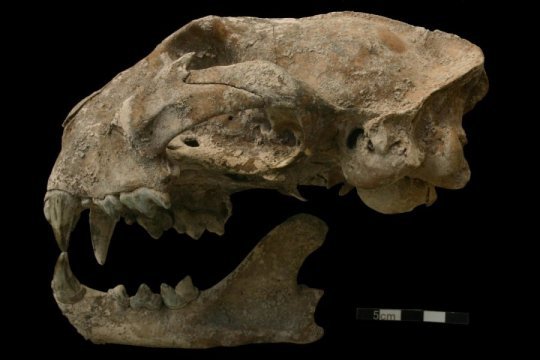


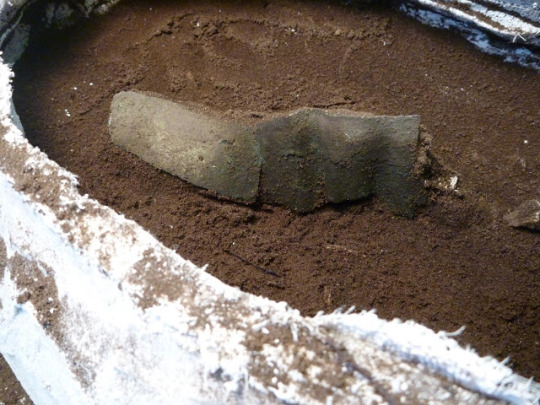


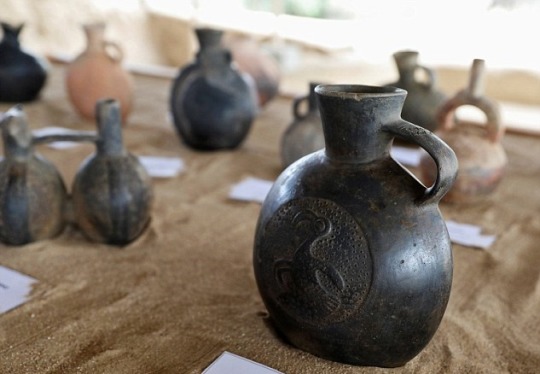


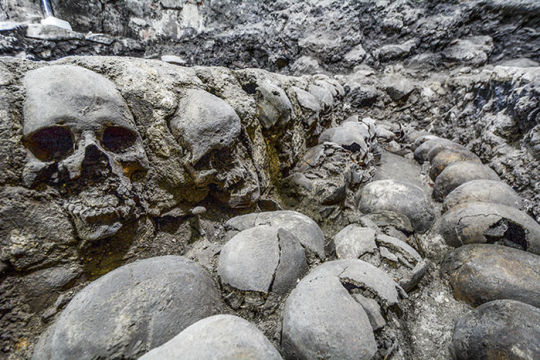


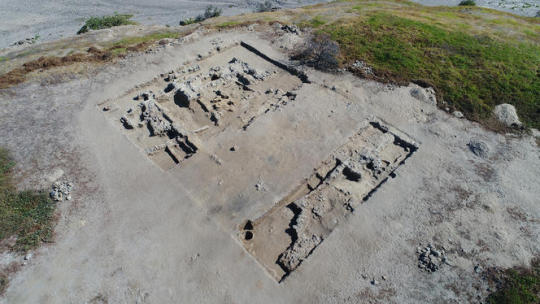





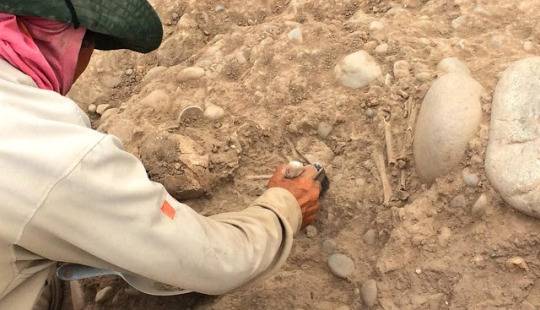

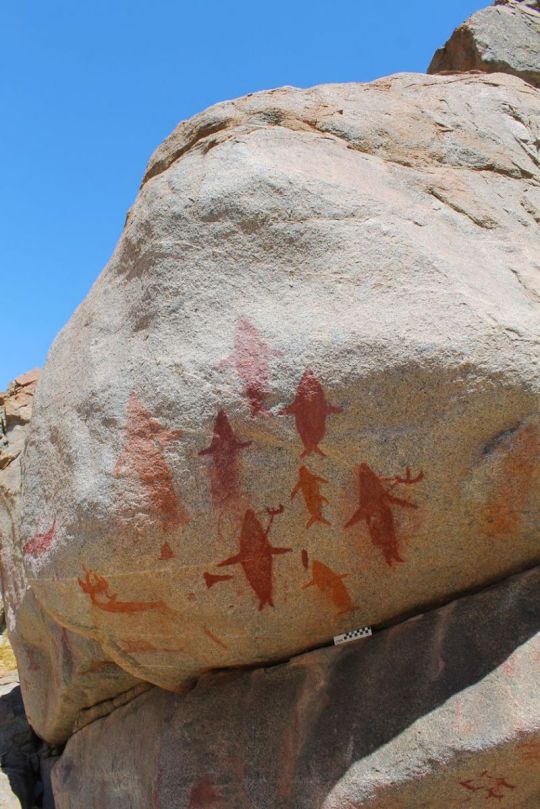


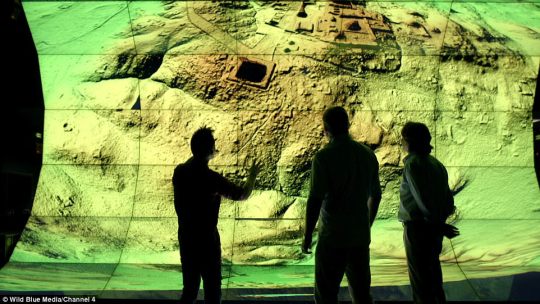


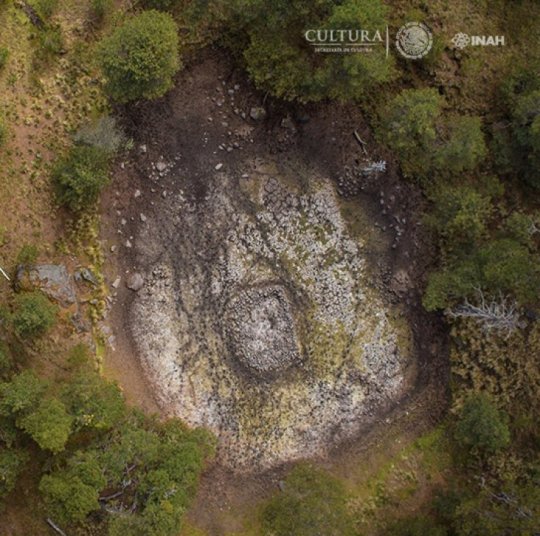


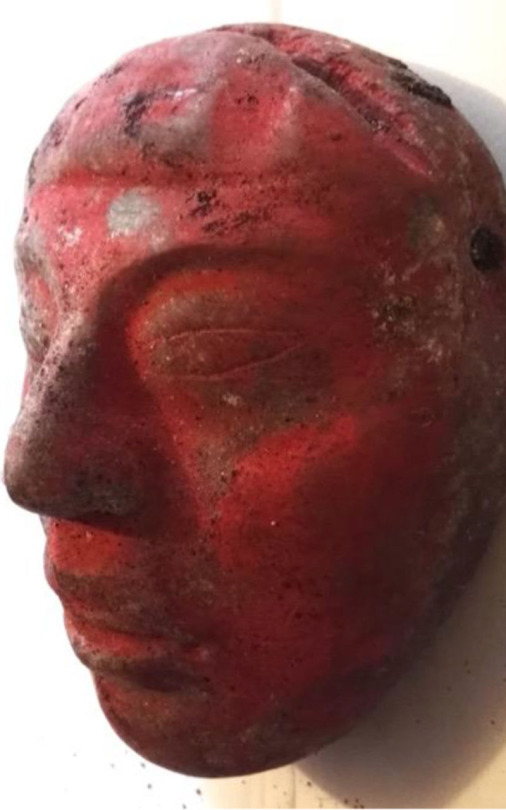
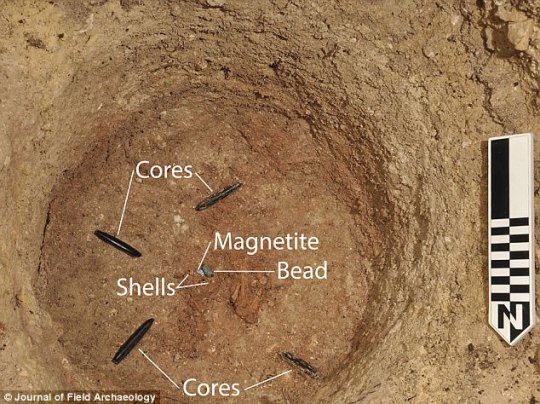


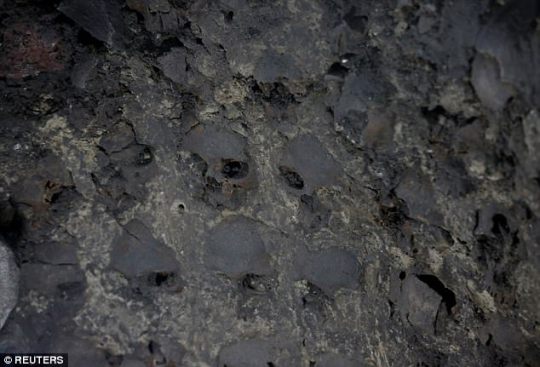


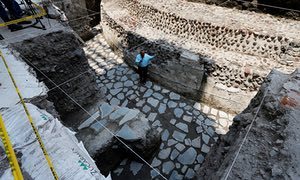


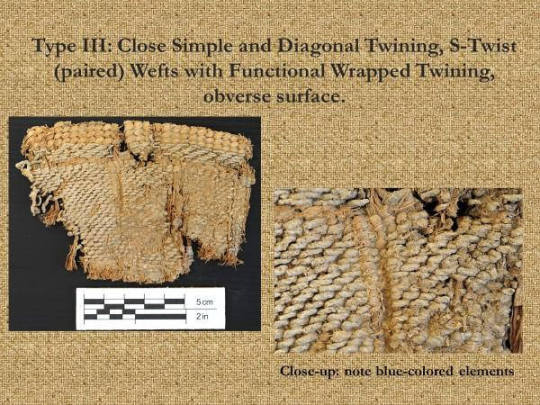
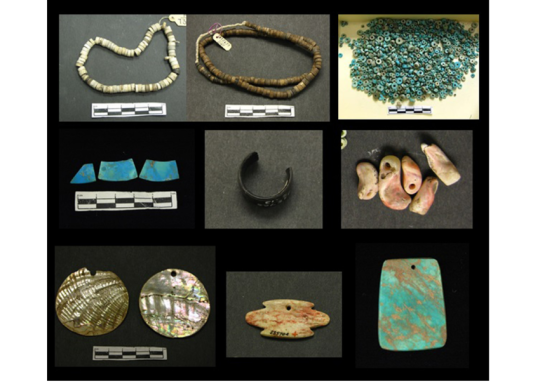


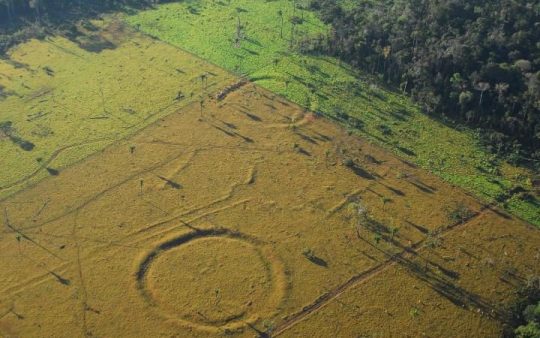


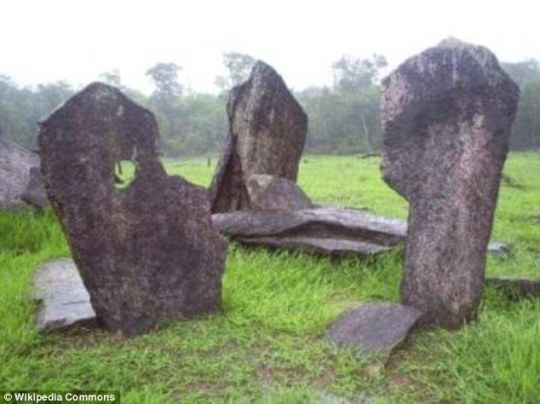





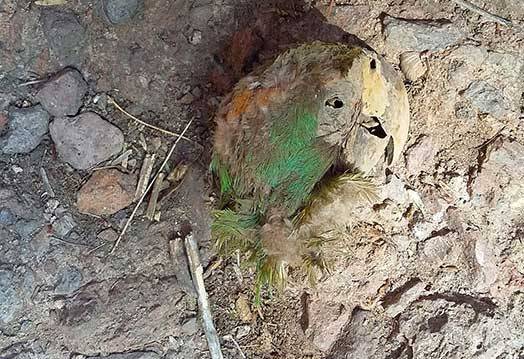


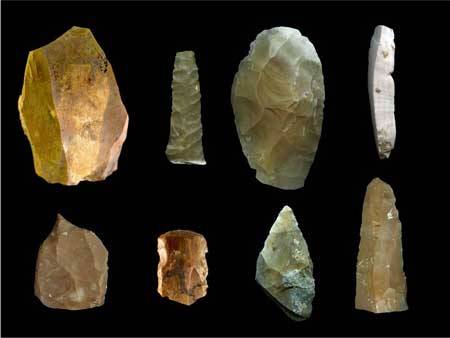
 MIKE RUGGERI'S ANCIENT AMERICAS NEWS